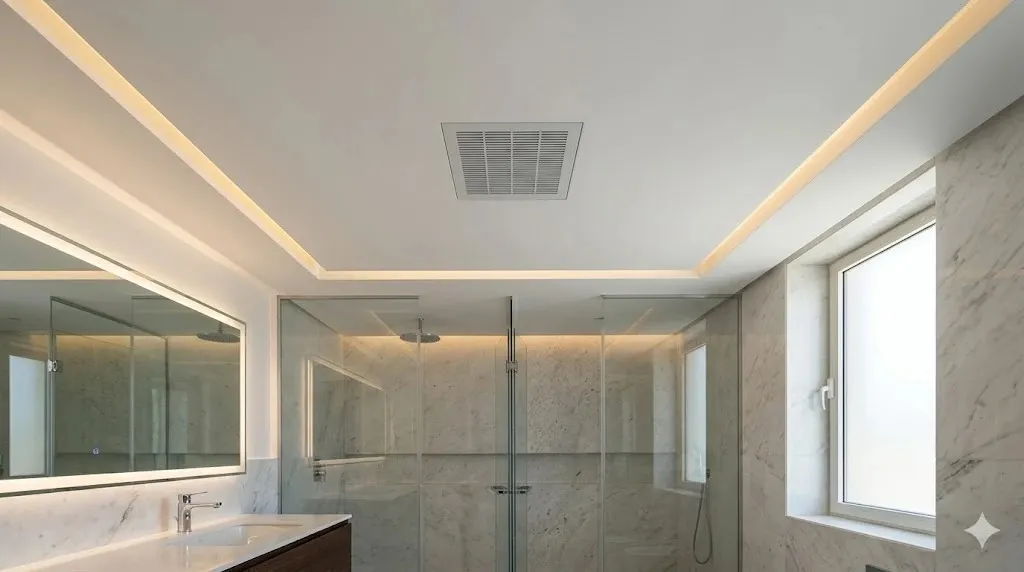
Finding the right bathroom ventilation solution—especially for enclosed bathrooms—starts with understanding the differences between bathroom exhaust fan types and how each one should be installed to achieve effective air exchange and long-term humidity control.
Today, Cyberia shares a practical part of our field experience to help you evaluate your current setup or build a new system that protects your space from moisture problems and helps prevent mold. Here’s what we’ll cover:
- How to choose a quiet bathroom exhaust fan and what really determines low-noise performance.
- The difference between concealed bathroom fans (hidden/inline) and visible units, plus the best ceiling exhaust fan options.
- How to calculate the right fan size (CFM sizing) and understand common fan faults—and when repair makes sense.
Cyberia delivers silent, high-performance bathroom extractor fan systems that solve stubborn humidity issues. Contact us to design a complete ventilation setup for your bathroom—correctly sized, properly ducted, and built to last.
Criteria for choosing the best bathroom exhaust fan
Comfort starts with clean air, so use these criteria to choose the right bathroom exhaust fan—one that removes moisture effectively without unnecessary noise:
1) Extraction power (airflow / CFM)
Measure your bathroom dimensions accurately so you can select the right fan capacity (CFM) to remove steam quickly and prevent humidity buildup. Avoid oversizing: excessive airflow often increases noise and energy use without a real performance benefit in a small space.
2) Noise level (quiet operation)
If you want a quiet bathroom exhaust fan, look for a low noise rating (commonly listed in sones) and choose models designed with vibration isolation—such as rubber mounting points—to reduce humming and vibration during extended use.
3) Duct size and routing
Match the duct diameter and the ceiling opening to the selected bathroom extractor fan to prevent airflow restriction and backpressure. Use the shortest, smoothest duct route possible (fewer sharp bends) to improve real extraction performance and reduce noise.
4) Electrical safety and moisture protection
Confirm the fan is built for wet-area conditions and includes suitable electrical protection for continuous exposure to steam and splashes. Add a backdraft damper (non-return valve) to prevent reverse odors and outdoor dust from entering the bathroom through the duct.
5) Control options (smart, practical)
For better humidity control, choose a bathroom fan with a humidity sensor (and/or a timer) to automate run time. Also pay attention to the quality of the external grille/cap so it’s easy to remove and clean—helping the system maintain performance for years.
Also read: Centrifugal Fan: How They Work and How to Maximize Efficiency
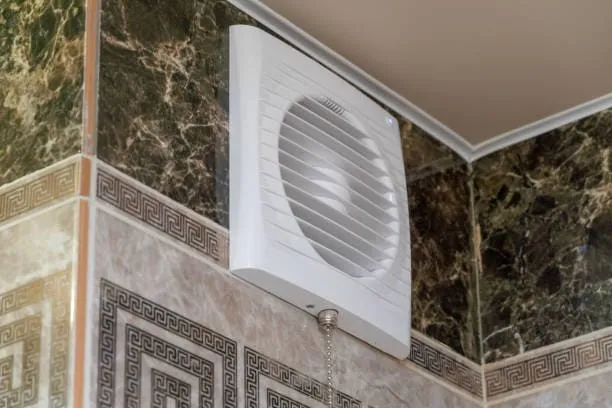
Quiet ventilation essentials: how to reduce bathroom fan noise
True “quiet” performance is often determined less by the fan model itself and more by installation quality and duct routing. Here are the most common noise sources in a bathroom exhaust fan, and what they usually mean:
- Fan vibration: A low-frequency hum often comes from mounting the fan on an uneven surface, weak gypsum/false ceiling boards, or poor support framing—causing the housing to resonate.
- Loose installation: Unsecured screws and brackets can create whistling, rattling, or clicking as air moves and the unit shifts slightly under load.
- Restricted duct path: Long, narrow ducts or too many tight bends increase static pressure, forcing the fan to work harder—raising noise and reducing real airflow.
- Backdraft damper flutter: Incorrectly installed non-return/backdraft dampers can flap repeatedly, producing intermittent tapping sounds—especially when airflow is low or pressure fluctuates.
- Dust and residue buildup: Deposits on the fan blades (impeller) upset balance and increase rotational noise, often getting worse over time.
How to ensure quiet operation for a bathroom exhaust fan
- Choose a well-balanced motor with quality bearings: Look for a fan built with reliable ball bearings (bearing-supported motors) for smoother rotation and reduced vibration—especially with longer daily runtime.
- Use a rigid housing with vibration isolation: A solid fan body plus rubber mounts or acoustic pads helps isolate sound and prevents vibration transfer into gypsum ceilings and light framing.
- Keep the duct run short and smooth: The shorter the duct—and the fewer bends—the lower the static pressure, the quieter the airflow, and the better the real extraction performance.
- Check impeller (blade) balance and airflow stability: A balanced impeller reduces turbulence and helps avoid ceiling “shake” or resonance during operation.
- Install a high-quality backdraft damper and maintain the exterior grille: A good non-return/backdraft damper reduces rattling, while routine cleaning of the external grille keeps airflow stable and prevents noise from restriction and dust buildup.
With Cyberia, you get engineered solutions that eliminate ventilation noise and deliver professional mounting and duct routing—so your quiet bathroom exhaust fan system performs smoothly. Contact us now to install a silent extraction setup.
Concealed vs. surface-mounted bathroom exhaust fans: which one should you choose?
Before you decide, compare the practical advantages of each type—because the “best” option depends on your ceiling design, ducting possibilities, and the level of quiet you expect.
Concealed bathroom exhaust fan (inline / hidden fan system)
A premium option that combines aesthetics with stronger performance—often preferred in modern villas and high-end projects:
- Clean ceiling look: Delivers a sleek, hotel-style finish with only a discreet grille visible.
- Quieter operation: Noise is typically lower because the fan unit is installed inside the ceiling void or along the duct run.
- Flexible extraction points: You can place intake grilles in the most effective locations (e.g., near the shower).
- Better humidity control: Enables direct capture of steam at its source—supporting faster moisture removal.
- Smarter maintenance access: The motor can be serviced through an access panel rather than removing the ceiling grille.
Surface-mounted bathroom exhaust fan (visible unit)
A practical, fast-to-install solution—especially when the site layout limits ductwork:
- Quick maintenance: Easy to clean and replace without specialized access panels.
- Good for concrete ceilings: Ideal when you don’t have decorative ceilings or a large ceiling void to hide ducting.
- Standard installation: Often works without complex duct extensions or additional construction work (depending on discharge route).
- Lower upfront cost: Usually cheaper in purchase price and labor compared to concealed/inline systems.
Also read: Restaurant Exhaust Fans: Commercial Kitchen Extraction Design Essentials
Cyberia’s best bathroom exhaust fan options
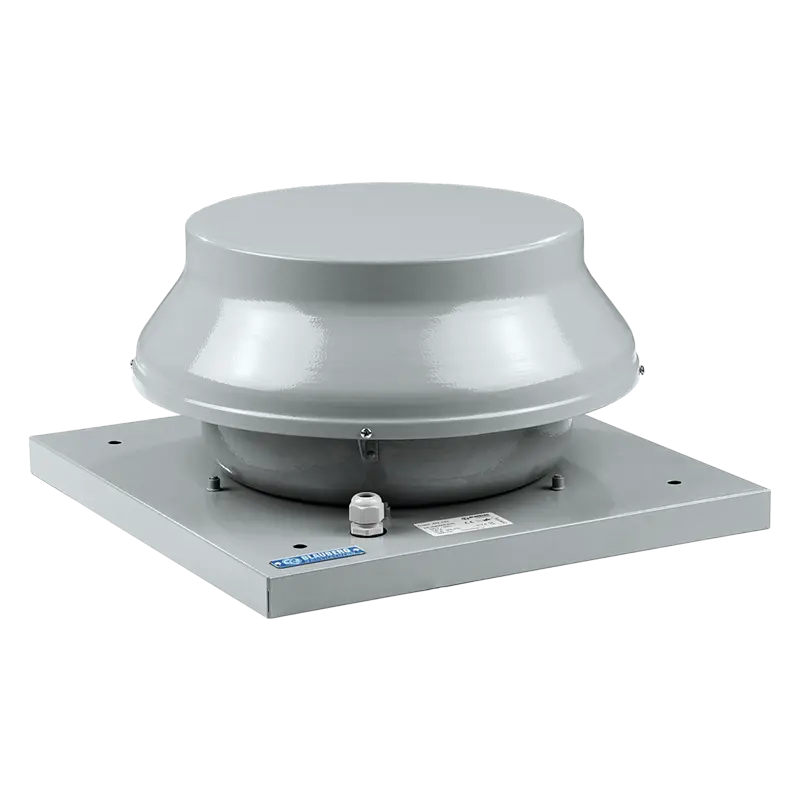
Blauberg Tower AM Roof Centrifugal Exhaust Fan
This German roof fan features a robust metal housing designed to withstand humidity and heat, delivering up to 1,880 m³/h. The Blauberg Tower AM is a strong fit for larger facilities where the bathroom exhaust system needs continuous-duty performance and reliable steam extraction.
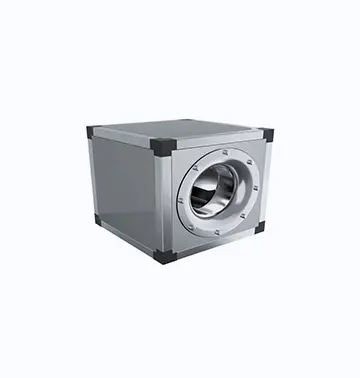
ALPA IN-BOX Sound-Insulated Box Fan
The IN-BOX sound-insulated fan delivers extraction capacity of up to 15,500 m³/h with pressure capability that can handle demanding duct conditions. It’s a quiet, practical solution for public or workplace bathrooms, with an insulated enclosure that helps protect the motor from external moisture—supporting long operating hours.
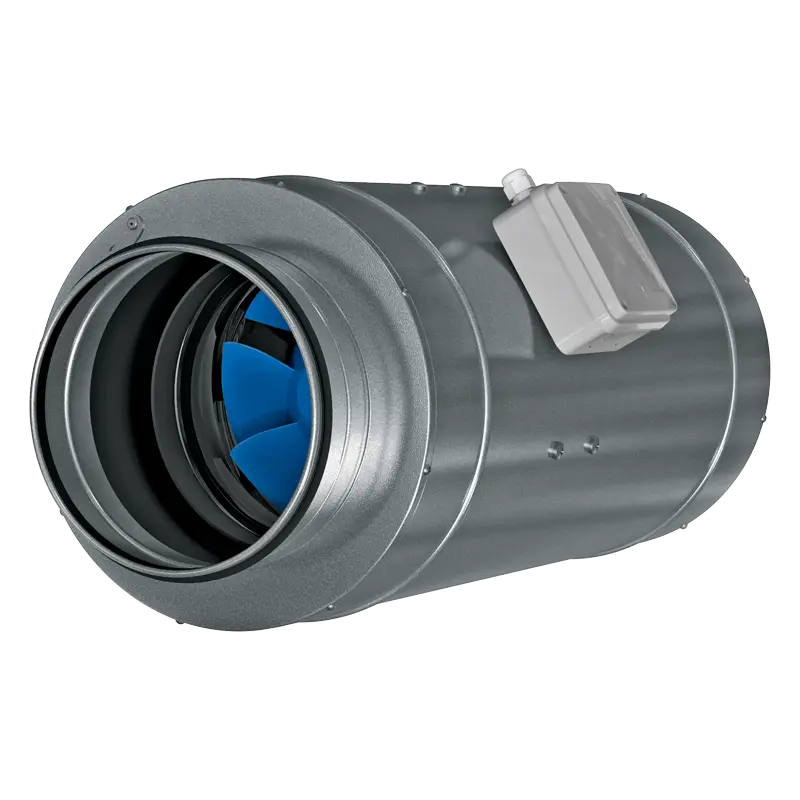
Blauberg ISO PRIMO Sound-Insulated Inline Fan
Designed with acoustic insulation, the Blauberg ISO PRIMO provides fresh air extraction up to 3,185 m³/h with noticeably quieter operation. Its smart design allows easy removal of the motor unit for maintenance, and it supports flexible control to match daily ventilation demand—ideal when you want a silent bathroom extractor fan without compromising performance.
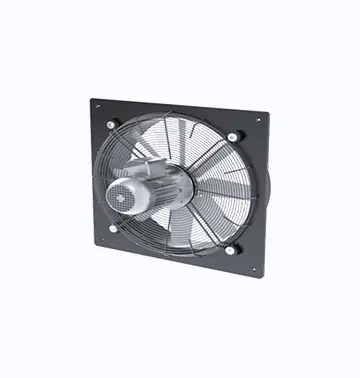
ALPA AXW Series Wall-Mounted Axial Fan
Built for fast air renewal in industrial bathrooms and wide spaces, the AXW Series delivers airflow up to 55,000 m³/h. It uses heavy-duty electric motors engineered for tough operating conditions, providing dependable performance and long service life in working environments.
You can explore more of our HVAC and ventilation solutions through our dedicated Products page.
Benefits of installing a ceiling bathroom exhaust fan for windowless bathrooms
When a bathroom has no window, a ceiling bathroom exhaust fan becomes essential for effective bathroom ventilation—for these reasons:
1) Continuous air exchange
A ceiling extractor fan supports steady air renewal by removing stale air and exhausting it outside. This creates a pressure pull that allows fresh air to enter from under the door and replace it quickly.
2) Moisture removal (humidity control)
A ceiling exhaust fan captures shower steam as it rises—before it condenses on gypsum ceilings and walls. That helps prevent black mold spots and the unpleasant “damp” smell associated with persistent humidity.
3) Odor isolation
Strong extraction can act as an airflow barrier that reduces odor migration into adjacent bedrooms or living areas, directing odors through the ductwork and out of the building.
4) Protecting finishes and fittings
By reducing humidity, ventilation helps protect wood elements from swelling and damage and reduces corrosion risk on metal accessories—lowering the likelihood of costly repairs later.
5) Safer external discharge
Well-designed systems provide a clear path to vent moist air outdoors through concealed bathroom exhaust ducting, helping ensure humidity is removed from your indoor environment—not trapped inside it.
Mistakes that reduce ventilation efficiency
- Venting air into a ceiling void or service ceiling instead of exhausting outdoors.
- Failing to seal duct joints—leading to moisture leaks above gypsum ceilings.
- Using long or flexible “corrugated” ducts that increase noise, raise static pressure, and reduce real airflow.
- Skipping a backdraft damper (non-return valve), which allows odors (and sometimes dust) to flow back into the bathroom through shafts or exterior openings.
- Placing the exhaust outlet in a tight corner that restricts smooth discharge.
These details matter even more in Kuwait. Heat, humidity, wind, and pressure swings increase condensation risk and can pull dust or odors back into the space if duct joints and dampers aren’t properly specified and sealed.
Kuwait’s bathroom humidity can damage gypsum ceilings and wood finishes—Cyberia solves it with smart, low-noise extraction systems that help block dust ingress and keep operation quiet. Install your bathroom ventilation system with our experts and get professional duct routing and external discharge done right.
How to choose the right bathroom exhaust fan size and duct route
To size a bathroom exhaust fan correctly and avoid weak extraction after installation, focus on the following:
- Calculate the bathroom volume (don’t guess): Multiply length × width × height to understand how much air needs to be removed. Then translate that into a target airflow (CFM) instead of selecting blindly. (A common rule of thumb is ~1 CFM per sq. ft. for standard bathrooms.)
- Size up for windowless or daily-shower bathrooms: If your bathroom has no window or is used for showering every day, choose higher capacity to pull steam quickly and reduce the risk of mold and persistent humidity.
- Increase capacity when the duct run is long or has many elbows: Long ductwork and multiple bends raise static pressure, which reduces the actual airflow delivered. In these cases, you may need a higher-performing fan (not just a higher “free-air” rating).
- Match duct diameter to the fan outlet: Keep the duct size consistent with the fan connection—reducing the duct diameter can choke airflow, increase noise, and cause backpressure issues.
- Always vent outdoors + install a backdraft damper: Make sure the duct terminates outside the home and add a backdraft damper (non-return valve) to prevent odor backflow and help the fan operate efficiently.
4-inch vs 6-inch bathroom exhaust fan: what’s the difference?
| Criteria | 4-inch bathroom exhaust fan | 6-inch bathroom exhaust fan |
| Best use case | Small bathrooms or guest WCs | Larger bathrooms or bathrooms used for daily showers |
| Space conditions | Ideal when the exhaust outlet is close and the route is simple | Better for ducted ventilation where the run is longer |
| Performance in Kuwait | Quick, practical choice for bathrooms with direct, short discharge | Helps prevent airflow “choking” and handles heavier steam load more effectively (useful with Kuwait humidity) |
| Noise behavior | Often more comfortable-sounding when installed on a straight, well-sized duct route | Often more comfortable-sounding when installed on a straight, well-sized duct route |
| Sensitivity to installation errors | Very sensitive—any extra bend or restriction can weaken airflow fast (static pressure rises quickly) | Stronger push and typically less affected by minor bends (still needs good routing) |
| Installation needs | Flexible ducting, exterior grille/cap, and a backdraft damper (non-return valve) | Same accessories, plus stronger mounting/support to reduce vibration |
| Mistakes to avoid | Don’t use it for long duct runs—you’ll lose extraction performance | Don’t overcomplicate the route; excessive bends/restrictions waste fan capacity |
| Decision tip | Best for tight spaces and short distances | The safer choice for comfort and stronger ventilation in modern homes—especially for shower bathrooms |
Bathroom exhaust fan repair: common faults and practical fixes
A fault in your bathroom exhaust fan may tempt you to replace it immediately—but in many cases, you can fix a bathroom extractor fan first. Here are the most common problems and what to do before changing the unit:
1) Weak extraction (low airflow)
In most cases, weak airflow is caused by a blocked grille, dust buildup on the blades, or a restricted duct route. Try this before replacement:
- Clean the grille and fan blades thoroughly.
- Check the duct for sharp elbows, crushed sections, or obstructions that increase static pressure and choke airflow.
- Confirm the duct actually vents outdoors (not into a ceiling void).
2) Noise or vibration during operation
Common causes include loose screws, weak mounting points, or an unbalanced impeller due to dust accumulation.
- Tighten mounting screws and brackets.
- Add rubber mounts or vibration pads to reduce resonance through the ceiling.
- If noise persists, the fan may need a closer mechanical inspection.
3) Motor struggles to start
This could be a faulty switch, wiring issue, a failed capacitor (if present), or overheating.
- Turn power off first, then inspect wiring connections.
- Replace the wall switch if needed.
- If the motor windings are burnt, replacement is usually the correct fix.
4) Air and odor backflow (backdraft)
Backdraft is often caused by a stuck or damaged backdraft damper (non-return valve) or a blocked discharge outlet.
- Clean or replace the backdraft damper.
- Ensure the exhaust outlet is clear and the damper closes tightly.
- Confirm that air is discharged outdoors and not recirculating.
5) Moisture leaks and condensation
This may come from duct joint leakage or poor insulation above the ceiling, allowing moist air to escape and condense.
- Seal duct joints properly.
- Improve insulation above the ceiling where condensation is forming.
- This often fixes the issue without replacing the fan.
When should you call a professional technician?
Contact a qualified technician if you notice any of the following:
- Burning smell or abnormal overheating.
- Power trips or the safety breaker drops as soon as the fan turns on.
- Loud scraping sounds, repeated stalling, or sudden motor shutdowns.
- Water dripping or visible dampness around the fan or inside the ceiling.
- Any work that requires cutting the ceiling or modifying duct routes and electrical lines.
Also read: Industrial Ventilation Fans: Ventilation Solutions for Factories and Warehouses
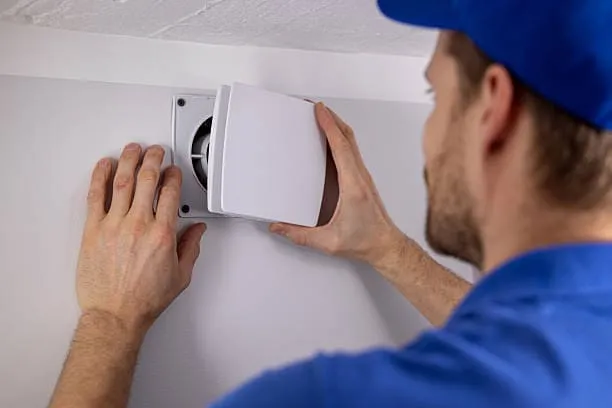
Cyberia: Your trusted partner for bathroom ventilation system setup and maintenance
At Cyberia, we bring deep experience in designing Residential Ventilation systems that perform reliably in Kuwait’s harsh climate. We rely on specialized technical teams and modern measurement tools to deliver effective stale-air extraction with the lowest possible noise—so your bathroom exhaust fan system works efficiently without disrupting comfort.
We provide engineering-accurate solutions that start with selecting quiet, high-quality motors and extend to properly sealed bathroom exhaust ductwork, tackling stubborn humidity issues at their root. The result is sustainable performance that protects finishes and improves indoor air quality (IAQ) over time.
Why work with Cyberia?
- Customized HVAC & ventilation solutions based on real site conditions and actual needs.
- Clear diagnosis before recommending any replacement or change.
- Strong focus on noise reduction through correct duct routing, mounting, and insulation.
- Clean, organized execution that protects interior finishes and reduces common installation errors.
- Component selection suited to Kuwait’s humidity and dust conditions.
- Handover with simple operating and cleaning guidance to keep performance consistent.
With Cyberia, Kuwait’s climate doesn’t have to mean trapped air and bathroom humidity. We deliver quiet extraction systems that remove moisture efficiently and help protect ceilings and finishes from mold and odors. Talk to our team today, share what you need, and we’ll start building—or maintaining—your bathroom ventilation system for your home or facility.
FAQ about Bathroom exhaust fans
Is there a completely silent bathroom exhaust fan?
In reality, most fans produce some level of sound—even “silent” models. Quiet performance depends heavily on installation quality, duct routing, and how well the fan is mounted and isolated from the ceiling structure. The most practical approach is to get a recommendation based on your bathroom layout and discharge route.
Does a concealed bathroom fan work for every bathroom?
A concealed/inline bathroom exhaust fan is an excellent choice when you have a false ceiling, a clear duct route, and a proper maintenance access panel. It’s not ideal if routine servicing will be difficult or if there’s no suitable outdoor discharge path.
How can I tell the difference between a weak fan and a blocked duct?
If extraction improves noticeably when you open the door, or if odors keep returning despite the fan running, the issue may be duct restriction, duct leakage, or a poorly positioned discharge point—not the fan itself. Checking the duct path and the backdraft damper is often the first step.
Is a ceiling exhaust fan enough for a windowless bathroom?
Usually yes—if the system vents outdoors correctly and the duct is properly sealed. Results drop quickly when air is discharged into the ceiling void, or when the duct run is long with many bends that increase static pressure.(SEO terms embedded naturally: silent bathroom exhaust fan, concealed bathroom fan, inline bathroom extractor fan, duct restriction, duct leakage, ceiling exhaust fan, windowless bathroom ventilation, static pressure.)