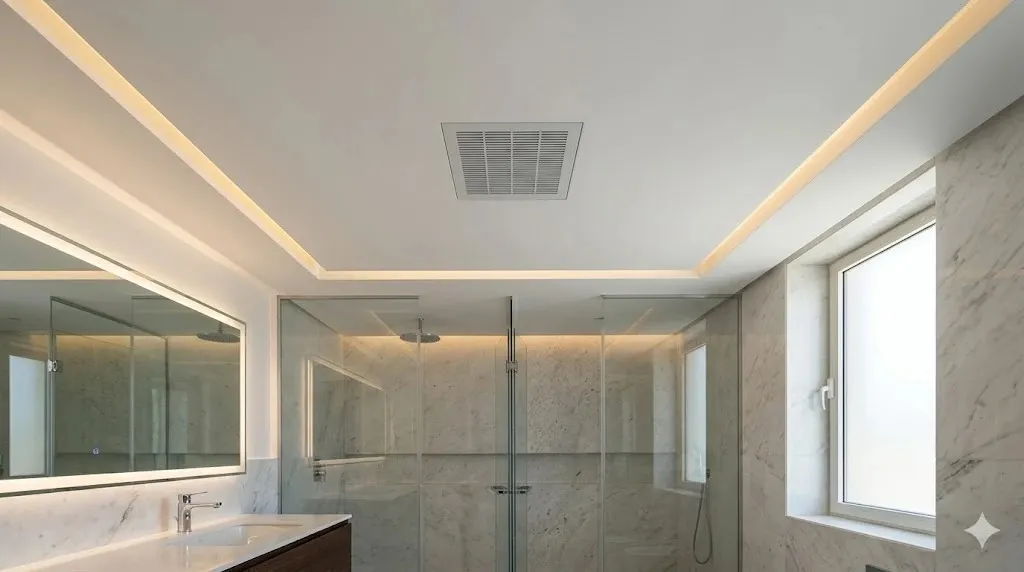
Instead of simply buying a bigger fan, look for a smarter centrifugal fan that can handle static pressure efficiently. The real engineering advantage is choosing a centrifugal blower that turns duct resistance into predictable performance—delivering balanced airflow across every branch, even the furthest outlets in your duct network.
In today’s Cyberia guide, we take a practical look at designing and installing centrifugal fan systems in line with Kuwait’s local project requirements and compliance expectations. We’ll cover:
- How a centrifugal fan works inside ductwork.
- When a centrifugal fan is the right alternative to an axial fan.
- How duct design and static pressure can make—or break—system performance.
- How to select the right airflow and pressure capacity, and how to choose a reliable supplier/installer to ensure quality execution.
The centrifugal fan and its role in ventilation efficiency
A centrifugal fan is often the “workhorse” inside HVAC and ventilation duct systems. Its main job is to generate static pressure and push air through ductwork resistance—so the airflow can overcome elbows, long runs, filters, and other restrictions that would quickly weaken many low-pressure solutions.
How a centrifugal fan works inside ductwork
The principle is straightforward:
- Air enters through the center (impeller eye): Air is drawn into the fan through the inlet at the center of the rotating wheel, helping establish a stable intake stream.
- The impeller accelerates the air outward: As the impeller spins, it imparts energy to the airstream and throws it radially toward the outer edge, increasing velocity.
- The volute (scroll housing) guides flow and builds pressure: The curved casing collects the high-velocity air and directs it toward the outlet while converting part of that velocity into static pressure—which is what helps the air “fight” duct resistance
- Air discharges into the duct system: Once connected to the duct network, the pressurized airflow is better able to travel through the route to the final exhaust points or ventilation outlets.
Why centrifugal fans are preferred for long duct runs
Duct systems create resistance (pressure loss) due to several factors, including:
- Long duct length (more distance = more friction loss)
- Multiple elbows and branches (direction changes increase pressure loss)
- Air filters (especially higher-efficiency filters or dirty filters)
- Dampers and airflow control devices
- Cooling coils and air-handling sections with tighter internal passages
In these conditions, a properly selected centrifugal fan typically handles rising resistance better because it’s designed to operate at higher static pressure and maintain more stable performance in ducted applications.
Also read: Restaurant Exhaust Fans: Commercial Kitchen Extraction Design Essentials
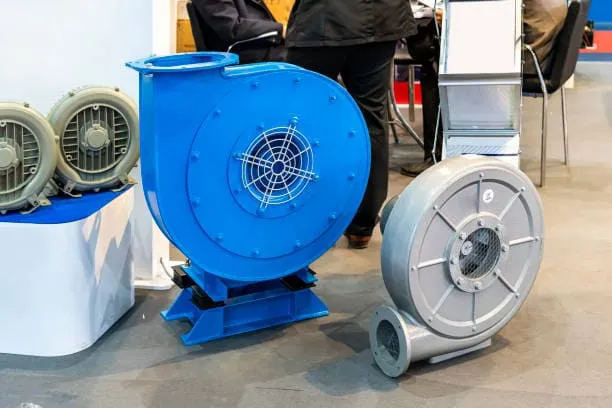
When is a centrifugal fan the better choice than an axial fan?
A centrifugal fan becomes the stronger option when the job is no longer just “moving air,” but pushing air through high resistance inside ductwork. These are the most suitable scenarios:
- Long duct runs: When duct distance increases, you need higher static pressure to protect airflow performance all the way to the last grille/outlet.
- Complex routing: If the network has many elbows, branches, and transitions, centrifugal fans typically handle the pressure losses better than axial fans.
- High-resistance components: With dense filters, dampers, or sound attenuators, pressure capability becomes essential to prevent airflow drop.
- Precise multi-outlet balance: When you need consistent distribution across multiple outlets, a centrifugal fan often provides more stable performance across the whole network.
- Speed control requirements: If the system needs a VFD/inverter or speed regulation, centrifugal fans offer broader flexibility as operating loads change.
- Compensating for losses: In networks with imperfect sealing or restrictive sections, stronger pressure capability helps reduce the impact of losses and keep airflow closer to target.
- High external static pressure (ESP): If your system must overcome high ESP, a centrifugal fan is usually the logical choice.
- Professional-duty applications: For commercial kitchens, basements, workshops, and factories, centrifugal fans are often preferred for their ability to tolerate heavier operating demands.
Cyberia installs engineered ventilation systems designed to overcome high duct pressure and deliver balanced airflow across long extraction routes—reliably and efficiently. Contact our team to design a complete ventilation network built for your site conditions.
Centrifugal fan vs. axial fan: what’s the difference?
To compare centrifugal fans and axial fans in a way that works for both residential and industrial use, focus on one core trade-off: airflow volume vs. the ability to push air through resistance (static pressure). Use these differences to make a correct selection:
- Pressure vs. airflow: A centrifugal fan builds higher static pressure to overcome duct resistance, while an axial fan delivers high airflow when resistance is low and the path is open/direct.
- Ductwork suitability: Centrifugal fans perform better on long duct runs with multiple bends and branches. Axial fans tend to perform best on short, straight, low-resistance routes.
- Handling restrictions: With filters, dampers, or sound attenuators, centrifugal fans typically maintain performance better. Axial fans can lose airflow quickly as pressure losses increase.
- Noise and vibration: A centrifugal fan can be quieter when installed in a plant room with proper isolation. An axial fan may become noticeably louder if installed close to occupied areas.
- Space and installation: Axial units are often lighter and easier to install. Centrifugal systems usually require more space, a flexible connector, and a well-engineered mounting base to control vibration.
- Energy and speed control: Both can use speed control (e.g., a VFD), but a properly selected centrifugal fan often holds steadier performance as system resistance changes.
- Maintenance and reliability: Centrifugal fans typically need regular checks for cleanliness and impeller balance. Axial fans are often simpler, but their blades can be more sensitive to fouling or blockage in dusty environments
- Total operating cost: Axial fans can be cheaper upfront, but a centrifugal solution may reduce future operational issues when the duct network is complex or high-resistance.
Centrifugal fan vs. Axial fan
| What matters to you | Centrifugal fan | Axial fan |
| Best use case | Long, complex duct networks with filters/accessories and higher resistance | Direct discharge or short duct runs with low resistance |
| Real performance advantage | Higher static pressure (pushes air through restrictions and long runs) | Higher airflow volume in easy, straight airflow paths |
| Noise behavior | Often quieter in complex ducted systems when correctly installed and isolated | Very quiet on short paths; noise rises as resistance increases |
| Installation sensitivity | High—needs correct duct inlet/outlet conditions and careful transitions | Also sensitive, especially with long ducts and tight elbows close to the fan |
| Maintenance & access | Depends on mounting location; usually needs a planned service access panel | Often simpler with direct discharge, but service access still matters |
Why do ventilation systems fail even with a powerful fan?
Even the strongest extraction equipment can perform poorly when the ductwork is consuming static pressure and choking airflow. If you want to pinpoint the technical fault, these are the most common duct-network issues that cause underperformance:
- System resistance higher than the design: Extra duct length and too many elbows increase pressure losses, pushing the fan outside its efficient range and reducing airflow at the outlets.
- Air leakage and poor sealing: Gaps and loose joints leak air before it reaches the discharge point—so the fan seems “strong,” but the duct network wastes the pressure along the way.
- Turbulent fan inlet conditions: A tight elbow installed too close to the inlet can create unstable intake flow, leading to higher noise and vibration and lowering the real delivered airflow.
- Incorrect duct sizing:
- Undersized ducts increase velocity and noise and raise losses.
- Oversized ducts can reduce air momentum and disrupt system balance.
- Unbalanced outlet distribution: Nearby branches “steal” the airflow while distant branches are starved—so you get strong air in one area and weak flow in another.
- Restrictive add-ons: Dense filters or sound attenuators installed without proper pressure-loss calculation can gradually consume the available pressure and restrict the system.
- Poor insulation and installation: Vibration, leakage, and condensation can increase noise and shorten component life over time.
- No balancing and commissioning: The fan runs, but without damper adjustment and airflow measurements, the network may never deliver the required airflow where it’s needed.
Signs your duct route has a problem (especially in residential or light commercial)
- Loud noise or whistling—often near elbows or supply/exhaust grilles.
- Vibration in the false ceiling or the exhaust fan mounting base.
- Weak extraction of steam/odors, and humidity doesn’t clear as expected.
- Odors or smoke transfer easily from one area to another.
- Clear airflow imbalance: strong airflow nearby, almost none at distant points.
Seeing one or more of these signs doesn’t automatically mean the centrifugal fan is defective. More often, it means the air is facing excessive resistance, leakage, or turbulence inside the duct network.
Your facility deserves HVAC and ventilation systems built on real engineering insight. Cyberia delivers integrated solutions that support comfort, efficiency, and dependable long-term performance. Contact our experts to inspect your ventilation system and restore full airflow performance
Also read: Industrial Ventilation Fans: Ventilation Solutions for Factories and Warehouses
Rules for selecting centrifugal fan capacity (airflow + static pressure)
Choosing a centrifugal fan starts with two completely separate questions:
- How much airflow do you need? (volume flow)
- How much resistance must the fan overcome? (static pressure)
To size airflow and pressure correctly for your duct network, follow these practical steps:
- Define the operating purpose: Is it exhaust, supply, or make-up air? The purpose changes the required airflow target and how the system should behave.
- Map the duct network route: Identify the actual duct length, number of elbows, branches, and added components like filters or dampers—because each item increases airflow resistance.
- Estimate required airflow (capacity): Calculate airflow based on the space requirement, number of outlets/inlets, and any applicable project/building code—avoid random guesswork.
- Calculate pressure losses: Add friction losses from straight duct runs plus losses from elbows, transitions, branches, filters, dampers, and grilles to determine the total external static pressure (ESP) the fan must deliver.
- Choose the right operating point on the fan curve: Match the airflow and static pressure on the manufacturer’s fan curve, and aim for a balanced mid-range operating point to reduce noise and avoid unnecessary power consumption.
- Select the right impeller for the airstream: Dusty or greasy air often requires more rugged impeller choices, while quieter applications benefit from high-efficiency designs (e.g., backward-curved impellers).
- Allow for balancing and adjustment: Provide a control method such as a VFD/inverter or balancing dampers, because real duct networks often shift after installation and require commissioning adjustments.
- Verify on site (field testing): Request measurements of airflow, static pressure, leakage, and vibration after installation. Real performance is confirmed in the field—not on paper.
Criteria for selecting fan impellers and housings that fit Kuwait’s climate
To choose the right centrifugal fan (and keep performance stable in Kuwait’s heat, dust, and coastal humidity), focus on these decision points:
- Air conditions (dust / humidity / fumes): Start by defining what the fan will actually handle—clean air vs. dusty, humid, or fume-laden air. That determines the right impeller style and how prone it will be to fouling.
- Impeller design (backward-curved vs. radial):
- Backward-curved (backward-inclined) blades are typically chosen for efficient airflow and lower noise in cleaner-air applications and higher-pressure HVAC duty.
- Radial / straight blades are commonly favored when the airstream contains heavy dust/particulates because they’re more rugged and less likely to be affected by abrasive contaminants.
- Housing material (galvanized vs. stainless steel): Use corrosion-resistant housings—especially in coastal zones.
- Galvanized steel offers cost-effective rust protection in many standard conditions.
- Stainless steel generally provides stronger corrosion resistance in humid/salty exposure (coastal Kuwait), which improves longevity when properly specified.
- Surface protection (coatings and finishes): Require proper anti-corrosion coatings or heavy-duty finishes so minor scratches don’t become corrosion entry points in high humidity.
- Condensation management (drainage): Ensure the system design includes ways to drain condensate and avoid trapped water inside the housing or ductwork—standing moisture accelerates corrosion and can damage bearings over time.
- Motor sealing and ingress protection (IP rating): Specify a motor and terminal box with suitable Ingress Protection (IP) for dust and moisture exposure (e.g., common outdoor-use levels like IP55, depending on the application).
- Bearing quality (high-temperature duty): Use bearings designed for higher temperatures with appropriate lubrication to reduce grease breakdown and vibration risk during continuous operation.
- Preventive maintenance plan: Schedule periodic cleaning and balancing checks (especially blade cleaning) to prevent buildup from driving vibration, noise, and airflow loss over time.
Cyberia Recommendations: The Best Centrifugal Fan Options
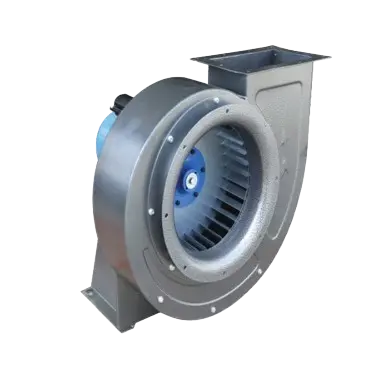
ALPA CEF-N Industrial Centrifugal Fan
Delivering powerful performance of up to 17,600 m³/h and up to 1,300 Pa static pressure, the ALPA CEF-N is built to overcome the resistance of grease filters and long exhaust paths in restaurants and large commercial complexes. Its German motor is available with multiple electrical configurations to suit both industrial and residential needs, while the rugged metal housing helps protect internal components against Kuwait’s harsh heat.
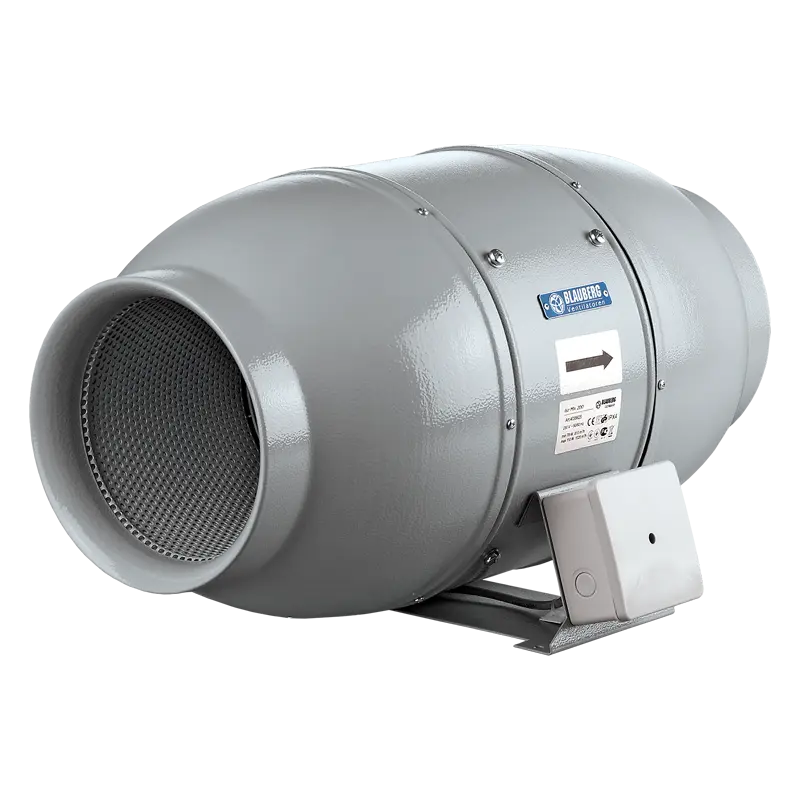
Blauberg ISO MIX Round Sound-Insulated Fan
The Blauberg ISO-MIX provides strong extraction at up to 1,920 m³/h, with integrated acoustic insulation for noticeably quieter operation—ideal for offices, majlis areas, and residential spaces. Designed for round ductwork, it supports precise speed control for smoother airflow and performance aligned with modern ventilation requirements.
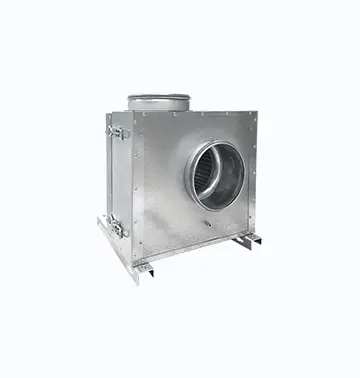
ALPA KVF Centrifugal Fan
With extraction capacity of up to 8,500 m³/h and high pressure to handle long flues and heavy grease filtration, the ALPA KVF is well-suited for workshops and central kitchens. Its galvanized steel casing helps protect the German motor in hot conditions, while the integrated insulation layer reduces operating noise for a more comfortable work environment.
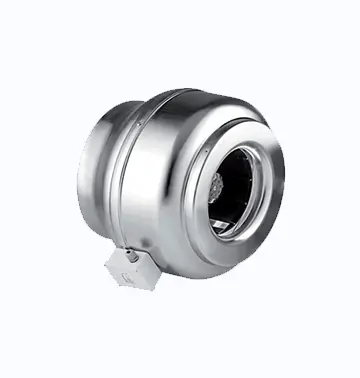
ALPA AKC Round Turbo Fan
The ALPA AKC round turbo (inline) fan features metal impellers across multiple sizes to deliver up to 2,350 m³/h with stable pressure up to 1,000 Pa. Designed for exhaust and fresh-air supply applications in homes, it offers flexible mounting thanks to metal bases compatible with walls, ceilings, and round ducts from 4″ to 12″.
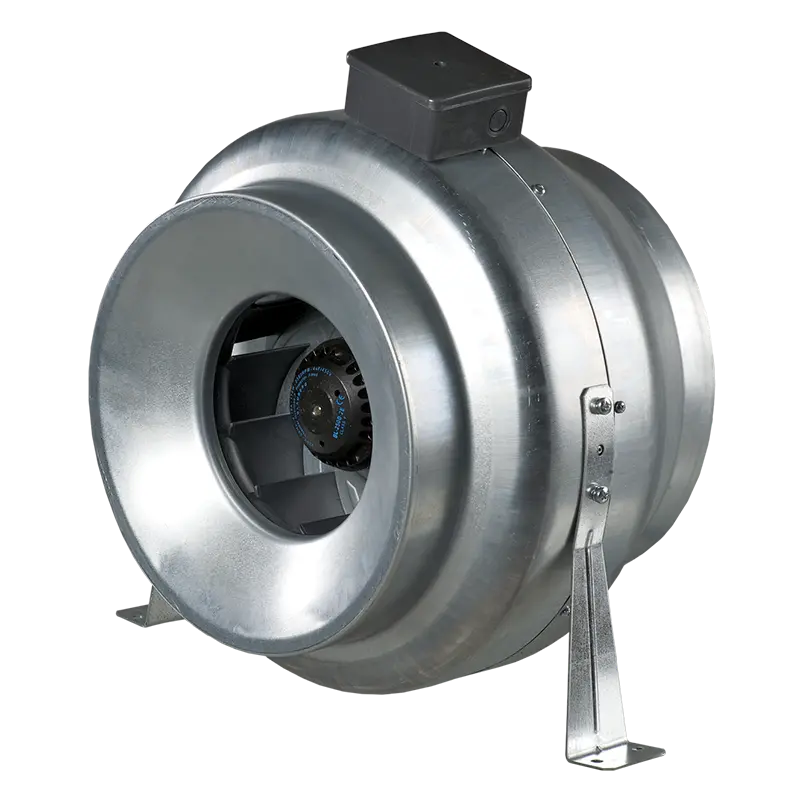
Blauberg Centro-MZ Round Turbo Fan
The Centro-MZ is a fast, effective solution for air renewal at up to 1,450 m³/h in kitchens, swimming pool areas, and majlis spaces, powered by a long-life German motor. Available in multiple sizes, it’s engineered to withstand weather fluctuations and high heat—delivering a clean, durable, and safe ventilation solution for residential and service areas for years.
Factors that affect the cost of a centrifugal fan system
The total centrifugal fan cost is rarely just the fan unit. Price is driven by how the fan is specified, installed, and supported inside the full ducted ventilation / exhaust system, especially when static pressure is high.
1) Fan type and how it’s distributed in the system
- Application purpose: Whether the fan is used for exhaust (extraction), supply (air delivery), or general ventilation changes the engineering requirements, accessories, and overall design scope.
- Impeller and casing design: Some designs prioritize dust tolerance, others prioritize low-noise performance and build quality directly affects price and required add-ons (e.g., acoustic lining, protective finishes).
- Installation location: Indoor (ceiling/plant room) vs. outdoor placement changes weather protection, service access, and vibration isolation requirements.
2) Drive method: direct drive vs. belt drive
- Direct-drive centrifugal fan: The motor is coupled directly to the impeller—fewer parts and typically simpler installation, with careful selection of motor protection/specification for the duty.
- Belt-driven centrifugal fan: Offers flexibility for speed changes and maintenance adjustments, but introduces wear parts (belts/pulleys) and requires a clear preventive maintenance plan.
Most important in both cases: service access. A high-quality fan installed in a hard-to-access location often means higher labor time and higher lifecycle cost later.
3) Resistance to humidity and coastal salt (Kuwait coastal areas)
In Kuwait, especially near coastal zones, specs often need to be upgraded for corrosion risk:
- Higher corrosion resistance: via special metals or high-grade protective coatings/finishes.
- Tighter sealing: to limit moisture/dust intrusion into sensitive and electrical parts and reduce failure risk.
- Bearings and motors rated for heat + moisture + continuous duty: improves service life and reduces unplanned stoppages.
4) Duct network design and required accessories
Even if two centrifugal fans look similar, costs change significantly when system resistance increases because higher static pressure may force:
- Longer duct runs or different duct sizing
- Better sealing to reduce leakage losses
- More elbows or complex branches
- Added components such as dampers, backdraft dampers, filters, or acoustic insulation inside the duct route
5) Electrical supply, controls, and safety protection
Cost changes based on the site’s electrical and technical standards:
- Available power supply and compatibility with motor rating and required control gear
- Control level: simple ON/OFF vs. a VFD (variable frequency drive) to adjust speed for noise control and energy optimization
- Protection devices: breakers, thermal protection, sensors—used to protect equipment, stabilize operation, and reduce failures
6) Noise reduction requirements and installation quality
Projects with stricter acoustic requirements (or fans above false ceilings) often need:
- Proper anti-vibration mounts (not just “mounted on steel”)
- Strong engineered bases (weak bases create noise and early wear)
- Flexible connectors where needed to reduce vibration transfer to ductwork
- Additional acoustic treatment depending on proximity to occupants
Also read: Bathroom Exhaust Fan: Silent & Concealed Types and the Best Installation Method
Cyberia: Your trusted partner for HVAC and ventilation solutions in Kuwait
Cyberia is a smarter choice in Kuwait because we understand the region’s demanding climate and deliver custom air conditioning and ventilation solutions that balance strong cooling performance with energy efficiency. We’re committed to technical innovation, high-quality execution, and ongoing support for our clients and contractor partners—helping maintain indoor environments that are comfortable, healthy, and reliable over the long term.
Our services include:
- High-efficiency central air conditioning installation.
- Comprehensive preventive maintenance programs to sustain strong performance.
- Technical HVAC consulting to select the right equipment for your building size and usage.
- Advanced ventilation system design for commercial kitchens and enclosed spaces.
At Cyberia, our engineering approach simplifies complex ventilation challenges—removing humidity and heat through balanced, intelligent airflow distribution. Share your building plan to receive an accurate technical design for your exhaust, ventilation, and air conditioning system.
FAQ about Centrifugal fan systems
Is a centrifugal fan always better than an axial fan?
Not always. Centrifugal fans are typically the better choice when you have ductwork and higher system resistance (higher static pressure). Axial fans can be more suitable for short, low-resistance routes where air is discharged directly with minimal duct losses.
Why does a centrifugal exhaust fan feel weak after installation?
In most cases, the fan isn’t the problem—the system is. Common causes include restricted ductwork, leaking joints, too many bends, or missing make-up air (replacement air) that creates pressure imbalance. The correct first step is to inspect the duct route and sealing before replacing the fan.
How do I choose a centrifugal fan for airflow and pressure?
Collect the site data and duct path details, then match them to the manufacturer’s fan curve and performance tables. Fan selection must be based on both required airflow and the duct network’s static pressure—not just a “free-air” rating.
Does Kuwait’s humidity affect centrifugal fan selection?
Yes. Kuwait’s humidity and dust can increase condensation and corrosion risks, so selection should prioritize suitable materials/coatings, vibration isolation, maintenance access, and a planned cleaning schedule to protect performance and service life.