Creating a stable indoor climate in your facility is an engineering challenge—one that requires balancing the needs of the space with equipment that can deliver continuous performance under load. Choosing custom HVAC and ventilation solutions is the most reliable way to reduce unexpected breakdowns, protect uptime, and maintain workforce productivity, even in Kuwait’s toughest climate conditions.
Today, Cyberia will walk you through the right methodology for building a stable work environment by designing a high-efficiency industrial ventilation system, covering:
- What industrial ventilation fans are, and why they outperform light-duty ventilation fans in demanding applications.
- How to choose the best fan type, and how static pressure impacts real-world airflow and efficiency.
- The difference between general ventilation and local exhaust ventilation (LEV) for capturing contaminants at the source.
- How to choose a certified HVAC & ventilation contractor in Kuwait to ensure proper inspection, installation, and commissioning (testing and balancing).
What are industrial ventilation fans?
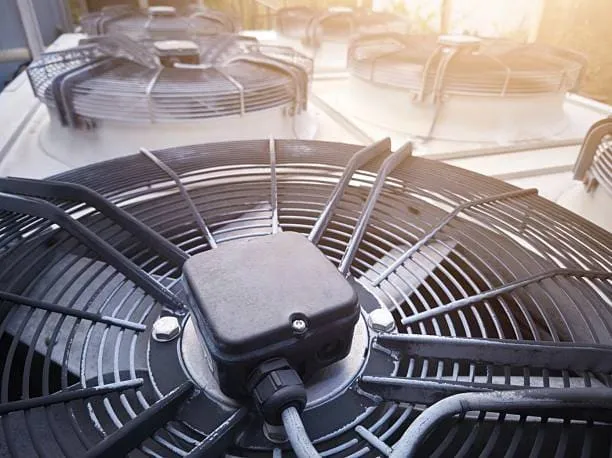
Industrial exhaust fans are engineered for harsh, high-demand workplaces—not for typical residential or office use. They’re built for continuous-duty operation and for maintaining reliable airflow in environments with high heat, humidity, and heavy dust loads.
Their real advantage is in the robustness of their components, designed to deliver stable performance in workshops, small factories, warehouses, engine rooms, and loading docks, where airborne contaminants increase, operating pressure rises, and systems often run for long hours.
What is the difference between industrial and light-duty fans?
Operating efficiency and continuous-duty performance
- Industrial ventilation fans: Built for continuous-duty operation with stable airflow and consistent performance over long run times.
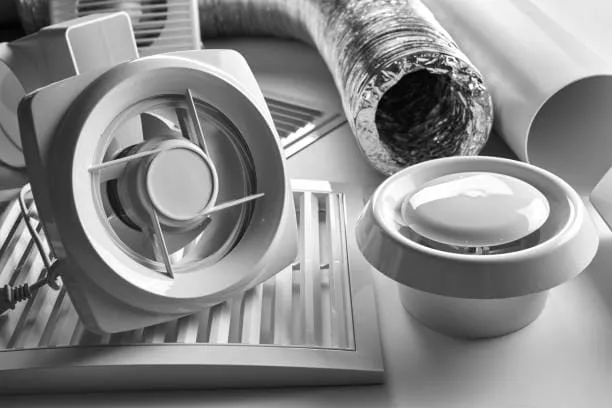
- Light-duty fans: Better suited to intermittent use and lighter loads in apartments or office spaces.
Resistance to heat, humidity, and dust
- Industrial: Typically use sturdier housings and protective finishes to withstand heat, humidity, and dust-laden air, helping maintain performance in harsher environments.
- Light-duty fans: Efficiency drops faster when exposed to high temperatures, humidity, or heavy dust, which can accelerate wear and airflow losses.
Air pressure and ventilation paths
- Industrial: Designed to handle higher static pressure, so they can maintain airflow through filters, long duct runs, bends, and high-resistance ventilation routes—where pressure losses are common.
- Light-duty fans: Airflow typically falls sharply once connected to complex ducted ventilation networks or when resistance increases.
Mechanical durability and installation quality
- Industrial: Often rely on higher-grade bearings, robust mounting bases, and vibration isolation to reduce mechanical vibration and noise during continuous operation.
- Light-duty fans: Limited vibration control and generally intended for simpler installations with lower mechanical demand.
Maintenance and service access
- Industrial: Needs a planned schedule for inspection and cleaning, with practical maintenance access for the motor and internal components to support uptime.
- Light-duty fans: Simpler mechanisms and often installed where frequent servicing isn’t expected.
Safety and operational requirements
- Industrial: Usually selected to meet stricter site safety requirements and continuous operating conditions; depending on the facility, the specification may require particular protections/enclosures.
- Light-duty fans: Intended for low-risk, cleaner environments and is not designed for demanding industrial conditions (and may be unsuitable where special safety ratings are required).
Also read: Centrifugal Fan: How They Work and How to Maximize Efficiency
When to use huge industrial exhaust fans for your facility?
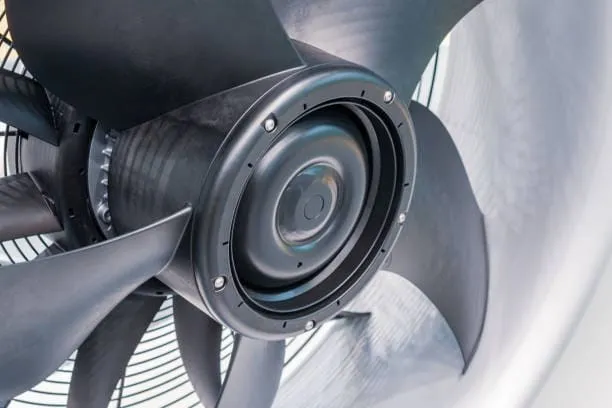
You already know that indoor air quality (IAQ) directly affects operational continuity, so watch for these warning signs:
- High contaminant load: Visible process dust or manufacturing fumes is a clear sign you need large industrial exhaust fans (or a dedicated industrial exhaust system) to protect workers.
- Rising indoor heat: Heat generated by machinery calls for immediate hot air extraction to reduce thermal stress and stabilize the space.
- Persistent odors: If odors linger after shutdown, that’s a ventilation deficit—and a strong indicator you need industrial air extraction rather than “basic ventilation.”
- Moisture buildup: High humidity can damage stored goods and promote mold; a properly designed warehouse ventilation and exhaust fan system helps control moisture.
- Chemical emissions: Paints, solvents, and battery-related fluids require source capture and exhaust design aligned with workplace safety practice (often via local exhaust ventilation – LEV).
- Health complaints: Frequent headaches, irritation, or shortness of breath can correlate with poor IAQ, meaning you need faster air renewal and better contaminant removal.
- Site expansion: Adding production lines or increasing storage density increases the ventilation load and demands higher, properly distributed airflow.
- Authority requirements: Safety, fire protection, or occupational inspections may require ventilation upgrades as part of compliance readiness.
At Cyberia, we want to highlight a critical design rule: industrial exhaust must be balanced with controlled outdoor make-up air to avoid common technical problems, including:
- Hot outdoor air infiltration through doors and gaps, which increases the cooling load and drives up energy demand.
- Disrupted airflow patterns inside the facility, pulling odors and dust toward clean areas and undermining air quality control.
That’s why the correct approach is to integrate air extraction with a precisely engineered make-up air route—not to rely on random exhaust alone.
With Cyberia, you get engineered industrial exhaust ventilation solutions backed by accurate make-up air calculations and full protection of pressure balance inside your facility. Request a technical site assessment today so our team can size the fans, define the right make-up air pathway, and help you implement confidently.
What are the different types of ventilation fans?
There are many types of industrial ventilation fans, but to make selection easier, Cyberia focuses on the most common options used across workshops, factories, warehouses, and commercial facilities—supplied from leading global brands based on your site conditions and performance requirements.
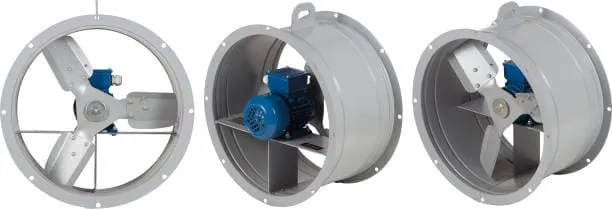
- Axial fans: High airflow for short, low-resistance paths. They are ideal for wall openings and spaces with minimal or no complex ductwork.
- Centrifugal fans: Best for long duct runs and systems with filters/bends—built to generate higher static pressure so airflow holds up when resistance increases.
- Roof mounted fans: Practical for pulling heat, fumes, and vapors upward—and they work best when designed with a proper discharge path and make-up air to avoid negative pressure issues.
- Wall-mounted exhaust fans: A straightforward, highly practical choice for direct installation—most effective when the extraction distance is short and the airflow path is planned properly.
- In-line duct fans: Installed inside the duct line to save space—well-suited to medium ducted networks, as long as maintenance access is considered from the start.
- Local exhaust ventilation (LEV): Captures contaminants at the source (dust, vapors, fumes) and is essential for concentrated emissions and hazardous chemical gases.
- Jet fans for car parks: Move and direct air inside parking areas without long ductwork, typically arranged based on the site layout and safety requirements
Also read: Bathroom Exhaust Fan: Silent & Concealed Types and the Best Installation Method
Top industrial ventilation fan options at Cyberia
Blauberg Axis-P Industrial Axial Fan
Delivering powerful airflow of up to 120,000 m³/h, the Blauberg Axis-P is a core choice for smoke extraction and fire safety ventilation in large buildings and workshops. Its coated housing helps resist corrosion, while adjustable blades support precise airflow control in ducted ventilation systems or open-roof installations.
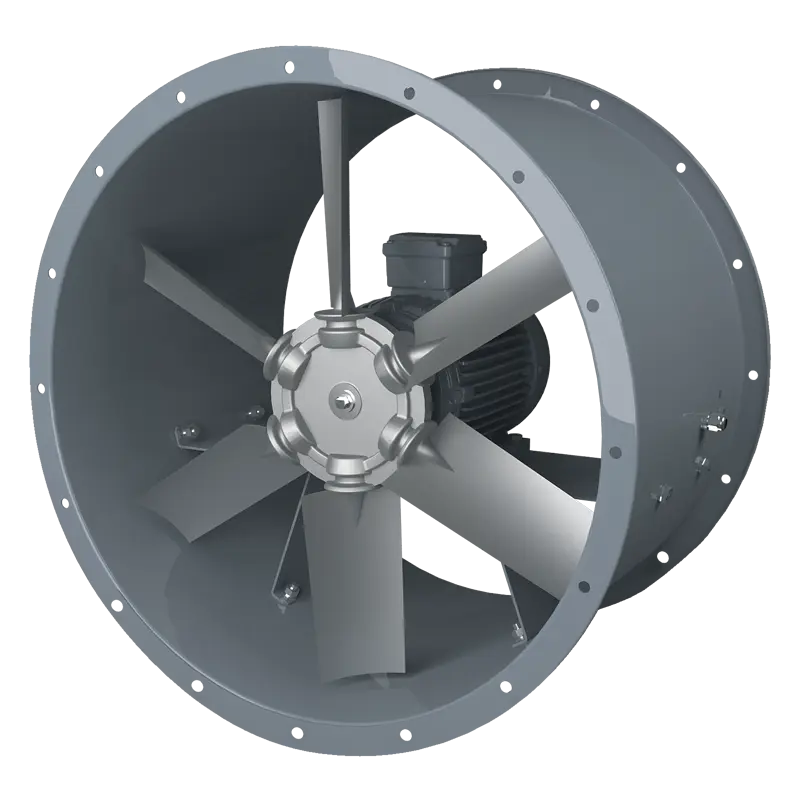
ALPA CEF-D Industrial Centrifugal Fan
Designed for central kitchens and demanding industrial sites, the ALPA CEF-D uses an electric motor built for heavy-duty operation under high heat and harsh regional conditions. It integrates smoothly with round or rectangular ducts and provides up to 1300 Pa static pressure—helping maintain performance through filters, elbows, and high-resistance ventilation paths.
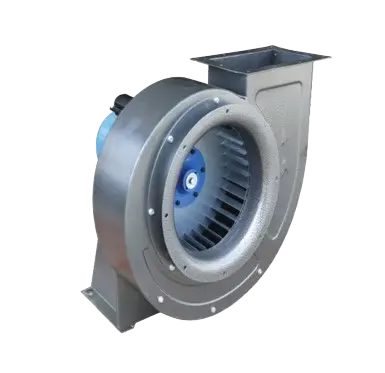
Blauberg S-VENT industrial centrifugal fan
The S-VENT combines a high-quality German motor with backward-curved blades for smoother airflow and noticeably quieter extraction while moving up to 19,000 m³/h. A polymer coating protects the casing from industrial humidity and corrosion, and its stable performance helps overcome long duct resistance and grease filtration loads commonly found in restaurants and workshops.
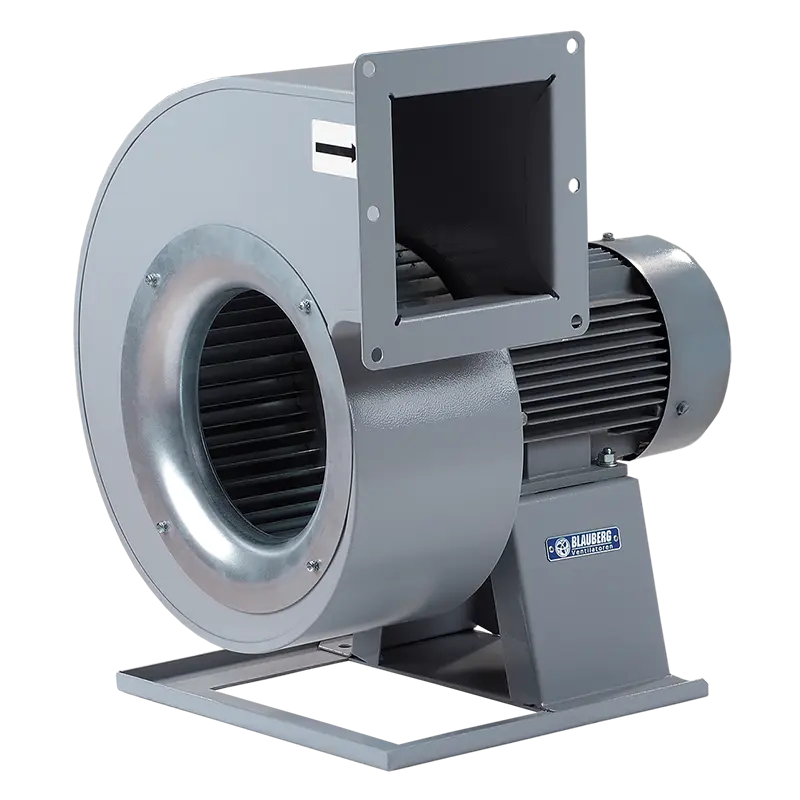
ALPA CEF-F Low-Noise Centrifugal Fan
A strong fit for warehouse ventilation and workshop extraction, the ALPA CEF-F delivers up to 7,215 m³/h while keeping sound levels low for better staff comfort. Its German motor supports flexible installation and easy servicing, with long-term operational reliability across varied duct connections and layouts—ideal when you need a low-noise industrial exhaust fan without compromising uptime.
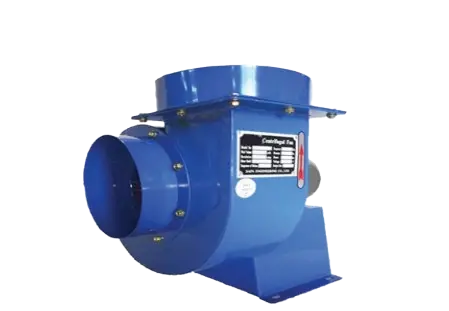
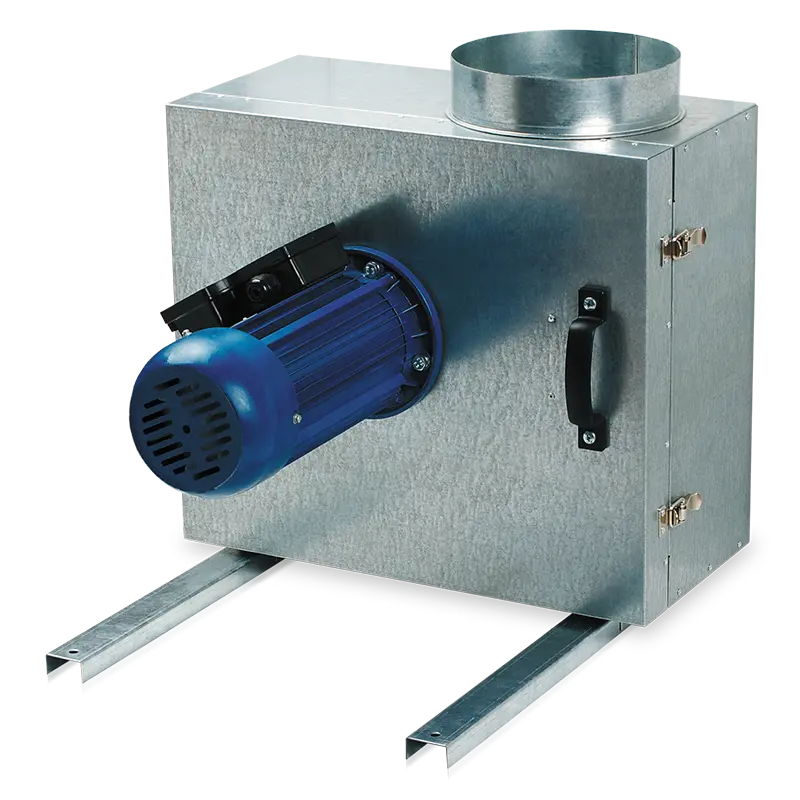
Blauberg ISO-K Sound-Insulated Centrifugal Fan
Built with an internal acoustic layer to reduce noise, the Blauberg ISO-K is well suited for hospitals and kitchens that need quiet extraction at up to 8,138 m³/h. Its metal housing tolerates challenging installation conditions and elevated temperatures, and it’s available with electrical specifications that fit residential, commercial, and professional use cases—making it a practical option when an acoustically insulated ventilation fan is required.
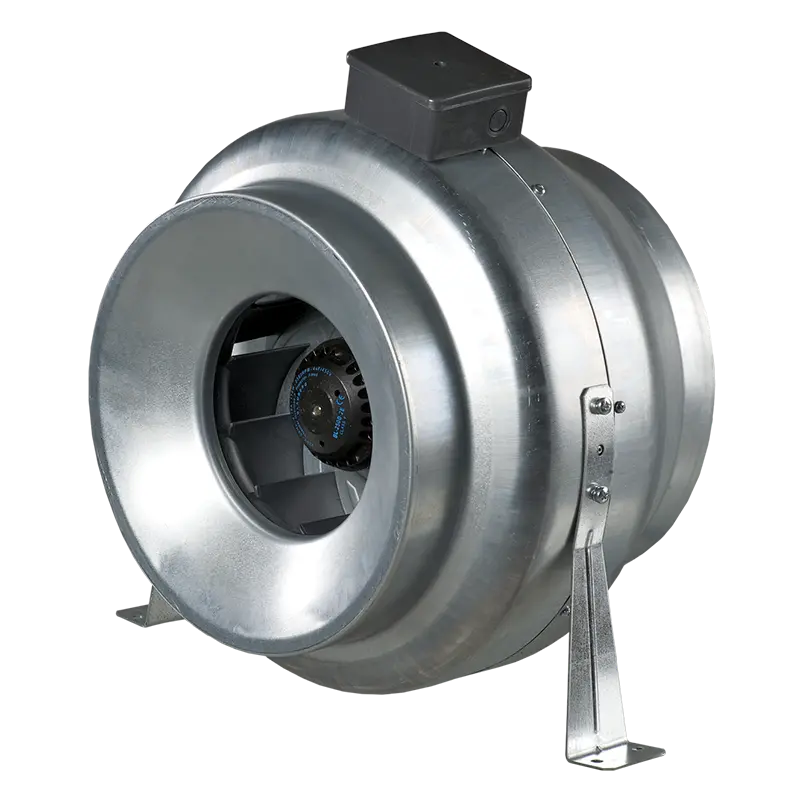
Blauberg Centro-MZ Round Turbo Fan
An efficient solution for ventilation in homes, swimming pools, and majlis spaces. The Centro-MZ is available in sizes from 4 to 12 inches to suit different room volumes. Its German motor supports efficient extraction of up to 1,450 m³/h, while the fan body maintains durability against weather variability and high heat over years of operation.
At Cyberia, we offer a wide range of durable German ventilation and industrial exhaust ventilation solutions designed to remove smoke, grease-laden air, and kitchen/workshop heat with strong pressure performance and quiet operation. Explore our advanced product range to choose the right industrial ventilation fan for your facility type and operating load.
Your guide to choosing an industrial large fan
Before selecting any large industrial exhaust fan, you need to understand air renewal (air exchange). Air renewal is the rate at which the air inside a warehouse is replaced with fresh outdoor air over a defined period—often expressed as Air Changes per Hour (ACH).
A higher ACH can solve heat, humidity, odors, and dust issuesو but only when the intake and exhaust path are engineered correctly, not left to chance.
Why do ventilation rates vary from one warehouse to another?
The right ventilation rate depends on your operation and the type of pollutants that must be removed from the workspace:
- General storage: Needs periodic air exchange to prevent stagnant air and lingering odors.
- Forklifts and material handling: Add heat and dust emissions—typically requiring stronger extraction and smarter air distribution.
- Industrial workshops: Generate fumes and dust—often requiring local exhaust ventilation (LEV) alongside general ventilation.
- Textiles and paper: Sensitive to humidity, so airflow routing must help prevent condensation and moisture damage.
To select warehouse ventilation fans, industrial roof exhaust fans, or a high-efficiency industrial exhaust system, follow these steps:
- Define the objective: Are you removing process heat, odors, dust, fumes, or targeting continuous-duty ventilation?
- Calculate the volume: Measure the true warehouse volume using net clear height, and account for racking/obstructions that affect airflow movement.
- Set the airflow target: Choose an appropriate ACH / air exchange rate based on use case, project code requirements, and safety constraints.
- Understand system resistance: Ductwork, filters, louvers, and grilles add resistance and reduce delivered airflow—so selection must be based on static pressure and the fan’s performance curve, not free-air numbers.
- Select the right fan type: Use axial fans for short, low-resistance paths; use centrifugal fans for long duct runs and higher static pressure applications.
- Distribute exhaust points: Multiple correctly placed fans often create better air movement than one oversized fan—especially in wide, racked spaces.
- Provide make-up air: Balance extraction with controlled make-up air (replacement air) to stabilize pressure, prevent pulling dust into clean zones, and avoid uncontrolled hot-air infiltration that increases cooling load.
- Controls and maintenance access: Add speed/control options where useful, and ensure service panels and cleaning access so the system maintains high extraction performance over time.
Benefits of large exhaust fans in large and open workplaces
To improve workplace conditions and operational efficiency, large industrial exhaust fans and properly designed air extraction systems can deliver real, practical gains:
- Faster air exchange: Increases the air change rate (ACH) so heat and odors are removed more quickly.
- Stronger contaminant removal: Helps reduce the buildup of dust, fumes, and airborne pollutants away from work zones—supporting cleaner indoor air.
- Lower heat stress: Extracts trapped hot air and improves perceived comfort by reducing hot-air accumulation.
- Pressure balance (when designed correctly): Prevents indoor air “bottling up” and supports stable airflow when adequate make-up air is provided.
- Better airflow distribution: Strengthens overall air movement when exhaust points are positioned strategically based on the layout.
- Improved safety: Reduces contaminant concentration and helps lower the risk of respiratory irritation in workshop environments.
- Equipment protection: Lowers operating temperatures around machinery, which can reduce heat-related wear and unexpected downtime over time.
- Operational flexibility: Supports speed control so extraction can be adjusted to match load, occupancy, and working hours.
LEV vs general ventilation: When to choose each one?
Local exhaust ventilation
Local exhaust ventilation (LEV) works by capturing the contaminant at its point of generation—before it disperses into the workspace air. You typically need LEV when:
- The problem is tied to a single production point, such as welding fumes, paint or solvent vapors, machine-generated dust, engine/exhaust emissions, or strong process odors.
- Contamination spreads immediately once work starts, or technicians near the source are affected first (direct exposure in the breathing zone).
- You can literally see a “cloud” of fumes above a specific task—even if the overall area is large (warehouse/workshop).
General ventilation
The purpose of general ventilation is to replace and circulate air across the entire facility to reduce stagnant air and heat buildup. It fits best when:
- There is no single identifiable contaminant source, but you’re dealing with trapped heat, humidity, or light, general odors.
- You want to improve workplace comfort by reducing CO₂ buildup and general indoor odors through overall air exchange.
- Contamination levels are low or spread across multiple points, making it impractical to extract from one capture location.
How duct design and static pressure affect exhaust performance
When extraction feels weak after installation, the cause is often simple: the ductwork and central ventilation layout are creating more system resistance than expected. The key concept that explains this is static pressure.
What is static pressure?
Static pressure is the resistance inside the airflow path that a fan must overcome to move air all the way to the discharge point. In industrial ventilation fans and any industrial exhaust fan installed on ductwork, static pressure is often the real reason performance drops after installation.
Here’s how static pressure affects extraction and airflow in practice:
- Long duct runs and too many elbows weaken extraction: The longer the route and the more bends it has, the lower the delivered airflow becomes—even if the fan motor speed stays the same on site.
- Wrong duct sizing hurts both noise and performance:
- Undersized ducts increase velocity, raise noise, and consume pressure quickly.
- Oversized ducts can reduce air velocity, disrupt distribution, and weaken overall ventilation balance.
- Filters and dense grilles increase resistance: Filters, screens, and restrictive grilles raise the required static pressure and can push the ventilation system outside its efficient operating range much faster than expected.
- Air leaks waste pressure before air reaches the outlet: Gaps at joints and connections bleed pressure, so you see weak extraction even when the fan is mechanically running perfectly.
- Turbulent inlet airflow causes vibration and lowers real airflow: Disturbed air at the fan inlet can trigger mechanical vibration and reduce actual airflow below the values shown in catalog specs.
- Higher static pressure shifts the operating point: As pressure rises, the fan moves to a different point on the fan curve—capacity drops, motor temperature increases, and internal wear accelerates over time.
- Branch imbalance starves distant zones: Near branches can “steal” more air while far branches choke—unless the system is properly sized and balanced with accurate adjustments, regardless of fan motor power.
The right approach: simplify the duct path, seal connections tightly to reduce pressure losses, then select an industrial ventilation fan that covers both required airflow (m³/h) and static pressure (Pa) with a properly engineered safety margin.
At Cyberia, we assess duct routes with engineering precision and treat static pressure losses to raise extraction efficiency and achieve smoother, quieter airflow and more consistent cooling distribution. Contact our team for a site inspection of your ventilation network and unlock the full performance of your fan system.
Also read: Restaurant Exhaust Fans: Commercial Kitchen Extraction Design Essentials
How to choose a qualified HVAC & ventilation contractor in Kuwait
Working with industrial ventilation equipment is not a “standard install.” It directly affects uptime, energy performance, and failure risk—so choosing the right contractor (and the right supply source) carries real responsibility. Cyberia recommends focusing on the following selection criteria when you’re looking for a certified ventilation contractor in Kuwait:
- A written agreement: A clear contract that defines supply, installation, inspection, testing, and handover with detailed, enforceable clauses.
- Approved designs and drawings: Engineer-approved shop drawings and accurate duct routing plans before purchasing—so the system is built to a verified design, not guesswork.
- Clear specifications: Transparent documentation for ductwork gauge, insulation, accessories, dampers, louvers, and quality certificates when requested.
- Qualified installation crew: A specialized HVAC/ventilation team with an on-site supervisor and a complete HSE (health & safety) plan.
- Installation QA/QC checklists: Formal pre-start checklists covering duct sealing, insulation, supports/hangers, vibration isolation, and readiness before running the fans.
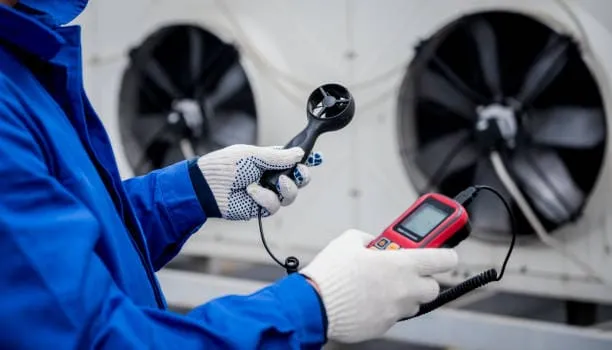
- Performance testing with documented results: Measurement of airflow (m³/h), static pressure (Pa), noise, and vibration, recorded in a formal commissioning / TAB report. (Testing, Adjusting & Balancing is commonly referred to as TAB.)
- Air balancing: Correct adjustment of diffusers/grilles and branch balancing to achieve acceptable air movement and comfort across the facility—especially in ducted systems.
- Complete handover: System start-up, basic operator training, delivery of O&M manuals, warranty documents, and a practical preventive maintenance plan.
Why is Cyberia your trusted partner for industrial ventilation projects in Kuwait?
With over 20 years of experience, Cyberia is a trusted choice for industrial ventilation services in Kuwait, combining robust mechanical performance with engineering designs built to handle high operating temperatures.
We deliver practical solutions that support efficient air exchange in large facilities and factories—helping reduce humidity, improve indoor air quality (IAQ), and create a safer, healthier work environment.
Backed by an experienced technical team, Cyberia helps ensure dependable, long-term performance that can reduce operating disruption, unexpected failures, and avoidable downtime.
Cyberia provides end-to-end services, including:
- Supply and installation of high-capacity industrial ventilation fans.
- Design of industrial exhaust and air extraction systems tailored to your facility size and operating load.
- Precise preventive maintenance to keep motors and systems performing efficiently over time.
- Advanced solutions for noise reduction and vibration control to improve comfort and system stability.
- Specialized technical consulting to optimize indoor air quality (IAQ) and ventilation performance.
With two decades of hands-on experience, Cyberia delivers powerful extraction systems engineered to withstand Kuwait’s heat, while renewing your facility’s air with quiet, continuous performance. Request a technical consultation today to design a complete industrial ventilation system for your large space.
FAQ about Industrial ventilation fans
Is one large exhaust fan enough to ventilate a whole warehouse?
It depends on the warehouse layout, the airflow path, and whether you have properly designed make-up air. In many cases, distributing multiple extraction points—or combining exhaust and supply ventilation—delivers better air movement and more stable performance than relying on a single oversized fan.
When should I choose a centrifugal fan over an axial fan in a factory?
Axial fans are typically best for direct discharge and general air exchange with low resistance. Centrifugal fans are better suited to longer duct runs and higher-resistance systems where static pressure is higher. The final decision should be based on your duct layout and the manufacturer’s fan performance curve, not just airflow numbers in free air.
How do I avoid sizing mistakes when buying warehouse ventilation fans?
Start by defining your operation type, the facility volume, and key loads such as humidity and process heat. Then match the fan type to your ductwork design and make-up air strategy. Only after that should you select the size—based on documented calculations, verified performance data, or an on-site assessment.
Does Kuwait’s climate and dust affect fan selection?
Yes. Kuwait’s heat, humidity swings, and dust can increase risks of corrosion, condensation, and faster wear, especially if materials, protective coatings, filtration strategy, and maintenance access aren’t considered. Choosing the right build quality and planning for easy cleaning and preventive maintenance helps protect service life and performance.