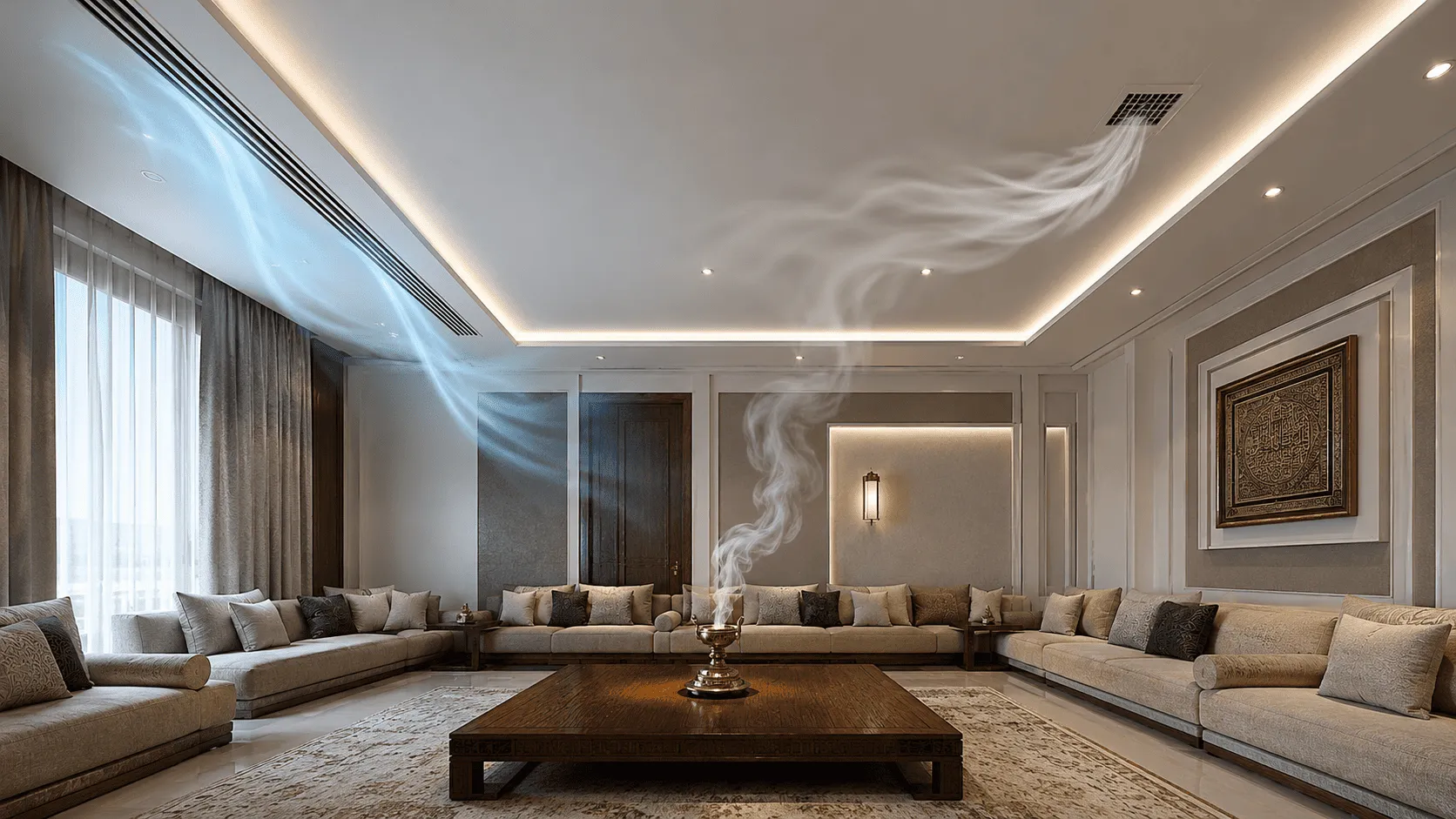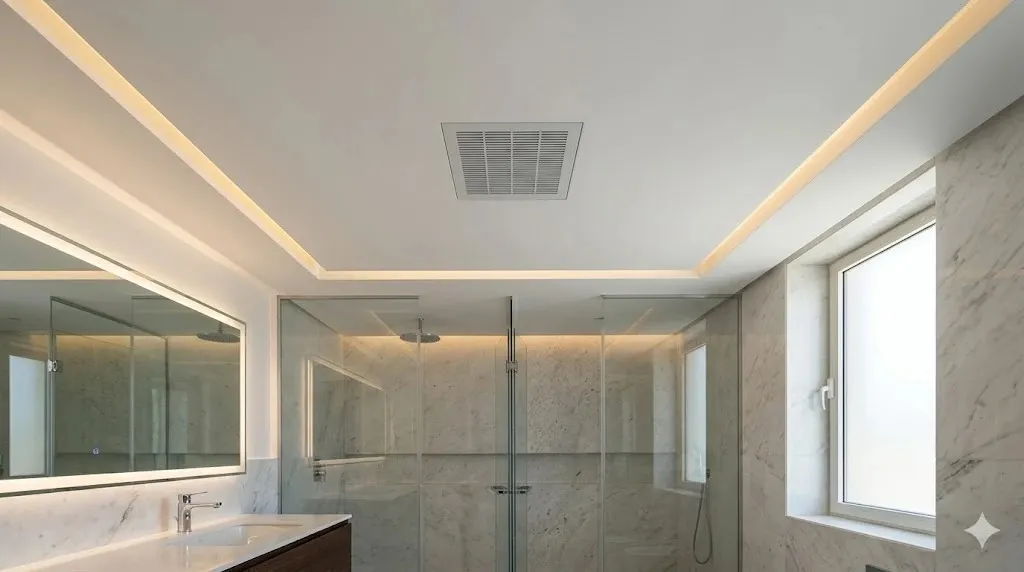
In Kuwait, modern homes need mechanical ventilation solutions that support indoor air quality and withstand harsh weather conditions without repeated failures. Planning extraction points in advance helps prevent odor return and ensures efficient performance with lower energy consumption.
Central home ventilation may be the best solution, but how does it work? At Cyberia, we explain the key details through the following points:
- What central home ventilation means and how extraction and discharge work.
- How to choose silent fans and distribute extraction points.
- Ventilation strategies for closed rooms and duct design rules.
- How to evaluate ventilation companies and technical quotations.
Cyberia’s systems treat stagnant air inside bedrooms and living areas intelligently. Send your home plan now, and our team will help design hidden and quiet extraction routes.
What Is Central Home Ventilation, and How Is It Different from Air Conditioning?
Central home ventilation is a system that extracts air loaded with humidity or odors from specific areas, such as bathrooms, kitchens, laundry rooms, and storage rooms, then transfers it through dedicated ducts to the outside.
The purpose is to renew indoor air and discharge steam and unpleasant odors away from the rooms.
Air conditioning, on the other hand, controls temperature, cools the space, and provides thermal comfort. However, it does not solve bathroom odors, shower steam, or stagnant air in rooms without windows.
The main difference is simple:
- Air conditioning cools the air inside rooms.
- Ventilation removes polluted air and allows fresh replacement air to enter.
Central home ventilation becomes especially important in areas that generate steam or odors, including:
- Bathrooms.
- Main kitchens.
- Laundry rooms.
- Closed storage rooms.
- Rooms and corridors without windows.
Cyberia’s expertise helps discharge odors away from the cooling system completely. Request a technical review of extraction points to ensure continuous air renewal.
Read more: Laboratory and Pharmacy Ventilation in Kuwait: Engineering Guide for Airflow and Pressure Control
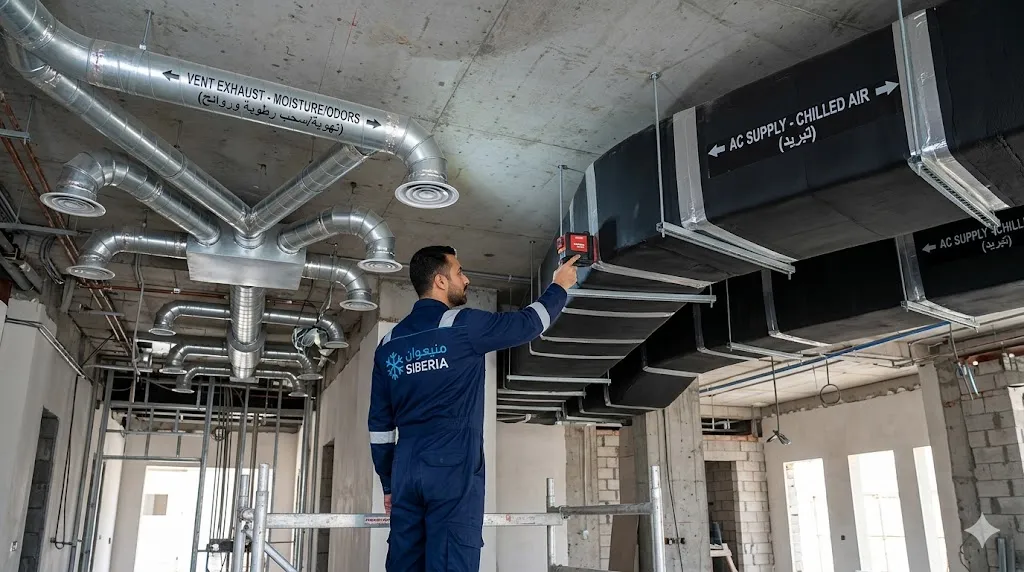
When Does Central Home Ventilation Become Necessary in Kuwait’s Climate?
Kuwait’s climate makes central home ventilation necessary when you notice signs that cooling alone cannot treat stagnant air.
The most important signs include:
Humidity Buildup
If shower steam remains inside the bathroom after use, or water droplets appear on mirrors and ceilings, this indicates weak extraction.
Lingering Odors
If bathroom, kitchen, or laundry odors remain inside the home for long periods, the air discharge system is not working properly.
Rooms Without Windows
Internal rooms, storage areas, and bathrooms facing shafts require accurate ventilation because they do not receive natural airflow continuously.
Heavy or Stuffy Air
Cooling the air does not mean purifying it. Recirculating the same air inside rooms can create a feeling of suffocation or discomfort.
Multiple Extraction Points
When a home has several bathrooms, laundry rooms, and preparation kitchens, individual exhaust fans may become noisy and insufficient for the whole house.
Pre-Finishing Stage
The period before installing false ceilings is the best time to set up the system because duct routes can be planned more easily.
How Central Home Ventilation Systems Work
A central home ventilation system moves unwanted air from the source to the outside. The process works in the following sequence.
1. Extraction Grille
The process begins at the extraction grille, which is placed as close as possible to the source of humidity or odor, such as the bathroom ceiling or storage room.
The grille location is important. If it is far from the source of the problem, extraction becomes weak, even if the fan itself is excellent.
2. Duct Route
After extraction, air moves through the duct. The route must be clear, sealed, and as short as possible.
Too many elbows or leaks in the connections can cause weak extraction, disturbing noise, or odor return. The duct route determines how much of the fan’s power actually reaches the extraction point.
3. Extraction Fan
The fan pushes air through the route until it reaches the outside.
A ventilation system may use an independent fan for each point or a central fan serving multiple points, depending on the design. Fan selection depends on the total duct length and the required quietness level inside the home.
4. Backdraft Damper
A backdraft damper prevents air or odors from returning from outside when the fan stops operating.
It is essential when the discharge outlet is exposed to outdoor air or located near areas that may allow unwanted odors to return indoors.
5. Make-Up Air
When the system extracts air from the room, replacement air must enter from a suitable location.
Without make-up air, the fan may pull air from under doors or through gaps, which can move odors instead of removing them. Air movement should always flow from the cleaner area toward the extraction area.
6. Discharge Point
The discharge point is the final outlet. Air must be discharged directly outdoors, not into the false ceiling.
The discharge location should also be away from windows to prevent exhausted air or odors from returning into the home.
Also Read: Majlis Ventilation in Kuwait: Odor Extraction and Duct Setup
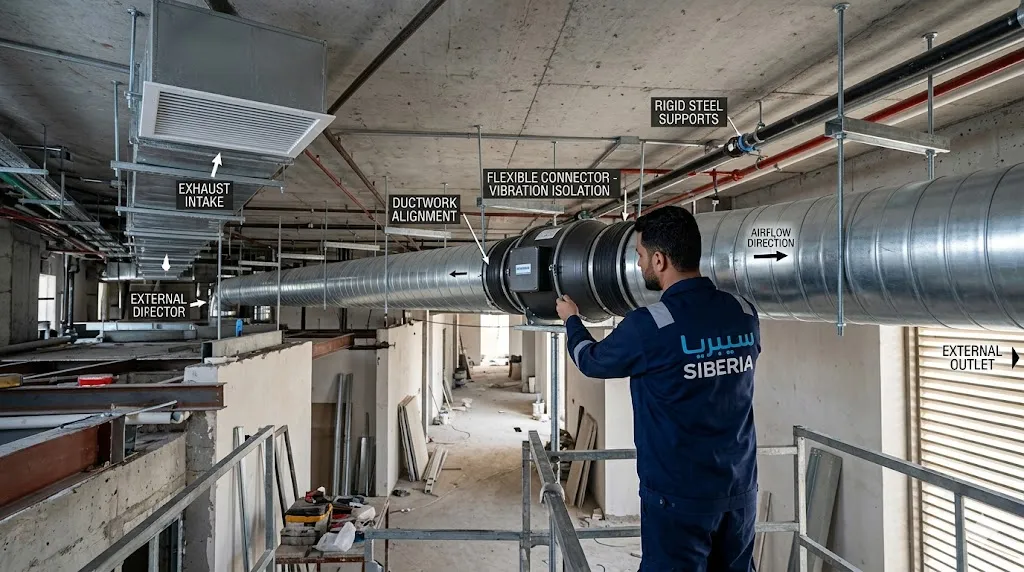
Types of Central Exhaust Fans Best Suited for Quiet Homes in Kuwait
Because of humidity, year-round dependence on air conditioning, and closed windows, homes in Kuwait need solutions that renew air effectively.
These solutions include several fan types.
Standard Ceiling Exhaust Fan
This option suits small bathrooms with a short and direct outdoor discharge route.
It is simple and easy to install, but it may become noisy if placed near bedrooms or connected to long duct routes.
Traditional Wall-Mounted Exhaust Fan
This is a practical option when an external wall is available and air can exit directly without internal ductwork.
However, it does not serve internal locations far from exterior walls, and it does not provide the same clean appearance or quiet performance as concealed systems.
Concealed Duct Fan
This fan is installed inside the duct route, away from sight, to extract steam and odors from internal rooms and push them outside.
It is preferred in premium homes because it provides a cleaner interior appearance with lower noise levels.
Multi-Point Central Fan
This fan serves several nearby extraction points, such as adjacent bathrooms or laundry rooms, based on a planned design.
Its success depends on balanced distribution of extraction power through the duct network.
Sound-Insulated Box Fan
This option is designed for long duct routes and large villas that require strong extraction with quiet operation.
The insulated metal box reduces motor noise reaching the rooms, provided that there is enough installation space and a maintenance access point.
The biggest mistake is choosing a very powerful ventilation fan without studying the duct route. Excessive power with a narrow route or small opening may create disturbing noise without improving ventilation.
Air should also never be discharged into the false ceiling, because this moves humidity and odors into a hidden space.
At Cyberia, we provide central box ventilation fans that reduce vibration transfer into rooms. Choose the fan type that matches your home’s required extraction power.
Check: Best Bathroom Exhaust Fan in Kuwait: Size Selection and Silent Ventilation Guide
Best Central Home Ventilation Fans in Kuwait from Cyberia
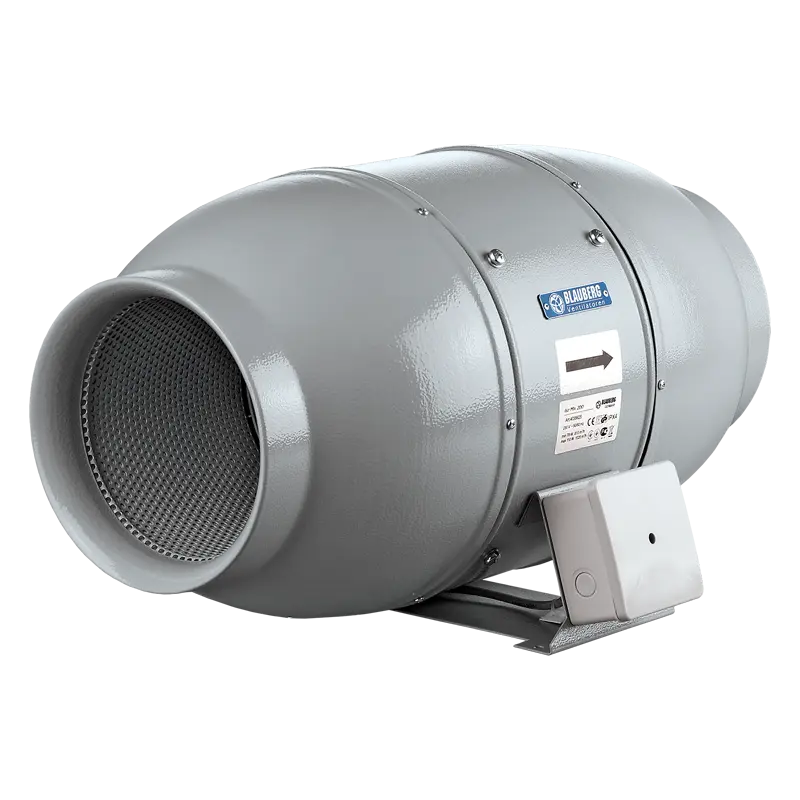
Blauberg ISO MIX Sound-Insulated Fan
Blauberg ISO MIX is an excellent choice for homes that require quiet operation in majlis areas, rooms, offices, and service spaces.
It features a sound-insulated circular design that hides the noise source inside the duct, making it ideal for areas close to bedrooms or family seating spaces.
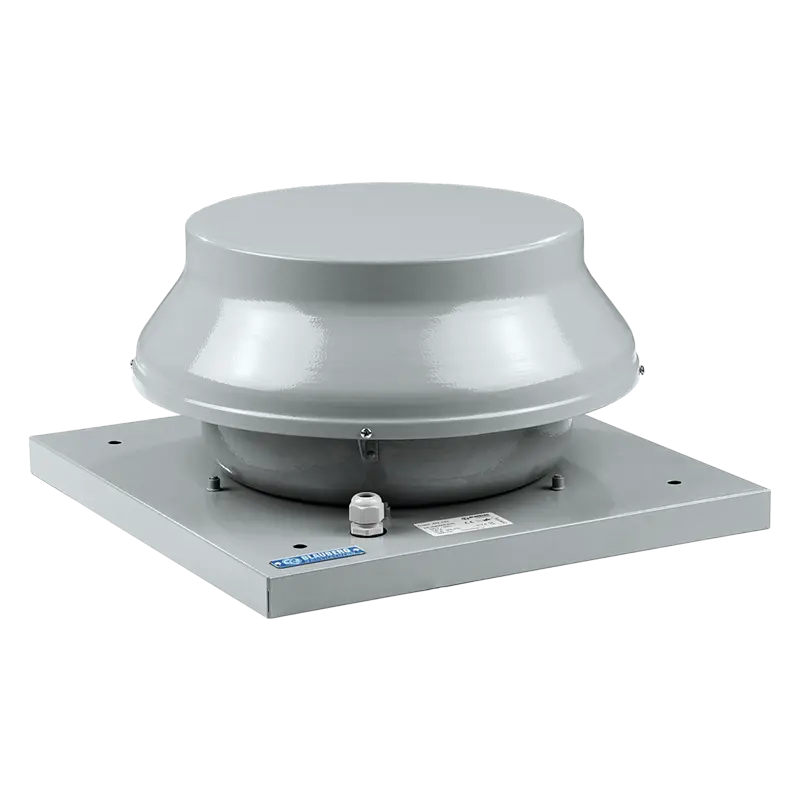
Blauberg Tower AM Roof Fan
Blauberg Tower AM is used when the best solution is installing the exhaust unit on the roof to serve a kitchen or several ventilation points.
This type moves the sound source away from interior spaces, reducing noise transfer while providing strong performance in villas that allow external rooftop installation.
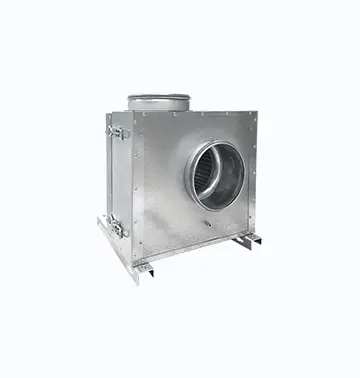
ALPA KVF Centrifugal Fan
ALPA KVF is a highly effective solution for heavy kitchens, basements, and villas that include a preparation kitchen requiring intensive extraction.
It handles long routes and high resistance caused by filters efficiently, providing strong extraction with sound insulation that reduces operating noise.
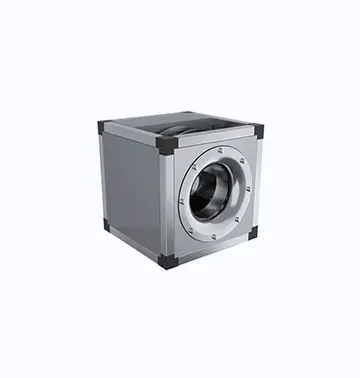
ALPA CF-BOX Sound-Insulated Box Fan
ALPA CF-BOX is ideal for large villas and outdoor kitchens that require extraction capacities far beyond standard home exhaust fans.
Its box design contains motor noise effectively, providing central home ventilation that combines strong performance and quiet operation in environments that use grease filters.
Suitable Sizes and Distribution of Extraction and Discharge Points Inside the Home
There are no fixed numbers that apply to every home. The requirement depends on each area.
A bathroom needs humidity extraction, a laundry room needs stale air removal, and a storage room needs protection from odor stagnation.
Small Spaces
These include single bathrooms or simple storage rooms with a short and direct outdoor discharge route.
They require medium-capacity extraction fans that renew air effectively and quickly while maintaining quiet operation.
Medium Spaces
These include large bathrooms, laundry rooms, or a combination of several nearby extraction points connected to one organized duct network.
This design requires fans with higher pressure capacity to overcome air resistance inside the ducts and deliver extraction power to all points.
Complex Routes
These apply to homes with multiple wings or long duct routes with many bends that naturally reduce airflow.
In this case, concealed duct fans or insulated box fans are preferred because they provide high extraction power without transferring motor noise into rooms.
Extraction Grille Locations
Extraction grilles are usually placed as close as possible to the source of steam or odor so they capture it before it spreads into the rest of the rooms.
The design should also keep grilles away from direct sleeping or seating areas to avoid cold drafts or sounds that may disturb occupants.
Discharge Points
The air outlet must be directed outdoors in a location where odors can disperse away from windows or AC air intakes.
The discharge point should also be accessible for cleaning and protected from blockage caused by dust or birds.
False Ceiling Risks
Discharging humid air above the false ceiling is a serious construction mistake. It can cause condensation, mold growth, and damage to gypsum and decorative finishes.
Protecting the building from humidity above the ceiling depends on a proper central home ventilation system that moves polluted air completely outdoors.
Read more: Best Bathroom Ceiling Exhaust Fan in Kuwait: Size and Installation Guide
Practical Solutions for Ventilating Rooms Without Windows
Rooms without windows, such as dressing rooms, storage rooms, and internal bathrooms, require central home ventilation that balances extraction and make-up air to prevent negative pressure that weakens fan performance.
This is done by:
- Providing a direct outdoor discharge point to remove steam and odors away from the interior spaces.
- Providing suitable make-up air openings to replace the extracted air and improve extraction efficiency.
- Choosing a ventilation fan capacity that matches the room size and duct length.
- Insulating duct routes properly to prevent condensation and protect the room from humidity and stagnant odors.
- Avoiding air discharge inside the false ceiling to prevent mold growth and protect finishes.
- Installing extraction grilles in strategic locations that support smooth airflow across the entire closed room.
Provide Cyberia’s team with room details, clear photos of the door, ceiling, and nearest external wall. We will suggest an executable ventilation route that solves the issue from the source with a proper engineering approach and reasonable cost.
Duct Engineering Rules to Avoid Humidity and Air Noise
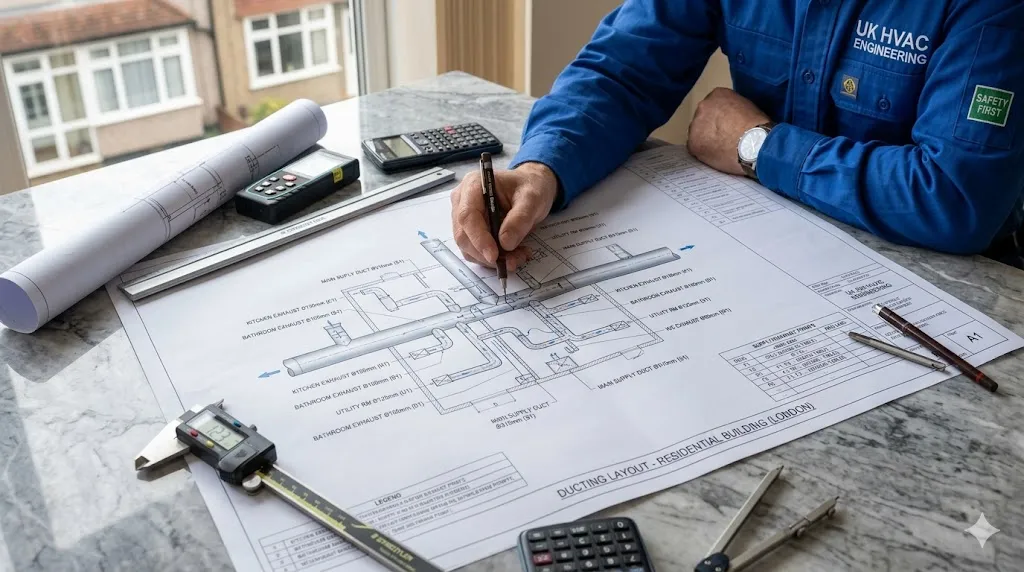
The duct route is the main artery of a central home ventilation system.
Most weak extraction and noise problems come from design mistakes, not from fan failure. For this reason, the work team must follow several rules during execution.
Shorten the Route Length
A shorter route reduces air friction against duct walls, allowing the fan to operate with less effort and quieter sound.
This also ensures that extraction power reaches the grille instead of being lost through long duct extensions.
Reduce the Number of Bends
Too many elbows disturb airflow and increase noise and whistling.
Straight routes should be used whenever possible. When bends are necessary, wide bends should be selected to allow air to pass with minimal resistance.
Seal All Connections
Any leakage in duct connections weakens extraction and may accumulate dust or odors above the false ceiling.
High-quality fixing materials and sealing tape should be used to isolate the duct route from the surrounding area and prevent odors from returning indoors.
Apply Thermal Insulation to Ducts
Good insulation prevents condensation caused by the temperature difference between exhausted air and the surrounding area above the ceiling.
This protects the home from moisture stains, mold, and gypsum decoration damage, which are common problems in humid areas.
Fix Supports Properly
Weak supports cause duct vibration when the fan operates, creating clicking or rattling sounds that travel through ceilings.
Strong supports should be selected and distributed regularly to stabilize the route and prevent vibrations that affect occupant comfort.
Provide Maintenance Access
An access opening near the fan and inspection points is necessary for monitoring and cleaning the system.
These access points make it possible to fix problems without breaking ceilings and help keep the air route clean and free from obstacles that may cause future noise.
Cyberia’s duct insulation practices help protect your home from condensation damage. Inspect your ventilation routes with our technical team before closing gypsum ceiling works.
How to Compare Central Home Ventilation Company Quotations in Kuwait
A low price does not always reflect the required quality. Real value lies in component details and installation quality.
When choosing a central home ventilation company, pay attention to the following:
- The number of air extraction points and the external discharge locations shown in the plan.
- The approved ventilation fan model and exact installation location for maintenance access.
- Whether the quotation includes ductwork, thermal insulation, and fixing supports.
- Availability of backdraft dampers to prevent odors and steam from returning from outside.
- Exact location of the outdoor discharge point and its effect on neighboring areas.
- Organized maintenance openings for motor inspection and filter cleaning.
- A real operating test and extraction performance check before handover.
- Clear cost policy if duct routes change or the number of bends increases.
To receive an accurate technical quotation from a central home ventilation company, provide:
- Building type and number of bathrooms, kitchens, and laundry rooms.
- Details about how to ventilate rooms without windows or storage areas that need special attention.
- Photos showing the false ceiling condition and the nearest external walls available for discharge.
- The architectural plan of the home with the plot location inside Kuwait.
Cyberia’s advice is clear: always request fan sizing based on real photos or approved technical drawings. Quotation accuracy depends on actual site conditions, duct routes, and execution details.
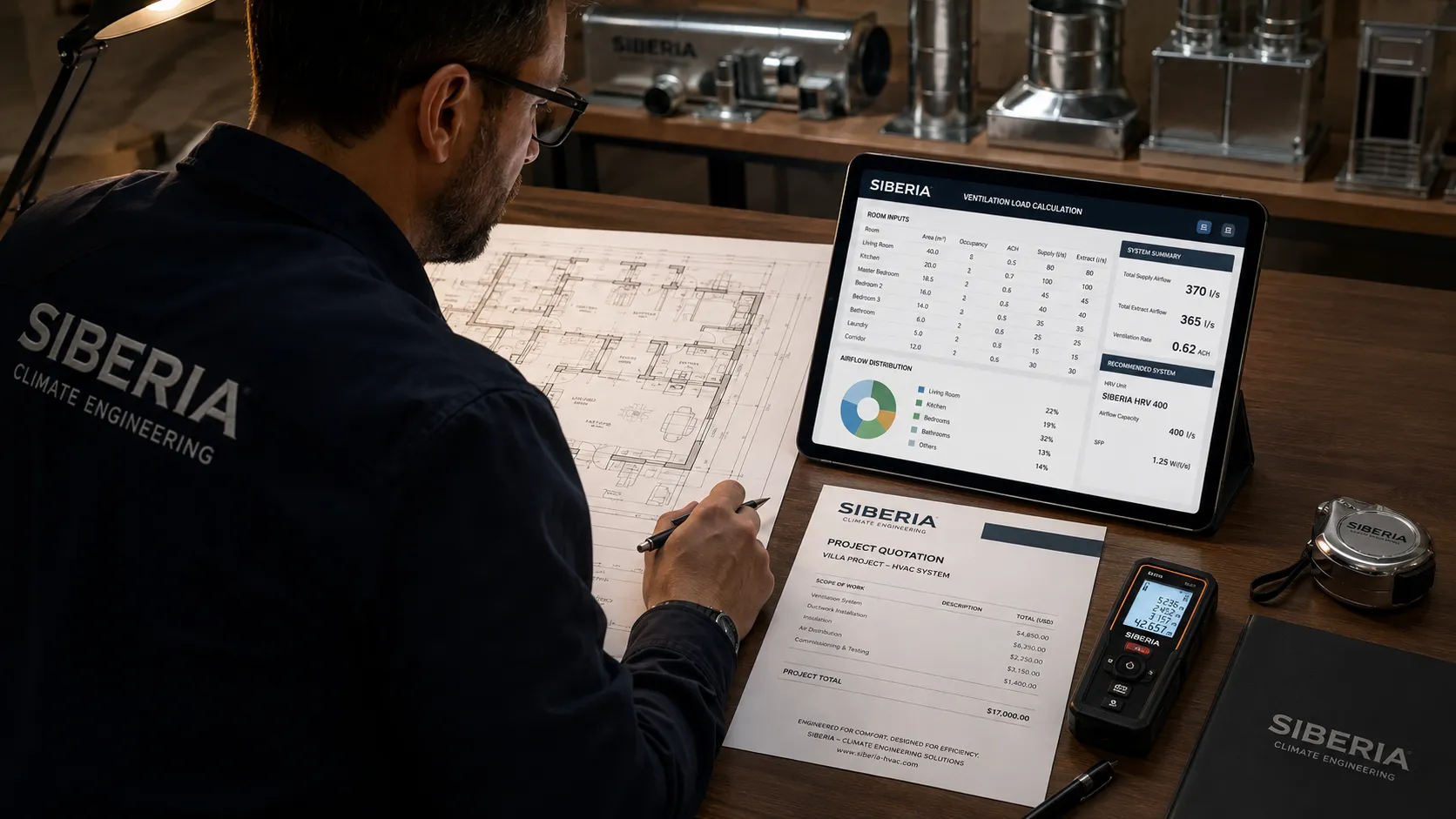
Cyberia: Engineering Expertise in Central Home Ventilation Systems in Kuwait
Cyberia is a specialized provider of integrated ventilation and air conditioning solutions for homes, restaurants, and industrial facilities in Kuwait.
Our work focuses on understanding the exact residential requirement and supplying duct accessories and exhaust fans for contractors and project owners according to approved technical standards.
Our execution process follows organized steps that ensure system efficiency and long-term reliability:
- Diagnosing your actual need through careful review of site photos or engineering drawings.
- Recommending the suitable ventilation fan model and designing the most effective and quiet duct route.
- Installing or supplying the required equipment according to approved technical specifications for your home.
- Conducting a full operating test to confirm smooth extraction and proper outdoor discharge.
- Providing technical recommendations for periodic maintenance and ideal operation practices.
Our services cover ventilation projects across all Kuwait governorates. You can coordinate with us for site inspections in Capital, Hawalli, Farwaniya, Ahmadi, Jahra, and Mubarak Al-Kabeer.
Quotation accuracy depends on explaining how to ventilate a room without windows or the size of areas that require central extraction, so we can offer balanced technical solutions that fit your budget.
You can request a technical consultation through our official contact page, where you will find direct phone numbers and email details.
FAQs About Central Home Ventilation for Homes and Villas in Kuwait
Does Central home Ventilation Increase Dust or Outdoor Odors?
This can happen if discharge points or sealing are not suitable.
The solution is to improve sealing, choose the correct outdoor discharge location, and add suitable filtration or protection when needed, with regular maintenance.
Does Running a Central home Ventilation System Increase Electricity Bills?
Energy consumption is directly related to design quality.
Wrong routes or blockages force motors to work harder. Using modern energy-efficient fans and smooth duct routes ensures effective extraction at a lower operating cost.
Can Central Exhaust Ventilation Be Installed After Finishing Without Major Breaking?
Sometimes yes, through hidden routes in secondary ceilings or service rooms.
The decision depends on site inspection because some homes do not allow a suitable route without modifying gypsum or decorative finishes.
How Can I Prevent Insects or Odors from Entering Through Outdoor Discharge Openings?
Choose a discharge location away from odor sources, use suitable external protection, improve sealing, and inspect the openings periodically, especially during summer and dusty weather.