

From an HVAC engineering perspective, a concealed exhaust fan is an investment in the life of the building. In a high-humidity environment like Kuwait, protecting gypsum ceilings and paint finishes depends heavily on duct quality and a proper outdoor discharge point that prevents odor return.
In this Cyberia guide, we explain concealed exhaust fans and cover:
- What concealed exhaust fans are and why you should plan them before finishing.
- The technical difference between a fan installed inside gypsum ceilings and an inline duct fan.
- Engineering criteria for choosing the right size and matching it with the discharge opening.
- Odor backflow solutions and how to inspect the system after installation.
Cyberia is a trusted name in equipping homes in Kuwait with powerful ceiling-hidden extraction systems. Request a free technical consultation for your site today.
Concealed Exhaust Fans and Why You Should Choose Them Before Finishing
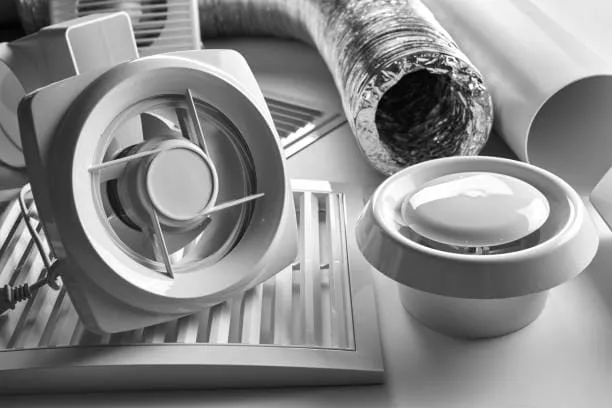
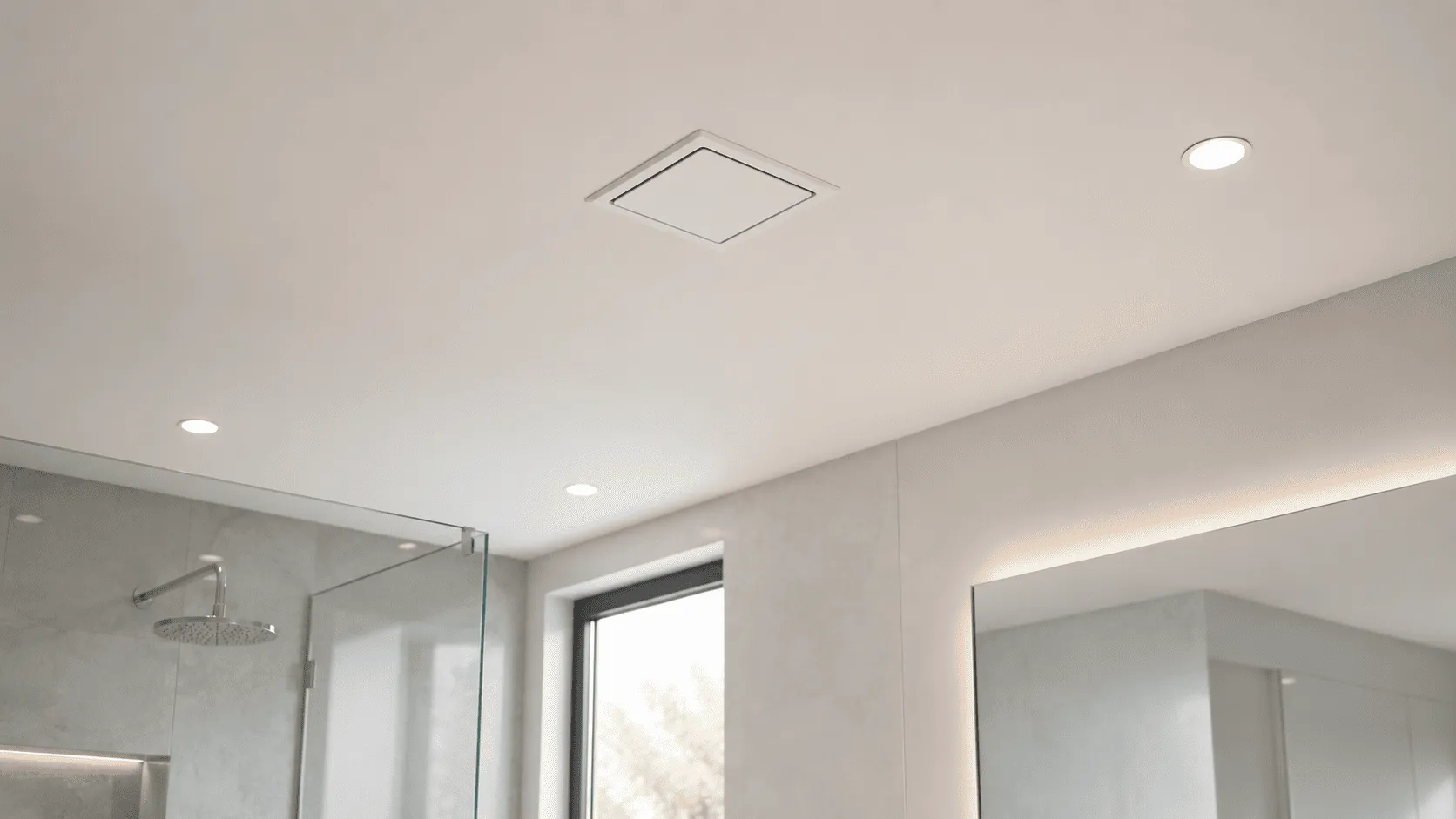
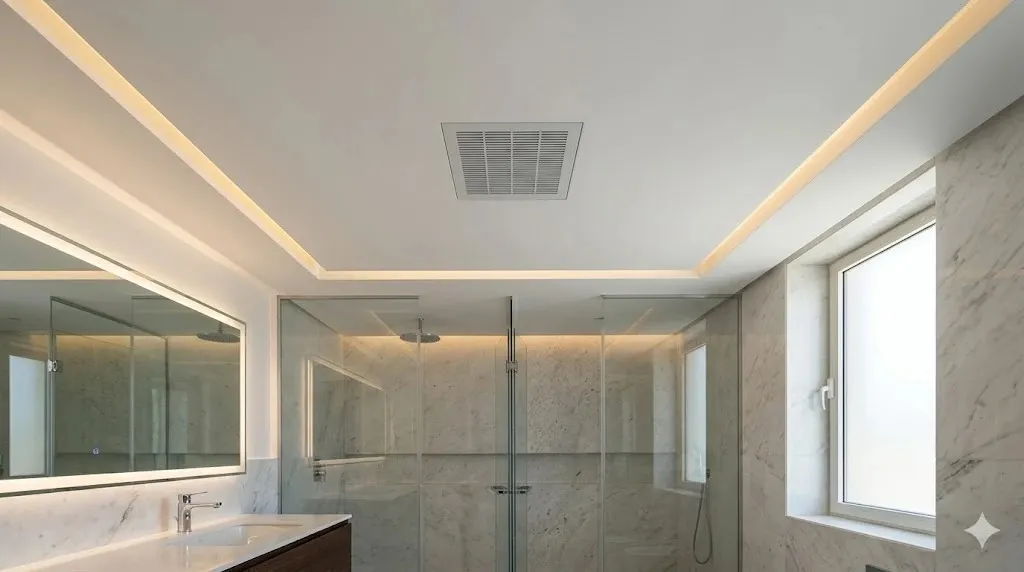
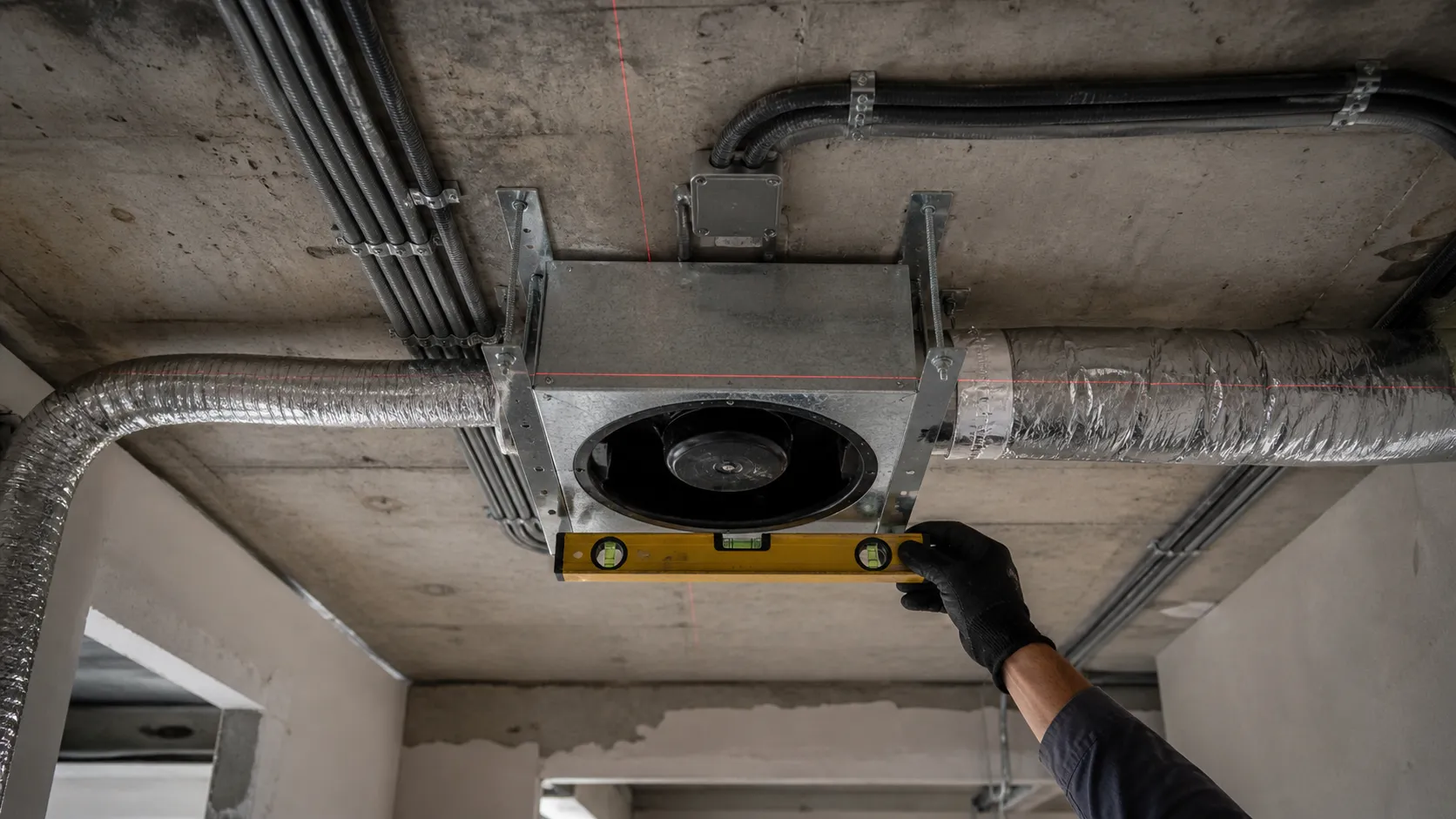
Concealed exhaust fans are ventilation units installed inside false ceilings or air ducts, so only the external cover or a clean extraction grille is visible.
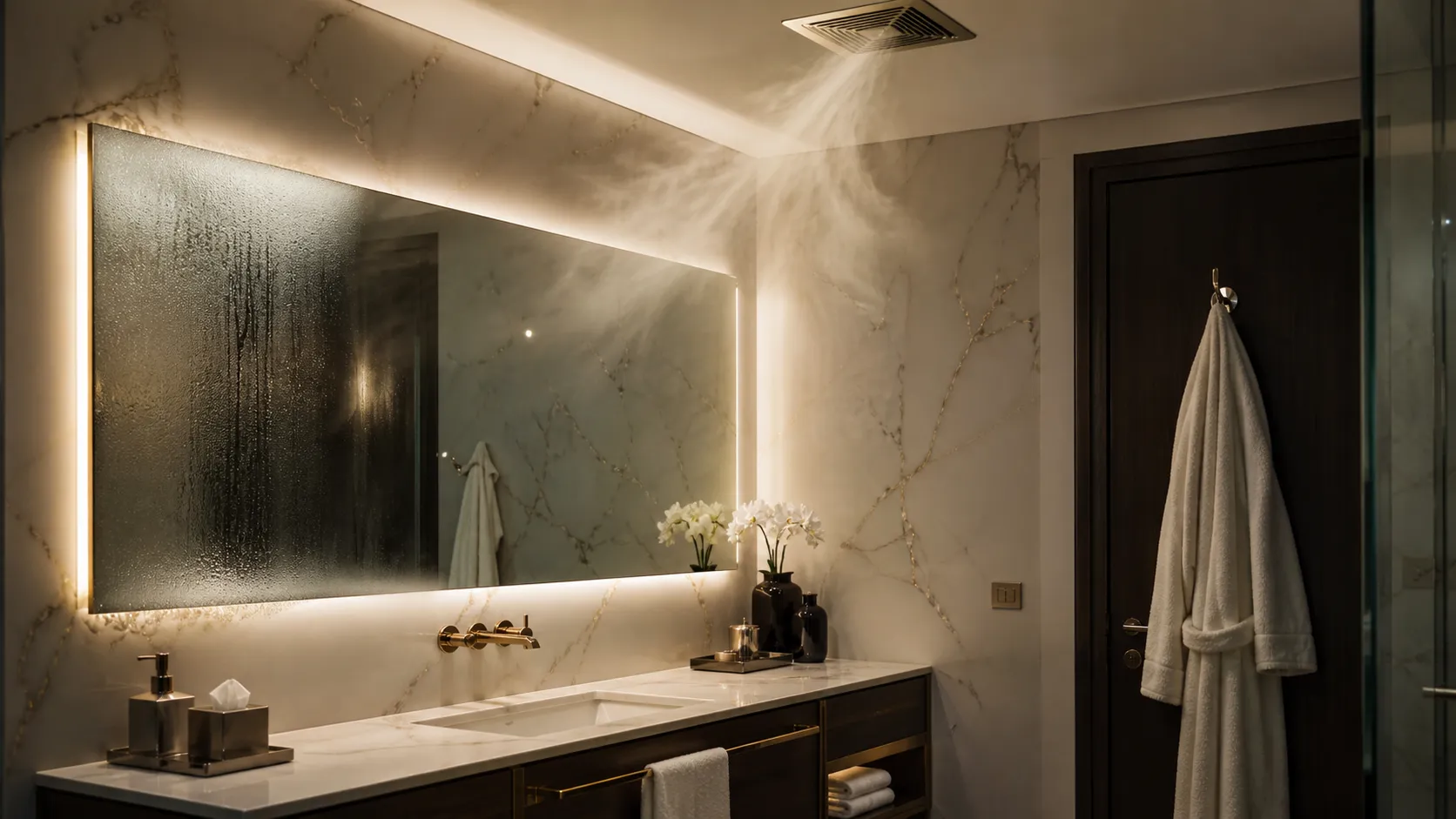
Their purpose is not only aesthetic. They also extract steam, humidity, and odors while preserving the smooth appearance of the interior design.
Choosing concealed fans before finishing is important because delaying the decision may lead to breaking ceiling surfaces, relocating lighting points, or creating ineffective ventilation routes.
Early planning allows the technician to determine:
- The extraction point closest to odor and humidity concentration.
- The duct route toward the final outdoor discharge point.
- The exact ceiling opening dimensions.
- Electrical points and operating control switches.
- Enough space for inspection and periodic service.
- A cover style that matches the interior design.
Difference Between a Concealed Exhaust Fan and a Visible Fan
A visible exhaust fan is installed directly on walls or ceilings, with the full body exposed.
A concealed exhaust fan hides the unit body completely, leaving only the air outlet visible. Integrated systems provide a more refined appearance and quieter ventilation distribution when false ceilings and proper duct routes are available.
Also read: Beauty Salon Ventilation Solutions in Kuwait
What Determines the Success of Concealed Exhaust Fans?
Several factors affect the efficiency of concealed exhaust fans, including:
- Choosing the right size for the space.
- Reducing duct route length as much as possible.
- Avoiding too many bends.
- Sealing duct connections to prevent leakage.
- Choosing a suitable outdoor outlet.
- Keeping access to the fan or filter for maintenance.
- Avoiding air discharge into the closed ceiling void.
Cyberia’s precision in preparing openings helps prevent gypsum and paint damage after construction. Coordinate with our team before starting ceiling works.
When Is a Concealed Bathroom Exhaust Fan the Right Choice?
When you want to combine ventilation efficiency with elegant bathroom interior design, concealed bathroom exhaust fans become a strong option.
However, some cases suit these systems, while others may require different solutions.
Suitable Cases for Concealed Exhaust Systems
Concealed bathroom exhaust fans are suitable when:
- The space has no effective natural ventilation windows.
- Shower steam remains trapped for a noticeable time.
- Moisture appears on mirrors or ceiling corners.
- Odors take too long to leave the space.
- False ceilings are available to hide the motor and ducts.
- You prefer simple covers instead of visible wall-mounted units.
- Air extraction needs to be distributed near shower areas.
- The project is still under construction, allowing early duct preparation.
Limitations of Concealed Bathroom Exhaust Fans
These fans may not be suitable in certain cases, such as:
- No false ceiling or very limited ceiling void.
- Difficulty extending ducts toward outdoor air.
- Finished construction with no intention to modify ceilings.
- No possibility of creating maintenance access points.
- Very long or highly twisted duct routes.
- Need for a fast solution without foundation or duct works.
In these situations, visible wall-mounted or ceiling-mounted exhaust fans may be faster and less complex to install.
Read more: Small Kitchen Exhaust Fan and Wall-Mounted Options in Kuwait
Why Kuwait Bathrooms Need Accurate Exhaust Systems
Any weakness in extraction performance can lead to trapped steam, lingering odors, and moisture around ceilings and corners.
The main reasons include:
- Lack of effective natural ventilation openings in many internal bathrooms.
- Shower steam remaining for long periods when fan capacity is weak.
- Odors moving into rooms and corridors due to AC air movement.
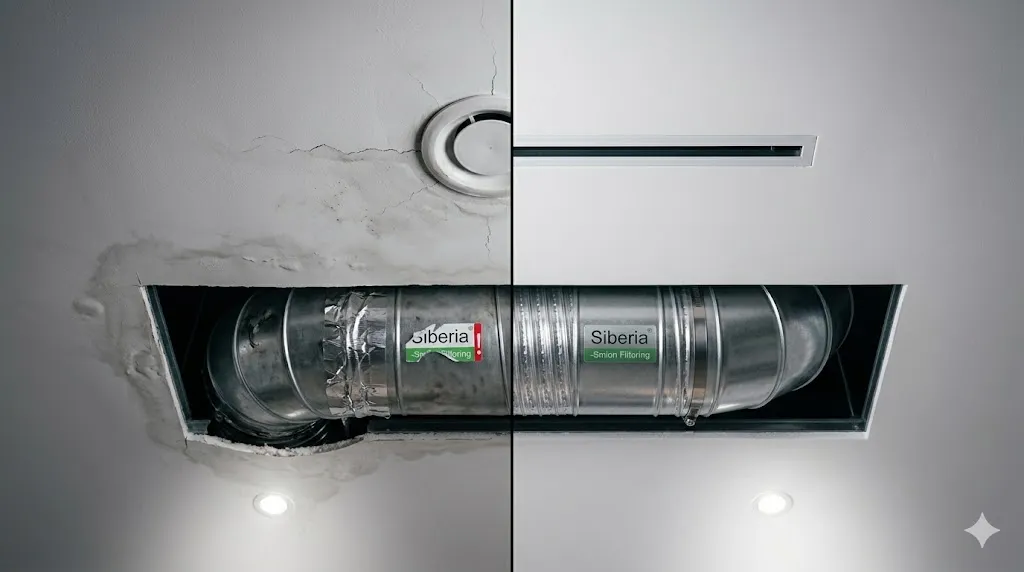
- Gypsum ceiling damage when air is discharged into the ceiling void instead of outdoors.
- Reduced extraction power due to long ducts or too many bends.
Ventilation success does not depend only on motor quality. It also depends on correct sizing, grille location, and smooth outdoor discharge.
Types of Concealed Exhaust Fans
Concealed extraction systems are usually divided into two main categories: units installed above false ceilings, and units installed inside duct routes.
Knowing the difference matters because the wrong choice may reduce ventilation efficiency, increase noise, or complicate maintenance.
Concealed Fan Inside Gypsum Ceiling
This fan is placed behind the false ceiling, with only the extraction cover visible inside the space.
It is suitable for:
- Main bathrooms and shower areas.
- Dressing rooms adjacent to wash areas.
- Laundry and drying spaces.
- Areas that need a clean visual appearance.
- Buildings under construction where openings can be prepared early.
Concealed Inline Duct Fan
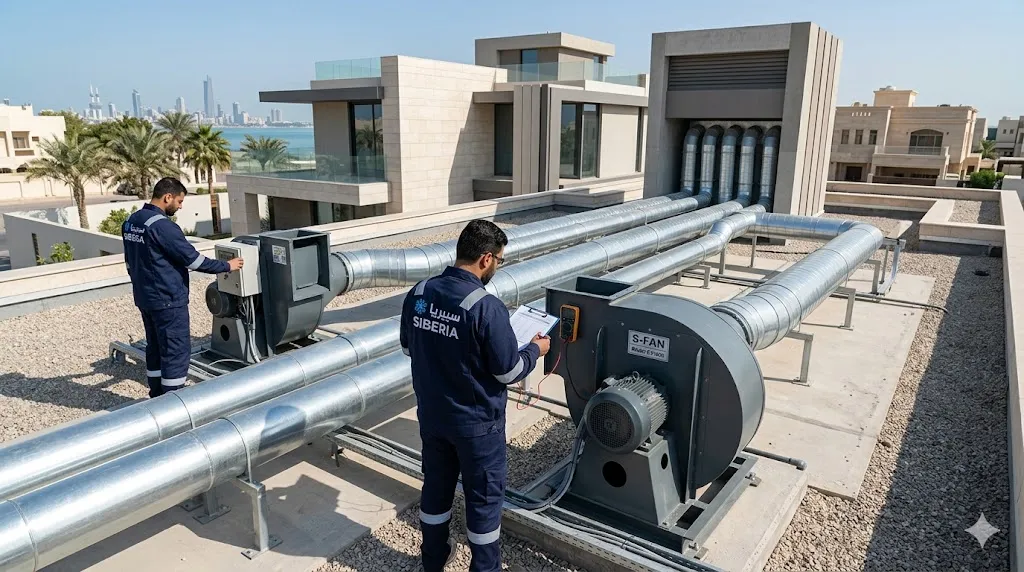
In this model, the motor is installed inside the air duct away from the extraction grille. It is used to pull air over longer distances.
It is best used in cases such as:
- Relatively long duct routes.
- A desire to move the noise source away from the room.
- Service kitchens or multi-point ventilation systems.
- Designs that rely on distributed extraction grilles.
- Locations where the motor cannot be placed near the grille.
At Cyberia, we provide different options for limited spaces and long routes. Consult our technicians to identify the model that matches your room design.
Cyberia’s Best Recommendations for Concealed Duct Fans in Kuwait
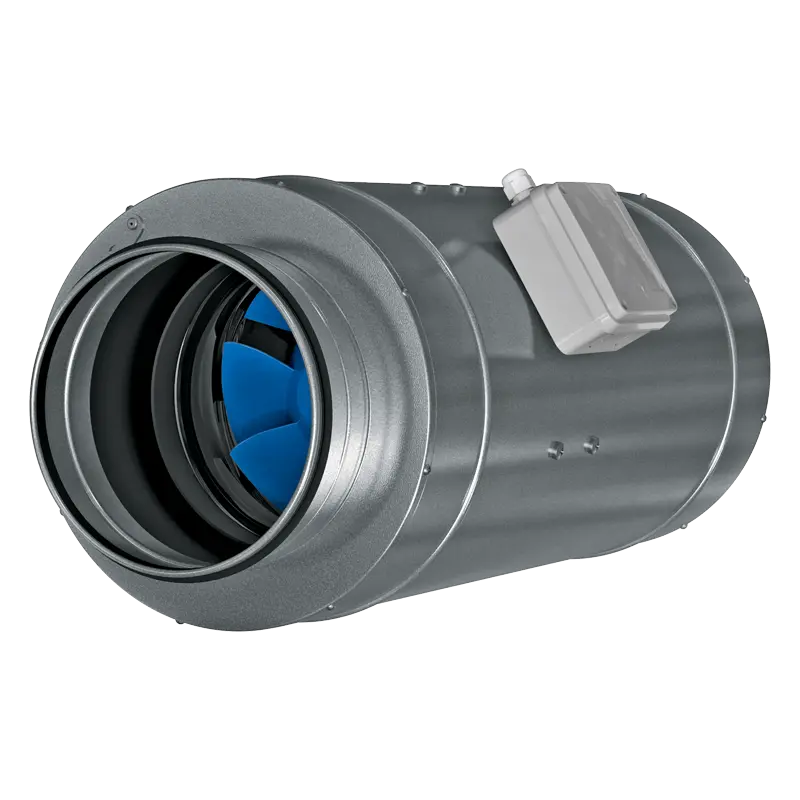
Blauberg ISO PRIMO Sound-Insulated Fan
Blauberg ISO PRIMO is a suitable option when quiet operation is a priority, especially in shower rooms, majlis areas, and spaces close to bedrooms.
It features internal sound insulation for quiet-use areas and can be integrated into concealed ventilation systems, with the unit body above the ceiling and only the extraction grille visible.
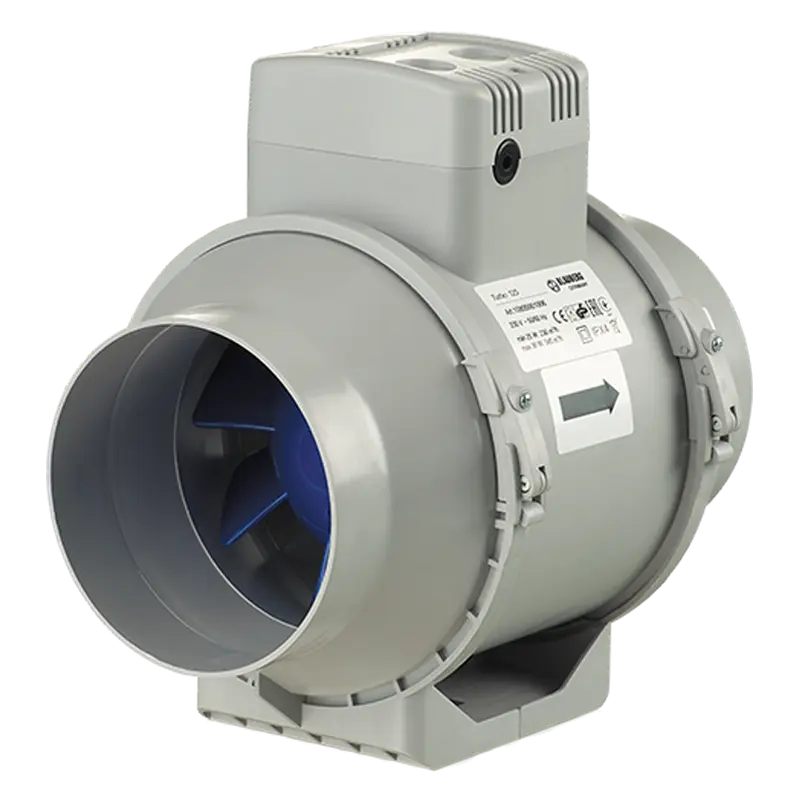
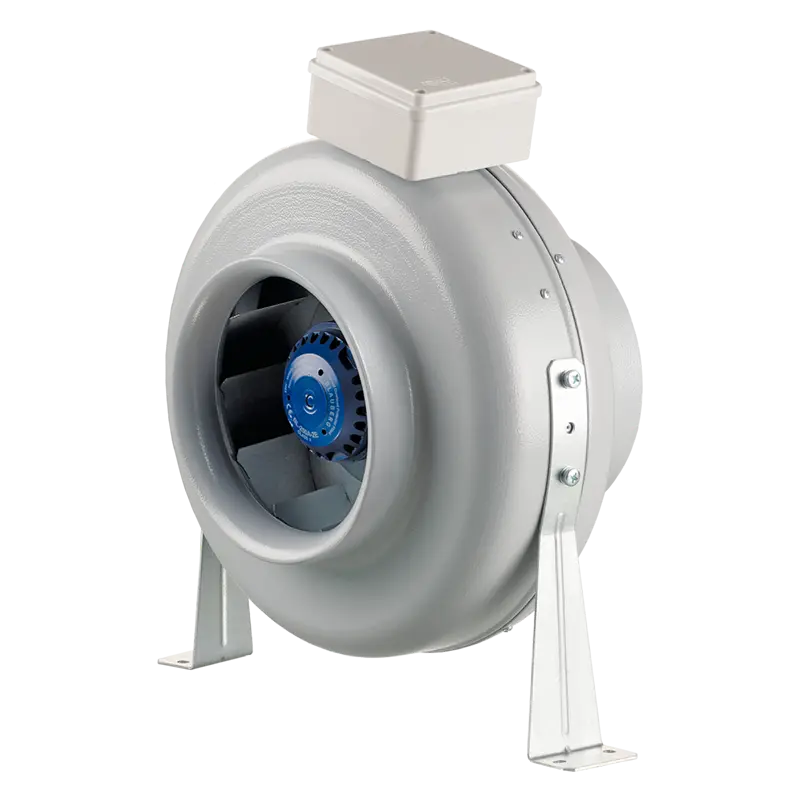
Blauberg Turbo Fan Circular Fan
Blauberg Turbo Fan suits bathrooms, offices, and medium-use spaces, especially when flexible circular duct extensions are required.
It is available in different sizes, offers low noise, and is easy to install inside air ducts. It is a practical concealed ventilation solution when duct routes are short to medium in length.
ALPA AKC Circular Turbo Fan
ALPA AKC is a strong option when duct routes are long or air pressure is high.
It serves home ventilation, kitchens, and swimming pool areas because it can overcome filter resistance. It is an effective solution for systems that require stronger air movement than simple traditional fans.
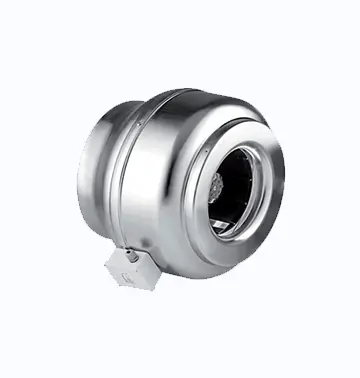
Blauberg Centro-MZ Circular Turbo Fan
Blauberg Centro-MZ provides balanced performance for homes, majlis areas, and kitchens when you need a concealed circular fan.
It suits home and bathroom ventilation thanks to its multiple sizes, which match different spaces. It is used in integrated extraction systems while maintaining duct size compatibility and avoiding sharp bends.
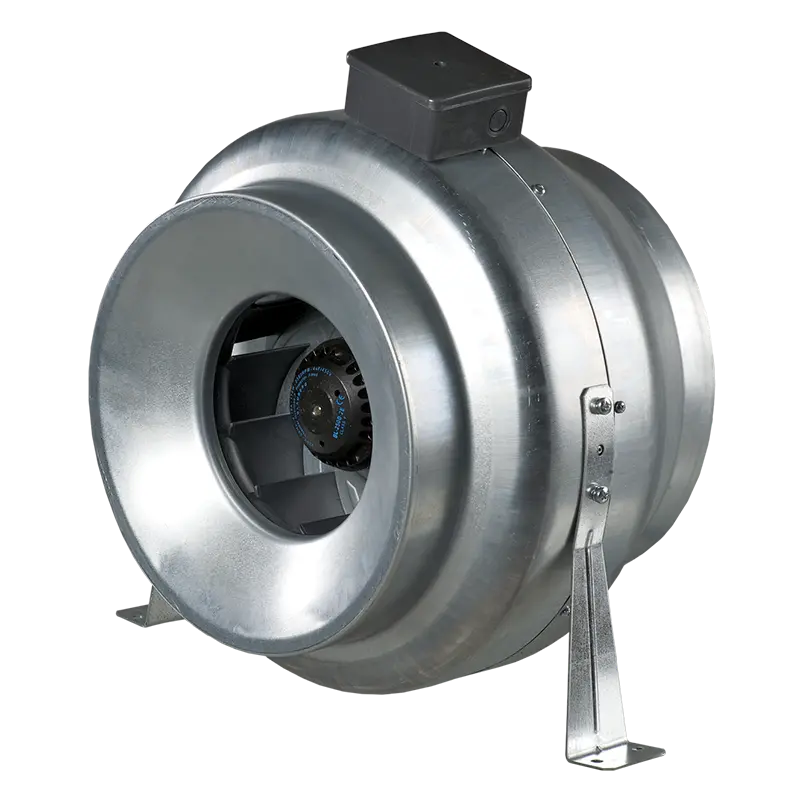
Blauberg Centro-M Circular Turbo Fan
Blauberg Centro-M serves larger projects, such as large kitchens or systems connected to multiple extraction points.
It includes technical features such as backward-curved blades, thermal protection, and precise mechanical balance. We recommend it for long routes that require high air-moving capacity after technical site inspection.
To choose the best concealed exhaust fan from Cyberia, start with the extraction point, duct length, application type, and required noise level. Then ask our team to recommend the right size before cutting gypsum or installing the discharge opening.
Check: Kitchen Hood Types and Installation Standards in Kuwait 2026
When Do You Need a Concealed Fan or a Kitchen Exhaust Fan in Kuwait?
Your decision depends on kitchen type, availability of an external duct, route length, and daily cooking habits.
When to Use a Kitchen Hood with Fan
A kitchen exhaust fan installed above the cooking area is preferred when:
- Daily cooking produces heavy steam and grease.
- Odors spread quickly to other parts of the home.
- Humidity and vapor collect around upper cabinets and ceilings.
- The external air discharge opening is close to the extraction unit.
- There is enough space for wall-mounted or built-in units.
When to Use a Concealed Kitchen Exhaust Fan
This option becomes useful in preparation kitchens or when long duct routes require additional air movement.
You can choose it when:
- You want an architectural design that hides ventilation equipment.
- Ducts extend above ceilings or inside cabinets.
- The extraction point is far from the external discharge outlet.
- Route planning and foundation works can be done before construction is completed.
When Is the Duct the Reason for Weak Extraction?
Poor ductwork often causes weak results even when the motor is efficient.
Common problems include:
- Duct routes exceeding the technically acceptable length.
- Too many sharp angles restricting airflow.
- Flexible ducts being compressed behind kitchen cabinets.
- Leaks in duct connections causing loss of extraction power.
- Narrow or blocked external discharge openings.
If you notice any of these issues, inspect the route before replacing the unit. Powerful motors with poor ducts can increase noise without improving performance.
Guide to Choosing Concealed Exhaust Fan Sizes
A specialist technician should handle sizing, but it is useful to understand the process so you can follow the work properly.
1. Define the Purpose and Extraction Requirement
Fan size and extraction capacity depend on the function of the space.
Main bathrooms, shower areas, laundry rooms, and preparation kitchens have different ventilation requirements. The technical team estimates the air volume that must be extracted based on expected humidity and odors, keeping the home clean and healthy.
2. Match Dimensions and Ceiling Depth
Before cutting ceiling openings, the actual internal fan body size must be checked, not only the external frame.
Technicians confirm that there is enough depth above the false ceiling to fit the unit body, while checking for structural conflicts or AC and electrical lines that may block installation.
3. Match Duct Size with Performance
Duct diameter is essential for stable performance.
The fan outlet must match the approved duct size in your project. Any mismatch may require technical adapters, which can increase noise or reduce airflow smoothness.
4. Evaluate Routes and Air Pressure
Fan size and power depend on the distance air travels before reaching the final discharge point.
The technical team evaluates route length and the number of bends. Long or complex routes need fans with higher static pressure to ensure air reaches the outdoor outlet effectively.
5. Ensure Maintenance Access
Concealed systems are designed to stay hidden, but they must remain accessible.
Technicians leave enough space to remove covers, clean filters, or inspect duct connections. The unit should not be blocked by fixed decorative elements or lighting units that make maintenance difficult.
Read more: Top Hotel Ventilation and Chalet AC Solutions in Kuwait: Silent Exhaust
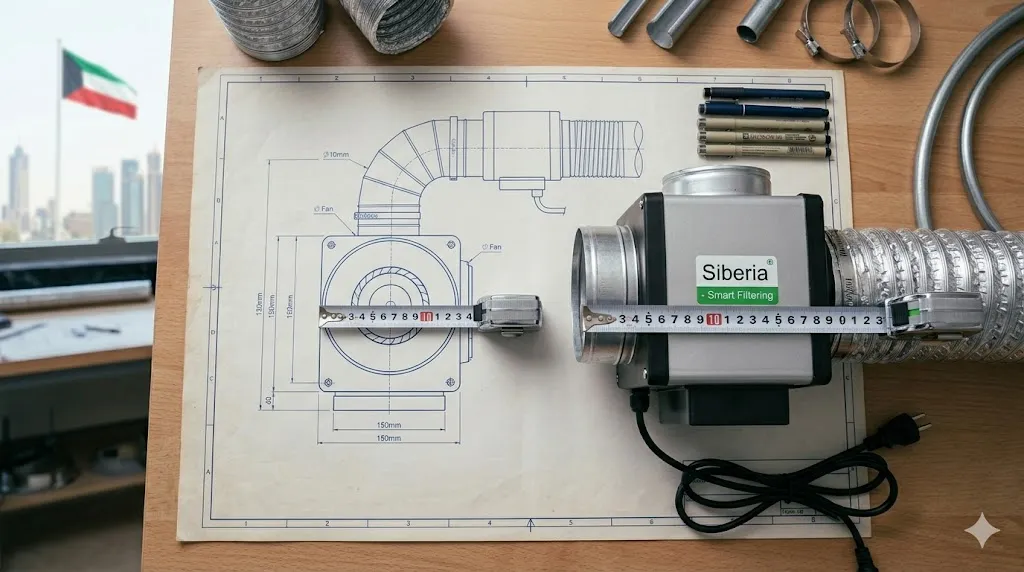
Steps for Installing Concealed Fans from Electricity to Ductwork
A specialized technical team usually completes the installation through these steps.
1. Define Locations and Extraction Route
The team:
- Selects the extraction grille location to remove humidity and odors effectively.
- Places extraction points near condensation areas while avoiding concrete obstacles.
- Provides a clear extraction route that respects furniture layout and room details.
2. Fix the Motor and Ensure Stability
The team:
- Places the fan body above the false ceiling using fixing supports.
- Tightens suspension screws to prevent vibration sounds during operation.
- Leaves enough clearance around the unit for future maintenance or replacement.
3. Extend Ducts and Seal Insulation
The team:
- Connects ducts and seals openings to control the air route completely.
- Reduces bend angles to allow air to exit smoothly.
- Directs the duct end outdoors to prevent steam accumulation.
4. Technical Connection and Performance Testing
The team:
- Connects electrical cables properly, then operates the system for testing.
- Measures extraction strength and checks motor noise.
- Monitors outlet covers to prevent reverse airflow.
Cyberia handles every detail, from safe electrical connection to sealing openings. Rely on our experience in concealed exhaust fan installation and contact our team to arrange supply and installation.
Also read: Best Central Home Ventilation Systems in Kuwait and Silent Duct
Treating Odor Return Through the Outdoor Outlet
Odor return is not usually caused by the fan body itself. It is often related to duct engineering, external outlet cover quality, and air pressure around the discharge point.
Common causes include:
- Duct routes without automatic dampers that prevent reverse airflow when the fan stops.
- External covers that do not close tightly, allowing dust and odors to enter.
- Invisible gaps or leaks at duct connection points.
- Discharge points close to pollution sources, such as nearby kitchens or narrow shafts.
- Strong external wind pushing steam and gases back against the exhaust direction.
- Several fans connected to one duct route without technical coordination.
How Backdraft Dampers Help
A backdraft damper allows air to exit during operation, then closes automatically when the fan stops to reduce dust and reverse air entry.
For this part to work properly, its size must match the duct diameter exactly. It should also open easily. Heavy or incompatible dampers may weaken extraction and increase noise instead of solving odor mixing.
Installation Defects and Signs of Weak Concealed Fan Extraction
Weak concealed extraction performance may not be obvious at first. The motor may run quietly, but odors and steam can remain trapped because of duct or outlet issues.
In this case, inspect the network instead of judging the motor only.
Installation Mistakes That Reduce Extraction Efficiency
Common mistakes include:
- Placing the extraction unit far from the steam or odor source.
- Using sizes that do not match the space or duct length.
- Extending the duct too far with too many bends.
- Bending flexible ducts behind décor or above gypsum panels.
- Leaving gaps at duct connection points that allow air leakage.
- Discharging extracted air into the ceiling void instead of outdoors.
- Installing an external outlet cover with narrow openings that restrict air movement.
- Closing the ceiling without inspection access points.
- Installing the fan where it conflicts with AC routes or lighting units.
- Connecting multiple extraction grilles to one route without proper calculations.
Signs of Weak Extraction
Weak extraction may appear through:
- Shower steam remaining after use.
- Odors not disappearing despite motor operation.
- Water droplets collecting on mirrors or upper surfaces.
- Dark stains or moisture signs in ceiling corners.
- Higher noise levels or resonance inside décor.
- Air or odors returning through the extraction grille.
- Weak airflow from the external wall outlet.
- Fast dust buildup on the internal fan cover.
How to Detect the Source of the Problem
You can identify the issue by:
- Checking actual motor rotation, not just hearing vibration.
- Testing air pull strength at the internal grille.
- Watching airflow at the final outlet if accessible.
- Noting whether odors return immediately after the fan stops.
- Inspecting the external cover and checking whether its blades move smoothly.
- Confirming that all duct connections are sealed and free from holes.
- Making sure the duct ends outdoors away from the building.
Cyberia: Experience in Supplying and Installing Concealed Exhaust Fan Systems in Kuwait
Cyberia HVAC is a leading name in the Kuwaiti ventilation and air conditioning market. Over the years, we have built a strong reputation based on precise engineering solutions and the supply of high-quality global systems.
We believe exhaust fan efficiency does not depend only on motor power. It depends on how well the fan integrates with the surrounding space and local climate conditions. This is why Cyberia is a preferred partner for residential and commercial projects seeking long-lasting quality.
Based on this experience, we help ensure your concealed ventilation system succeeds through:
- Technical size recommendation: Matching fan capacity with room size and duct length for ideal extraction.
- Global brand supply: Providing multiple options from leading brands that combine quiet operation with strong airflow.
- Professional execution: Installing motors, sealing ducts, and testing operation efficiency before handover.
- Technical support: Providing periodic maintenance and external outlet inspection to maintain performance and protect the building.
Cyberia serves all areas of Kuwait with high-quality ventilation materials and solutions. Send your address and site photos so our team can reach you as soon as possible.
FAQs About Concealed Exhaust Fans
Are Concealed Exhaust Fans Suitable for Every Gypsum Bathroom Ceiling?
Concealed exhaust fans are ideal for many gypsum bathroom ceilings, provided there is enough depth and an available outdoor discharge route.
However, they may not suit very low ceilings or sites without a possible duct route. In such cases, a wall-mounted solution may be more effective.
When Do I Need a Concealed Bathroom Exhaust Fan Instead of a Visible Fan?
Use a concealed fan when you want to improve appearance or when the room layout requires air extraction from points away from the walls.
It also provides an excellent technical solution for spaces that allow organized ventilation ducts with high humidity-removal efficiency.
Do Concealed Bathroom Exhaust Fans Need a Special Ceiling Opening?
Yes. Installation requires cutting an internal opening that matches the extraction cover dimensions and fixing method.
Random cutting is not enough. The opening must be planned according to the grille location and duct route to ensure smooth airflow.
What Determines the Best Concealed Exhaust Fan for a Bathroom?
The ideal choice depends on room size, duct route length, number of bends, and required quietness level.
The important factor is how well the fan’s technical specifications match the site conditions, not only the cover shape or brand name.