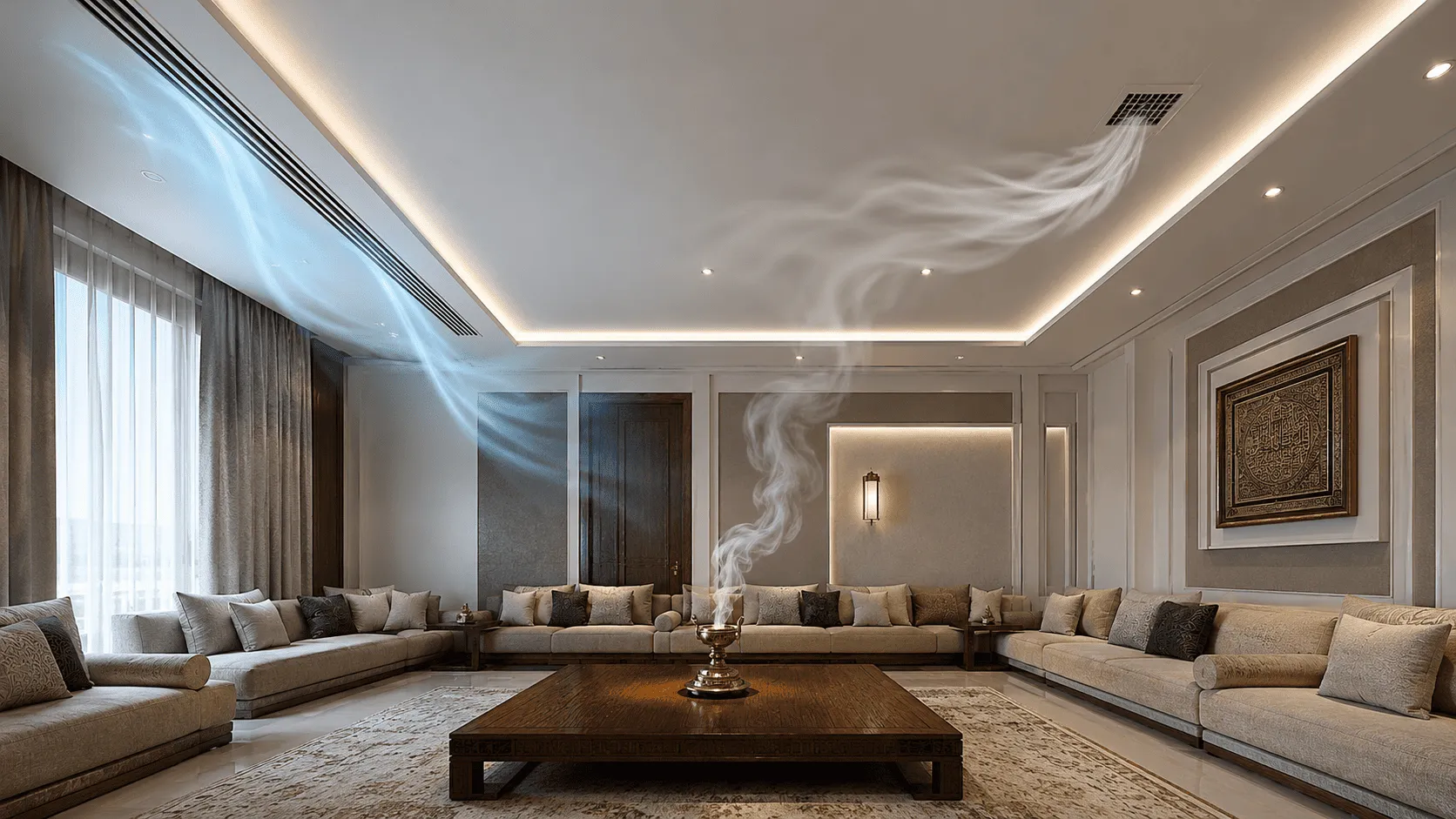
When you start designing your kitchen, do not focus only on its appearance and interior style. There is another priority, especially in modern kitchens: the air extraction system that keeps your cooking environment clean, fresh, and free from grease and humidity.
At Cyberia, we focus on the details that matter to homeowners and project owners in Kuwait. In this guide, we cover:
- Kitchen hood sizes and types that match the width of your cooktop.
- The difference between external duct systems and recirculating filters.
- Safe installation height and efficient exhaust outlet setup.
- Supply and installation cost factors in the Kuwaiti market.
- Cyberia’s services in supply, installation, and integrated engineering solutions.
Before buying a kitchen hood or customizing your cabinet, send Cyberia a photo of the stove area and the available space dimensions. Our team will recommend the right size, hood type, and duct route for your kitchen.
How Kitchen Hood Type and Size Affect Air Quality in Kuwait?
You may not realize how much the hood shape and size affect air quality. Many people assume the difference is minor, but in practice, it can determine whether your kitchen stays clean or fills with grease, humidity, and lingering food odors.
Size and Performance
Installing a hood that is smaller than the width of your stove allows steam, smoke, and airborne grease to escape outside the actual extraction zone.
This leads to grease buildup on cabinets and walls, while food odors remain in the space even when the extraction fan is running.
Hood Shape and Extraction Efficiency
Wall-mounted, built-in, concealed, and under-cabinet hoods differ in how they direct steam toward the filters and duct route.
If the hood design does not properly cover the heat source and the angles where steam rises, the motor must work harder to extract smoke and vapor.
The Role of Filters and Ductwork
Clean grease filters and a properly matched duct route are essential for keeping kitchen air clean.
If metal filters become clogged or the ventilation duct has too many bends, the hood’s performance drops significantly and the kitchen environment becomes less healthy.
The Link Between Air Conditioning and Odors
In Kuwait, air conditioning often circulates indoor air while natural ventilation openings remain closed. This can push uncollected cooking odors into other areas of the home.
That is why kitchen hood dimensions must be chosen correctly to extract fumes directly from the source, with an outdoor discharge route that prevents smoke from recirculating indoors.
Signs that your kitchen hood size may need reevaluation include:
- Food odors spreading quickly to bedrooms and living areas.
- Sticky grease layers appearing on nearby cabinets and surfaces.
- Steam rising from the sides of the hood.
- Loud motor noise while smoke remains in the kitchen.
- Filters becoming dirty very quickly.
- Unpleasant odors remaining even after regular filter cleaning.
Cyberia experts help prevent vapor backflow by designing exhaust outlets that handle air pressure correctly. Request a technical inspection to evaluate your kitchen ventilation efficiency and identify the stronger model for grease extraction.
Read more: Laboratory and Pharmacy Ventilation in Kuwait: Engineering Guide for Airflow and Pressure Control
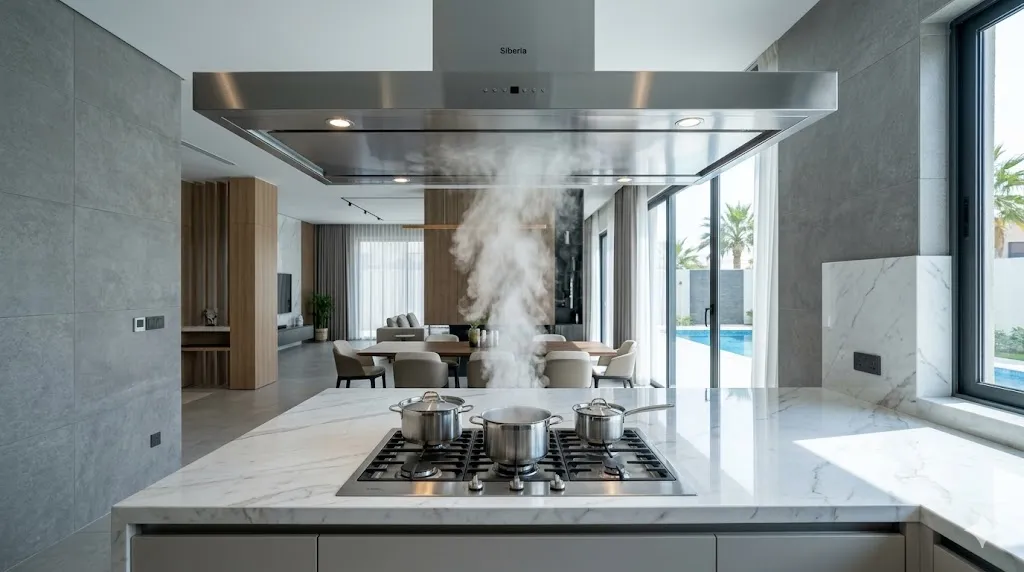
How to Choose Kitchen Hood Size Based on Stove and Cabinet Dimensions?
Choosing the wrong kitchen hood dimensions can lead to weak cooktop coverage or installation problems.
The basic rule is that the hood width should at least match the cooktop width to capture steam and grease properly and prevent them from escaping from the sides.
A technician determines the correct size by:
- Measuring the cooktop width from both sides to define the required extraction coverage.
- Checking the actual space between upper cabinets before buying the hood.
- Matching the hood’s internal depth with the cabinet space in concealed and built-in models.
- Identifying the position of the upper or rear duct outlet so it aligns with the air discharge route.
- Providing enough space around filters for easy removal and maintenance.
- Calculating gypsum thickness and surrounding decoration that may block installation or reduce available space.
Cyberia helps you choose the best kitchen hood type according to your actual kitchen dimensions, with specialized teams that inspect the site and install systems according to high technical standards.
Also Read: Majlis Ventilation in Kuwait: Odor Extraction and Duct Setup
Key Details to Send Before Requesting a Ventilation Technician
Before asking about suitable kitchen hood sizes and dimensions, send the technician or Cyberia the following information:
- Exact cooktop width and whether it is gas or electric.
- A clear photo of the wall or cabinet above the cooking area.
- Whether an external ventilation opening already exists or a new opening is needed.
- Whether the kitchen is open to the living room or fully enclosed.
- Ceiling material, such as gypsum or solid concrete.
- Preferred hood type: wall-mounted, concealed, built-in, or island hood.
- Current duct condition: ready for use or requiring new installation.
- Current work stage: design phase or finished kitchen.
Send this information to Cyberia with a clear photo, and request a size recommendation before buying the hood or cutting the cabinet.
Common Kitchen Hood Sizes in Kuwait
60 cm Kitchen Hood
This size is suitable for small kitchens or apartments with compact cooktops.
The hood width must match the cooking surface to prevent smoke from escaping from the sides.
75 or 80 cm Kitchen Hood
This size provides wider coverage for medium cooktops.
It is a practical option when the space between upper cabinets is larger than standard sizes but does not require a very large hood.
90 cm Kitchen Hood
This is one of the most common sizes in homes with frequent daily cooking.
It provides broad extraction coverage for most wide cooktops, provided that a suitable duct route is available for air discharge.
100 cm and 200 cm Kitchen Hoods
These sizes are used in open-plan designs or island hoods.
Their installation requires strong ceiling support and carefully designed air routes to ensure quiet operation and powerful extraction.
Cyberia’s systems are designed to handle the high heat of daily cooking. Consult our technical team before finalizing cabinets to avoid measurement errors and ensure smooth duct routing.
Check: Best Bathroom Exhaust Fan in Kuwait: Size Selection and Silent Ventilation Guide
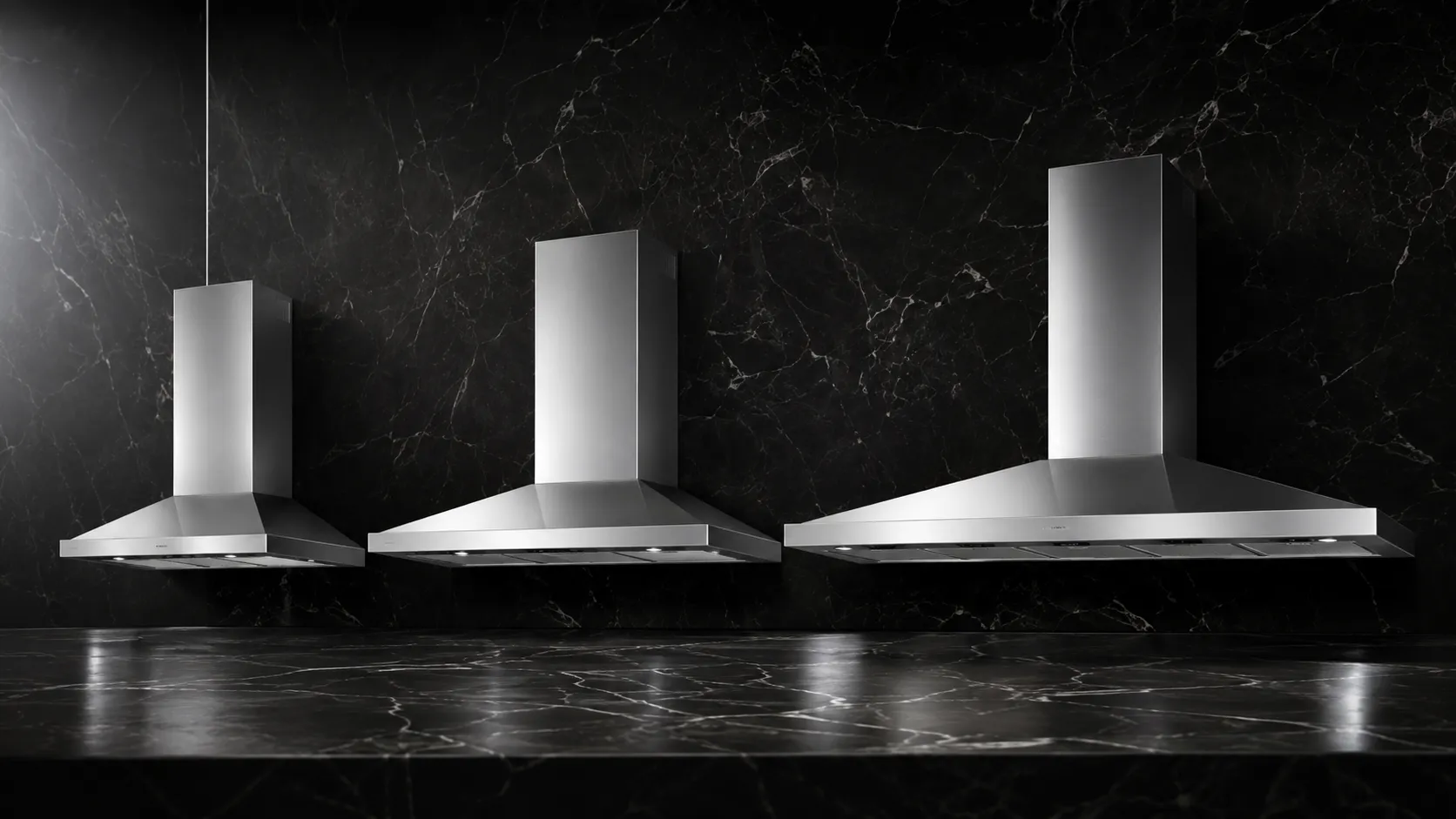
Kitchen Hood Types and Technical Distribution in Kuwait
There is no single ventilation system that works as the best kitchen hood type for every home.
Your choice depends on the cooktop location and how air will be discharged.
Below are the most common kitchen hood types used in Kuwait.
Traditional Wall-Mounted Hood
This type is suitable for cooktops placed against a wall, especially when there are no upper cabinets blocking the unit.
It offers a visible hood body and easy access to filters for routine cleaning. The external discharge outlet should be nearby to avoid long duct routes.
Under-Cabinet Hoods
Under-cabinet hoods are practical for kitchens that need to fully use upper storage space.
Before choosing this type, the cabinet depth and air outlet position must be checked to ensure the duct is not blocked and metal filters can still be removed for maintenance.
Concealed and Built-In Hoods
A concealed or built-in design gives the kitchen a neat and organized appearance by hiding the hood body inside the cabinet.
This type requires accurate measurement before cabinetry work begins to avoid structural modifications after installation.
Island Hoods
Island hoods are designed for cooktops located in the middle of the kitchen.
They require precise ceiling fixing and accurate alignment directly above the cooktop, with electrical points and exhaust routes passing through gypsum or ceiling structure.
Ductless Hoods
Ductless hoods filter and recirculate indoor air when an external exhaust opening is difficult to install.
Their efficiency depends entirely on regular filter maintenance, but they do not remove humidity and heat as effectively as systems with outdoor discharge routes.
At Cyberia, we provide a variety of kitchen hood types that combine extraction power with design harmony. We also provide site inspection to select the model that fits your kitchen layout and available ventilation routes.
Read more: Best Bathroom Ceiling Exhaust Fan in Kuwait: Size and Installation Guide
External Duct vs Ductless Kitchen Hood
The difference is simple: a ducted hood discharges steam and fumes outdoors, while a ductless hood filters air and recirculates it indoors.
However, each option has advantages that should be considered before making a decision.
Advantages of an External Duct System in Kuwait
An external duct system helps:
- Remove heavy cooking odors and spices completely from the home.
- Extract steam and excess humidity immediately.
- Improve grease extraction and prevent buildup on furniture.
- Keep open kitchens connected to living areas cleaner and fresher.
This system requires accurate planning to move air out quickly with the least possible noise.
Motor performance weakens if the route is long or includes many bends. A sealed exhaust outlet is also needed to prevent odors from returning indoors.
Features of Ductless Kitchen Hoods
Ductless hoods provide:
- Air purification through carbon filters before recirculation.
- A practical solution for apartments where façade modifications are not allowed.
- Easier installation without wall drilling or duct extension.
- Suitability for light cooking or quick meals.
This type depends on strict filter maintenance. Grease filters must be cleaned regularly, and carbon filters must be replaced on schedule.
If filters are neglected, odors remain in the air. Also, this system does not reduce heat or humidity caused by boiling as effectively as an external duct system.
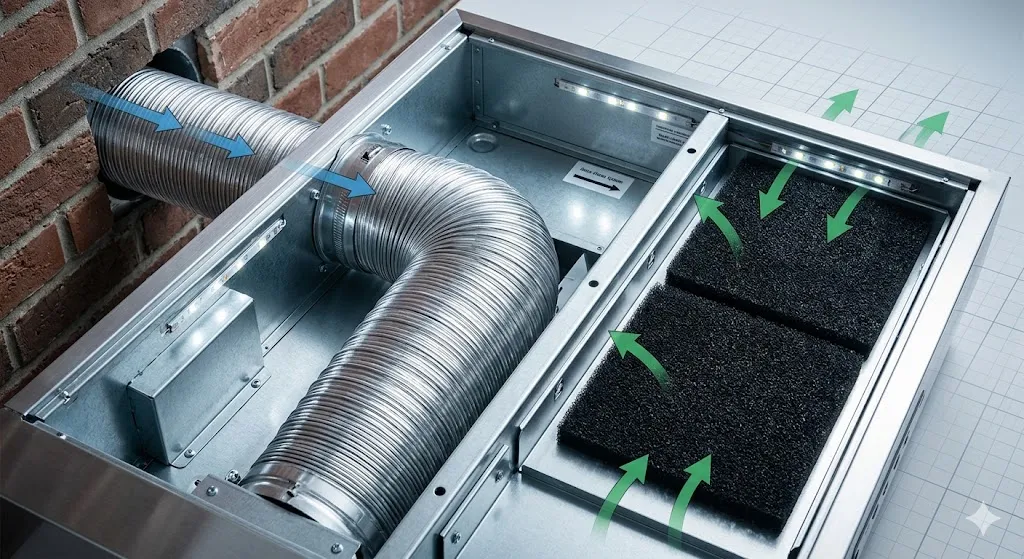
Kitchen Hood Height and Exhaust Outlet Rules in Kuwait
Kitchen hood height and exhaust outlet design are among the most important factors in successful kitchen ventilation.
Kitchen Hood Height Rules
The installation height should be determined by:
- Reviewing the manufacturer’s manual for the required distance.
- Considering whether the cooktop is gas or electric for safety.
- Leaving enough space for hand movement and large pots.
- Matching the installation point with upper cabinets or chimney height.
- Ensuring easy access to filters for regular removal and washing.
If the hood is installed too high, smoke and odors may disperse before reaching the motor. If it is installed too low, it may disturb the cook and expose the hood to direct flame effects.
Exhaust Opening and Duct Route Requirements
A proper exhaust system should include:
- An outdoor location that prevents odors from returning through windows or doors.
- A short and direct duct route to increase polluted-air discharge power.
- A backdraft damper to prevent dust and insects from entering the kitchen.
- An external cover that protects the outlet from weather and rain.
- A wall inspection before drilling to avoid electrical or AC lines.
At Cyberia, we treat cabinet safety and cooking comfort as priorities, not just the act of hanging a hood on the wall. Ask us about the correct height that protects your cabinets from damage.
Best Kitchen Hood and Exhaust Fan Options from Cyberia
Cyberia provides various options, from quiet home systems to large central kitchen ventilation systems, to ensure a clean environment free from grease and humidity.
ALPA AKC Circular Turbo Fan
ALPA AKC is an ideal choice for home kitchens that require extraction power beyond traditional units, especially when using circular duct routes.
This fan is available in sizes from 4 to 18 inches, with airflow capacity reaching 2,350 m³/h to maintain clean air continuously.
Its static pressure helps overcome resistance from oil filters and long ducts, making it suitable for homes, residential villas, and swimming pool areas.
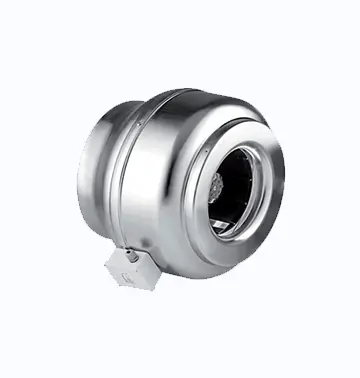
Blauberg Centro-MZ Circular Turbo Fan
Blauberg Centro-MZ serves residential kitchens and majlis areas that need practical odor and grease control.
This type provides extraction capacity of around 1,450 m³/h and is available in sizes from 4 to 12 inches to suit medium kitchen hood sizes.
It is suitable for moderate daily home use, offering a balance between performance and quiet operation required in residential spaces.
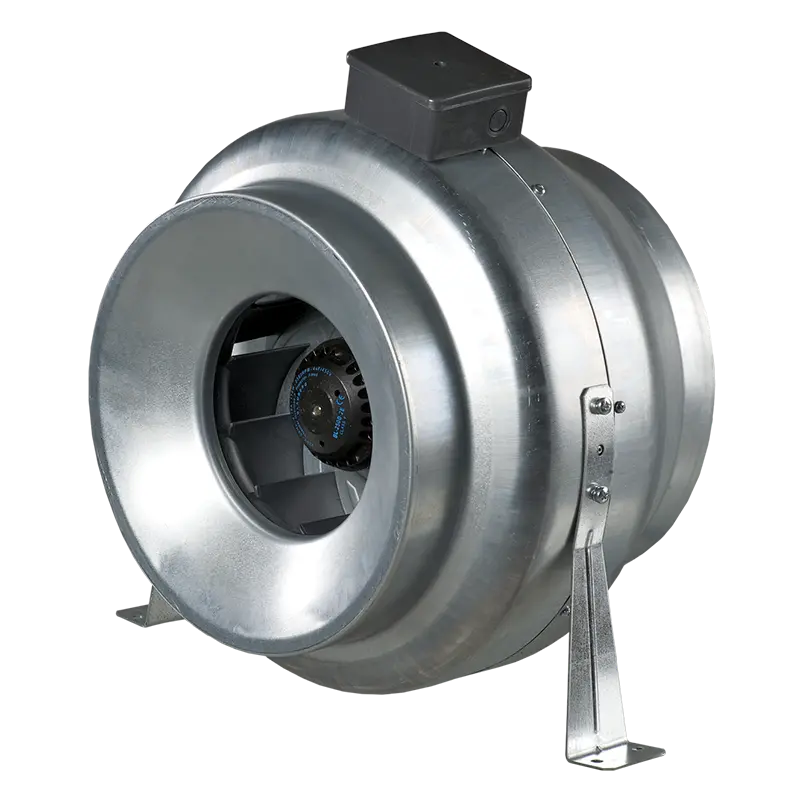
Blauberg Centro-M Circular Turbo Fan
Blauberg Centro-M is designed for large home kitchens with intensive cooking and long duct routes.
This system can reach extraction capacity of up to 6,280 m³/h, with multiple sizes covering large residential and home ventilation applications.
It is known for very low noise and vibration levels, supporting comfortable continuous operation without disturbing occupants.
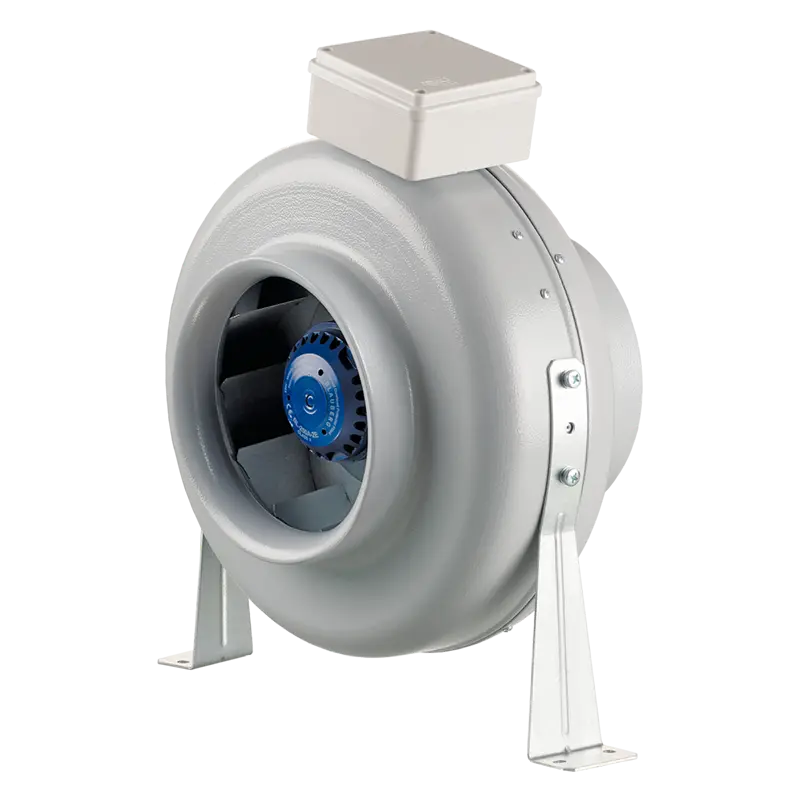
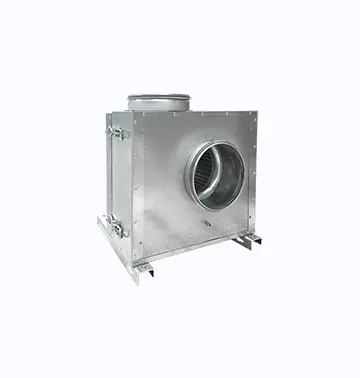
ALPA KVF Centrifugal Fan
ALPA KVF is a specialized solution for restaurant kitchens and central kitchens that face high resistance from grease filters and large cooking ducts.
Its actual extraction capacity reaches around 8,500 m³/h, with pressure up to 1000 Pa to keep polluted air moving steadily outdoors.
The integrated sound insulation helps reduce noise from the powerful motor, creating a more comfortable professional working environment.
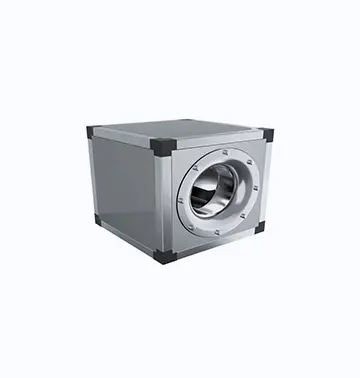
IN-BOX Sound-Insulated Box Fan
IN-BOX is one of the strongest options for central kitchens and commercial complexes that require powerful steam extraction with strong noise and vibration insulation.
This system can reach operating capacity of up to 15,500 m³/h and handle high resistance inside air ducts up to 1150 Pa.
Choosing this type depends on a precise engineering assessment of the site’s actual needs to ensure efficient operation in industrial and commercial environments.
How to Improve Exhaust Performance and Reduce Motor Noise
Achieving ideal and quiet extraction requires accurate technical practices during ventilation duct installation.
A specialist technician should:
- Use a duct size that fully matches the manufacturer’s recommendations without downsizing.
- Reduce the number of sharp elbows and turns to maintain smooth airflow and prevent vibration.
- Seal all connections with insulating materials to prevent steam and grease leakage into gypsum ceilings.
- Install a backdraft damper at the end of the route to prevent dust and outdoor odors from entering.
- Choose an air outlet away from windows, shafts, and AC openings.
- Fix duct components firmly to absorb vibration caused by motor operation.
- Provide technical access openings for easy periodic maintenance.
Kitchen Hood and Installation Cost Factors in Kuwait
Total cost is not determined by the catalogue price of the appliance only. Several technical and construction-related variables affect the final project cost.
Hood Type and Size
Cost is affected because:
- Island and built-in units require precise engineering fixing, which raises execution cost.
- Larger kitchen hood dimensions require stronger supports and wider installation space.
- Large sizes may require construction adjustments to provide full smoke coverage.
- Ductless systems reduce ductwork costs but require regular filter replacement.
- Unit price depends on extraction and filtration technologies integrated into the body.
Duct Extension and Construction Work
This is often the most influential cost factor:
- Cost increases when drilling through a concrete wall or extending ducts inside gypsum.
- Long routes require more materials and longer work time to seal all connections.
- Installing backdraft dampers slightly increases cost but improves performance quality.
- Installation cost is lower in kitchens still under finishing compared with fully completed kitchens.
- Duct insulation for noise reduction requires specialized materials that add to the total cost.
Technical Accessories and Kitchen Condition
Other cost factors include:
- An existing exhaust opening reduces technician labor and fixing material requirements.
- Repairing openings or modifying cabinets requires careful work and affects cost.
- Independent electrical connections and insulation materials improve system durability.
- Installation prices vary according to cooktop type to maintain safe distances.
Cyberia Kuwait: Helping You Choose the Right Kitchen Hood and Duct Setup
Cyberia helps customers move from random appliance selection to decisions based on site conditions and actual use.
We consider humidity, high heat, and intensive cooking challenges that are common in modern and open-plan kitchens in Kuwait.
Our work connects the hood motor, filter strength, and duct route engineering to protect furniture from grease damage and buildup.
This integrated approach helps you get the best kitchen hood type, one that operates quietly and keeps residential indoor air cleaner for longer.
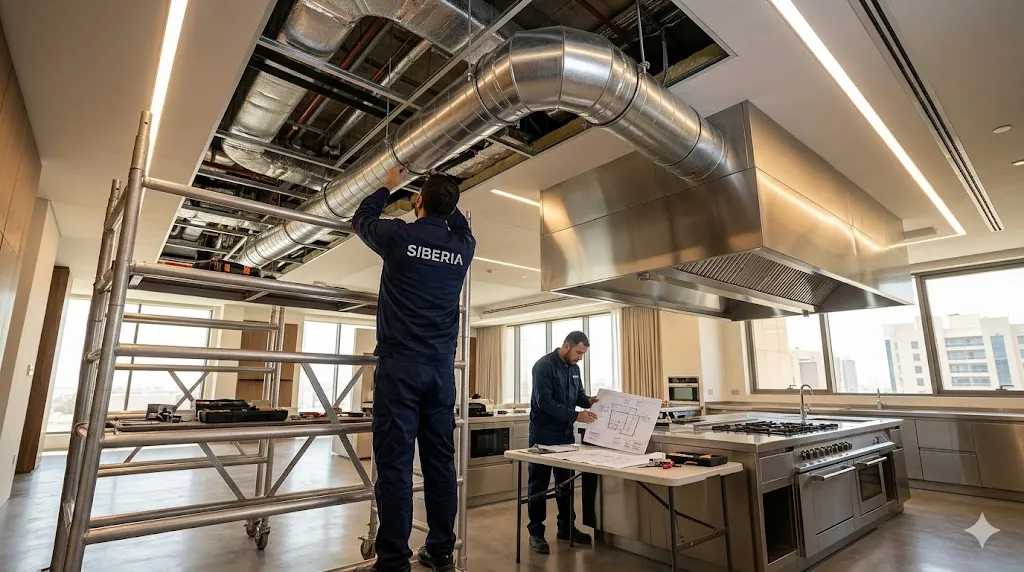
Cyberia provides comprehensive solutions starting with initial inspection, then:
- Recommending suitable kitchen hood types based on cooktop width and installation-area photos.
- Selecting the shortest and straightest duct route to improve extraction and reduce noise.
- Sealing all connections and providing external exhaust outlets that prevent odor return.
- Providing accurate size tables aligned with cabinet, false ceiling, and gypsum designs.
- Performing technical tests to measure extraction power and ensure routes are free from leakage.
- Studying recirculation and carbon-filter hood alternatives for locations without exhaust outlets.
Cyberia’s impact appears in a home free from stubborn grease deposits and lingering odors. Rely on our team’s skill to prepare the infrastructure for clean air. Contact us and complete your project with confidence.
FAQs About Kitchen Hood Types in Kuwait
What Is the Biggest Mistake When Choosing Kitchen Hood Dimensions Before Cabinetry?
The biggest mistake is focusing only on width and ignoring internal kitchen hood dimensions such as depth and exhaust outlet position.
Make sure the entire hood body matches the cabinet and that the hood height is suitable to avoid installation mistakes.
Can I Change the Hood Type Without Changing Kitchen Hood Dimensions?
Not necessarily. Each kitchen hood type has different fixing and depth requirements.
You should review the new appliance manual to confirm it fits the old hood location before buying.
What Determines the Right Kitchen Hood Type for Small Kitchens?
The available space above the cooktop, cabinet depth, external outlet availability, and cooking style all matter.
In small kitchens, an under-cabinet hood, built-in hood, or small wall-mounted hood may work, but the final decision depends on ductwork and filters, not appearance only.
Does an Island Hood Match the Same Sizes as a Wall-Mounted Hood?
The width may be the same, but island kitchen hoods require ceiling ductwork and a completely different suspension system.
Make sure the ceiling fixing point and duct route are ready before choosing this type.
How Can I Ensure a Concealed Kitchen Hood Fits My Cabinets?
Check the full internal body dimensions, not only the visible front width.
Correct fitting depends on the compatibility of depth and exhaust outlet position with the cabinet to get the full benefits of the kitchen hood.