
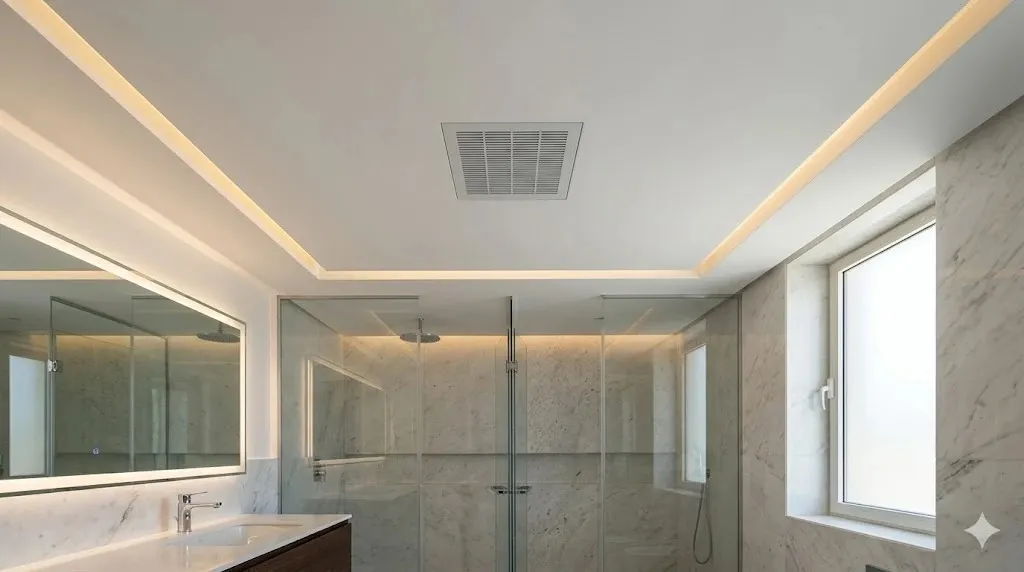
Modern apartment layouts often require hidden or built-in kitchen hoods. However, the real performance of these appliances depends heavily on whether their dimensions match the required extraction capacity and the actual installation conditions.
At Cyberia, this guide summarizes our experience in HVAC and kitchen ventilation systems. It helps you evaluate your real need before buying, away from appearance-based decisions only.
In this article, you will learn about:
- The performance limits of a ductless kitchen hood in Kuwait’s environment.
- How carbon filters work and when they need replacement.
- The technical comparison between ducted systems and internal air recirculation.
- How to choose the right size and prepare cabinets for hidden installation.
Steam buildup can damage expensive furniture and cabinets. Protect your kitchen from humidity by requesting a technical inspection to identify the safest internal extraction system for your site.
What Is a ductless kitchen hood and When Is It Used in Kuwait?
A ductless kitchen hood is a system that treats air internally without requiring a duct or wall discharge opening to the outside.
It extracts cooking smoke and passes it through specialized filters that capture grease and absorb odors. Then it releases the filtered air back into the kitchen.
You may need this type in specific cases, such as:
- Compact apartments that do not have natural ventilation routes.
- Internal kitchens where construction rules prevent drilling wall openings.
- Kuwaiti buildings where long duct routes conflict with interior design.
The efficiency of a ductless kitchen hood depends on the type of cooking activity inside your kitchen.
It is usually suitable for:
- Light daily cooking, food reheating, and boiling vegetables.
- Kitchens where deep frying or grilling is not common.
- Spaces where filter quality is strong enough to clean air before recirculation.
However, a ductless kitchen hood may not be the best option for heavy frying, grilling, or high-steam cooking because it does not discharge humidity and heat outdoors.
Kuwait’s humid environment requires solutions that go beyond the external appearance of the appliance. Contact our technical team to check whether an internal recirculation system suits your cooking habits.
Read more: Small Kitchen Exhaust Fan and Wall-Mounted Options in Kuwait
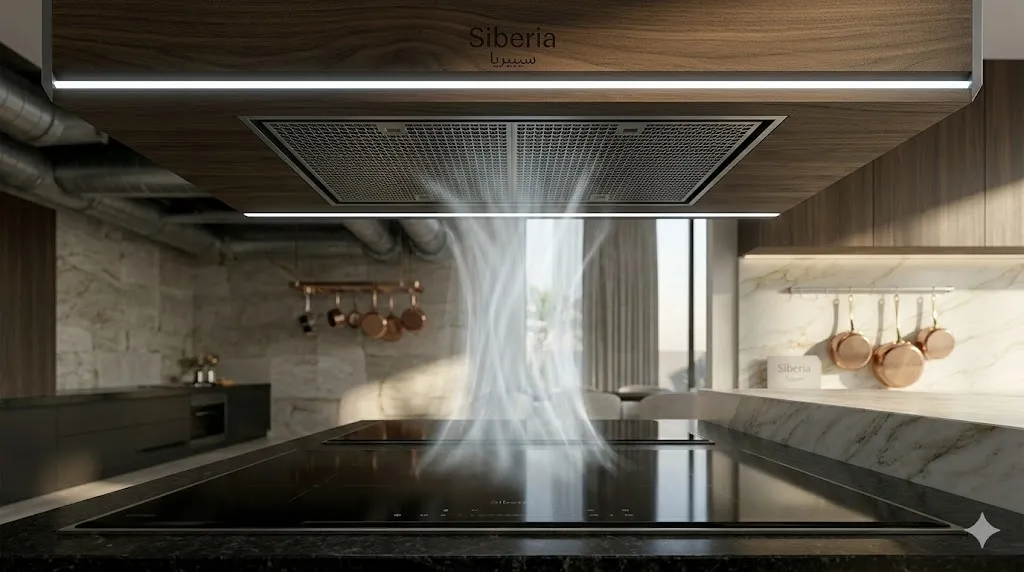
How the Carbon Filter Works in a ductless kitchen hood
In a ductless kitchen hood, the carbon filter is the main component responsible for treating the air instead of discharging it outdoors.
The filtration process works in two main stages:
- The grease filter traps airborne oil particles and prevents them from entering the internal parts of the hood.
- Activated carbon absorbs unpleasant odors and reduces their intensity before the air is released back into the kitchen.
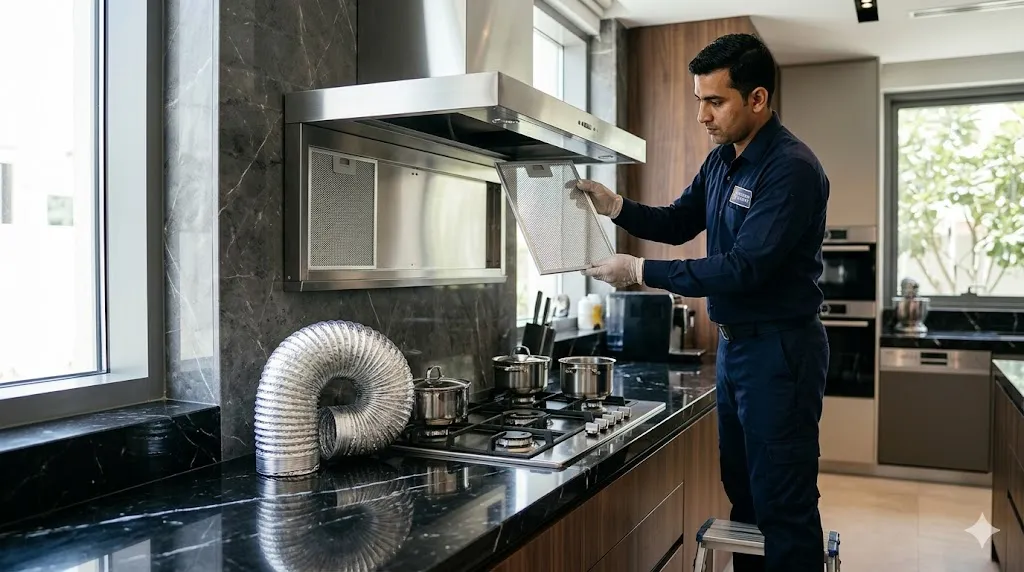
The performance of a ductless kitchen hood depends on regular filter maintenance.
To maintain efficiency, you should:
- Wash the metal grease filter regularly to prevent airflow blockage.
- Replace carbon filter cartridges when cooking odors remain in the kitchen.
- Turn on the fan before steam and smoke begin to rise to control air circulation from the start.
Why External Ducting Performs Better Than Internal Recirculation
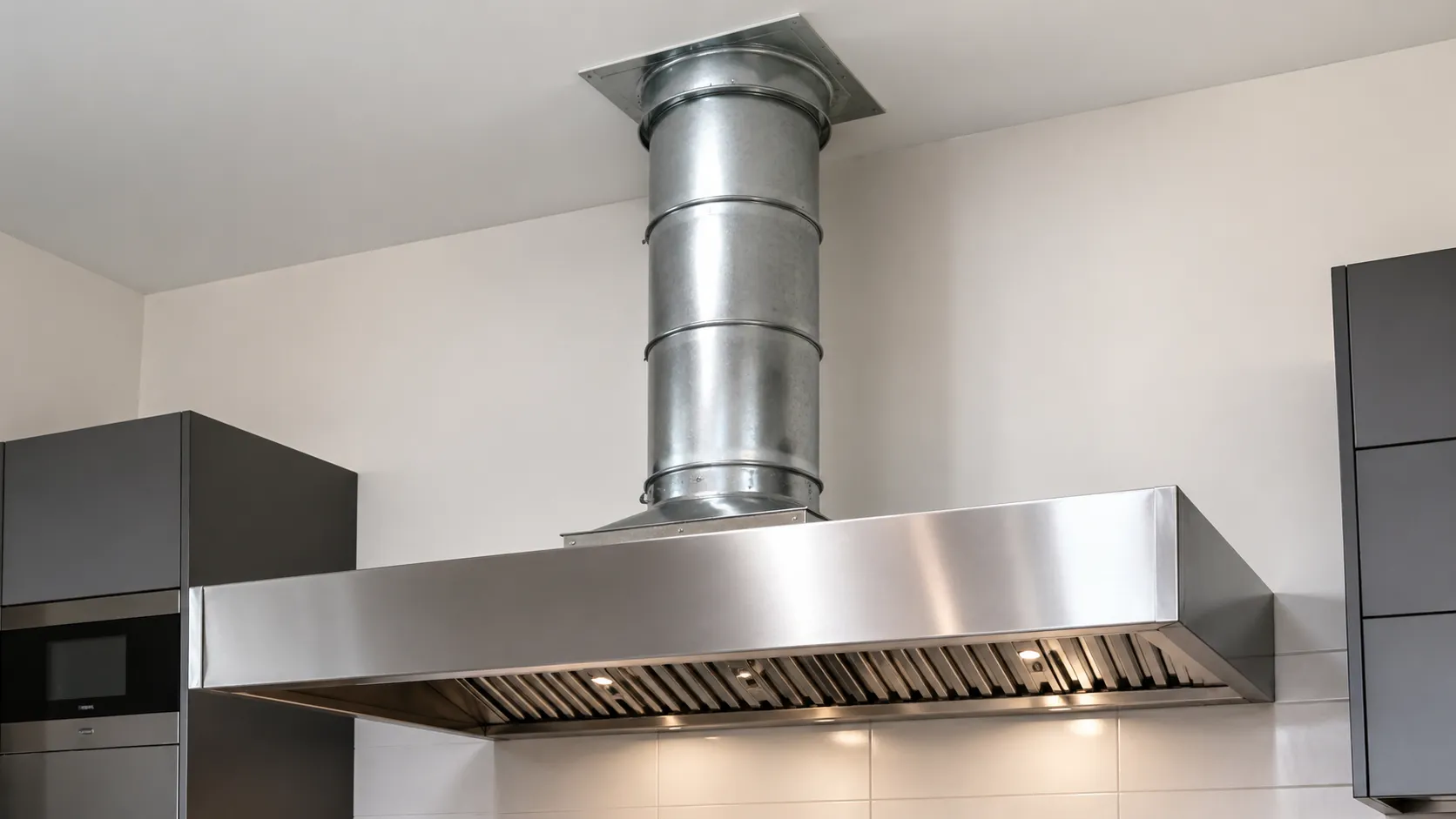
A kitchen hood connected to an external duct usually performs better than a ductless kitchen hood because it removes polluted air from the kitchen completely.
External ducting is better in the following cases.
Removing Humidity and Heat
A ducted system pushes steam and high heat outside the home.
A ductless kitchen hood, on the other hand, filters air and returns it indoors, which means humidity and heat may remain in the kitchen.
Handling Frying and Grilling
External exhaust systems extract frying oils and strong grilling odors before they spread through the kitchen or living areas.
This makes ducted systems more suitable for heavy cooking.
Supporting Open Kitchens
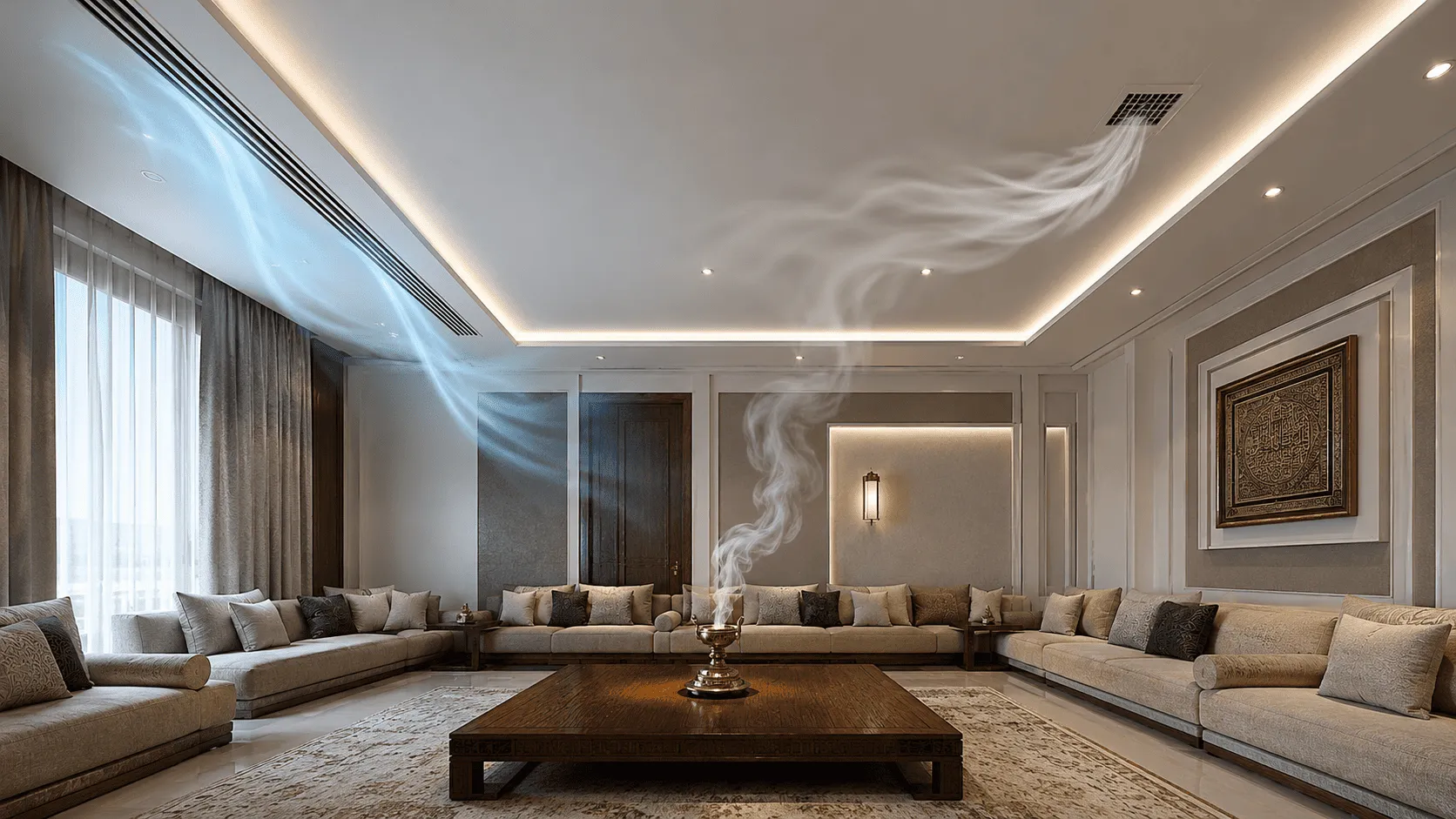
In open kitchens, an external duct helps prevent steam and odors from reaching the living room, furniture, and curtains.
A ductless kitchen hood may reduce odors, but it cannot remove all smoke, steam, and grease from open spaces with the same efficiency.
Reducing Maintenance Costs
External ducting reduces the need for frequent carbon filter replacement.
A ductless kitchen hood requires regular filter replacement because carbon filters gradually lose their ability to absorb odors.
Maintaining Stable Extraction Power
A ducted system allows the motor to discharge pollutants directly, while a ductless kitchen hood may lose efficiency when carbon filters become clogged or saturated.
Comparing Ducted and Recirculating Kitchen Hood Systems
The choice between ducted and recirculating systems depends on your daily cooking style and whether your kitchen has the right construction setup.
Use these standards when deciding:
- Choose external ducting as a stronger solution for removing grease, heat, and humidity.
- Choose a ductless kitchen hood when external duct routes are not possible.
- Use internal recirculation for light meals and simple cooking.
- Compare the strength of direct exhaust with the recurring cost of carbon filter replacement.
Heat produced by stoves needs a route that removes it from the kitchen. Ask Cyberia about the possibility of creating an external duct that makes your kitchen cooler and cleaner.
Also read: Beauty Salon Ventilation Solutions in Kuwait
Is a ductless kitchen hood Suitable for Your Kitchen?
The result depends on your kitchen layout and cooking behavior.
Closed Kitchen
A ductless kitchen hood may be acceptable in a closed kitchen when cooking is light and windows are available to help ventilate the space.
This reduces odor concentration and supports air renewal.
Open Kitchen
Open kitchens require more caution because steam and odors can move quickly into living areas.
A ductless kitchen hood may not capture all smoke, oil vapor, and cooking smells in open spaces, especially during frying or grilling.
Daily Usage Pattern
A ductless kitchen hood is suitable mainly for reheating, light meals, and simple daily cooking.
It requires strict commitment to filter replacement to maintain stable performance.
If your kitchen is open, external ducting is usually the better option for a cleaner home environment and stronger steam removal.
Turbo Kitchen Hood or ductless kitchen hood: Which Is Better?
The right choice depends on how you cook and whether your kitchen can support external air discharge.
When to Use a Turbo Kitchen Hood
A turbo kitchen hood is usually better when you have:
- Heavy cooking: Frying and grilling need stronger and faster steam extraction.
- Open spaces: Turbo extraction helps prevent odors from spreading into living rooms.
- Construction readiness: It is best when a duct already exists or when a direct wall outlet can be created.
When to Use a ductless kitchen hood
A ductless kitchen hood is more suitable when you have:
- Construction restrictions: Apartments or internal kitchens where duct routes are unavailable.
- Light cooking: Simple meals and reheating that do not produce heavy steam or grease.
- Flexible placement: Easier installation without complex or expensive construction changes.
Check: Kitchen Hood Types and Installation Standards in Kuwait 2026
Difference Between Built-in, Concealed, and Internal Kitchen Hoods
These terms are often confused, but each one has a different function.
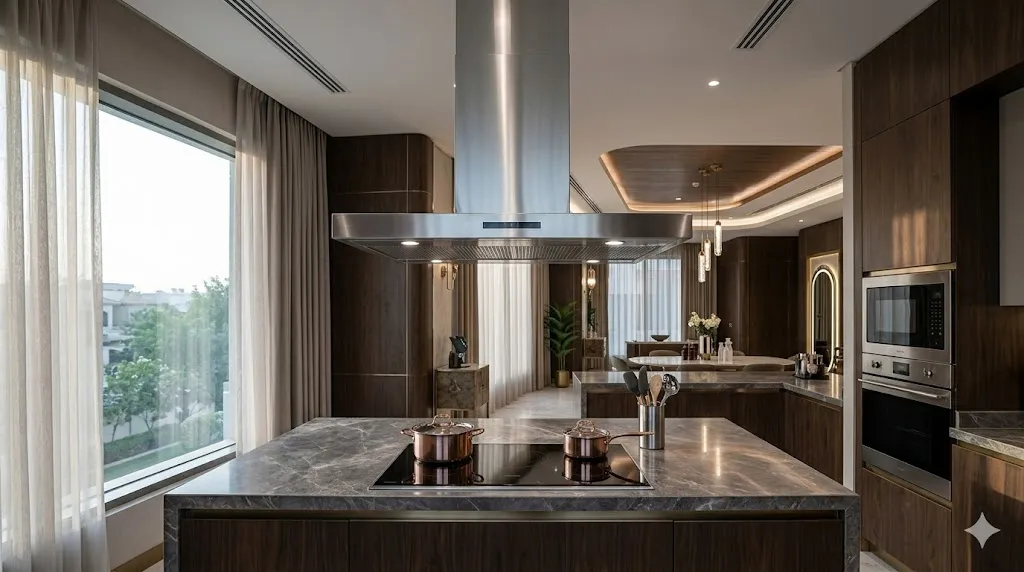
- Built-in kitchen hood: Installed inside the kitchen cabinet to reduce visibility while keeping extraction close to the stove.
- Concealed kitchen hood: Hidden almost completely behind the cabinet front, with only the control panel or grille visible. It requires very accurate measurements.
- Internal kitchen hood: Recirculates air through filters without an outdoor outlet. It may also be built-in or concealed.
Proper installation of these types requires professional safety standards, including:
- Providing enough space for air return inside the cabinet so the fan works efficiently and the appliance does not overheat.
- Designing the cabinet in a way that allows filters to be removed and replaced without dismantling wooden parts.
- Protecting the cabinet from heat and grease while providing a safe electrical source away from air routes and rising steam.
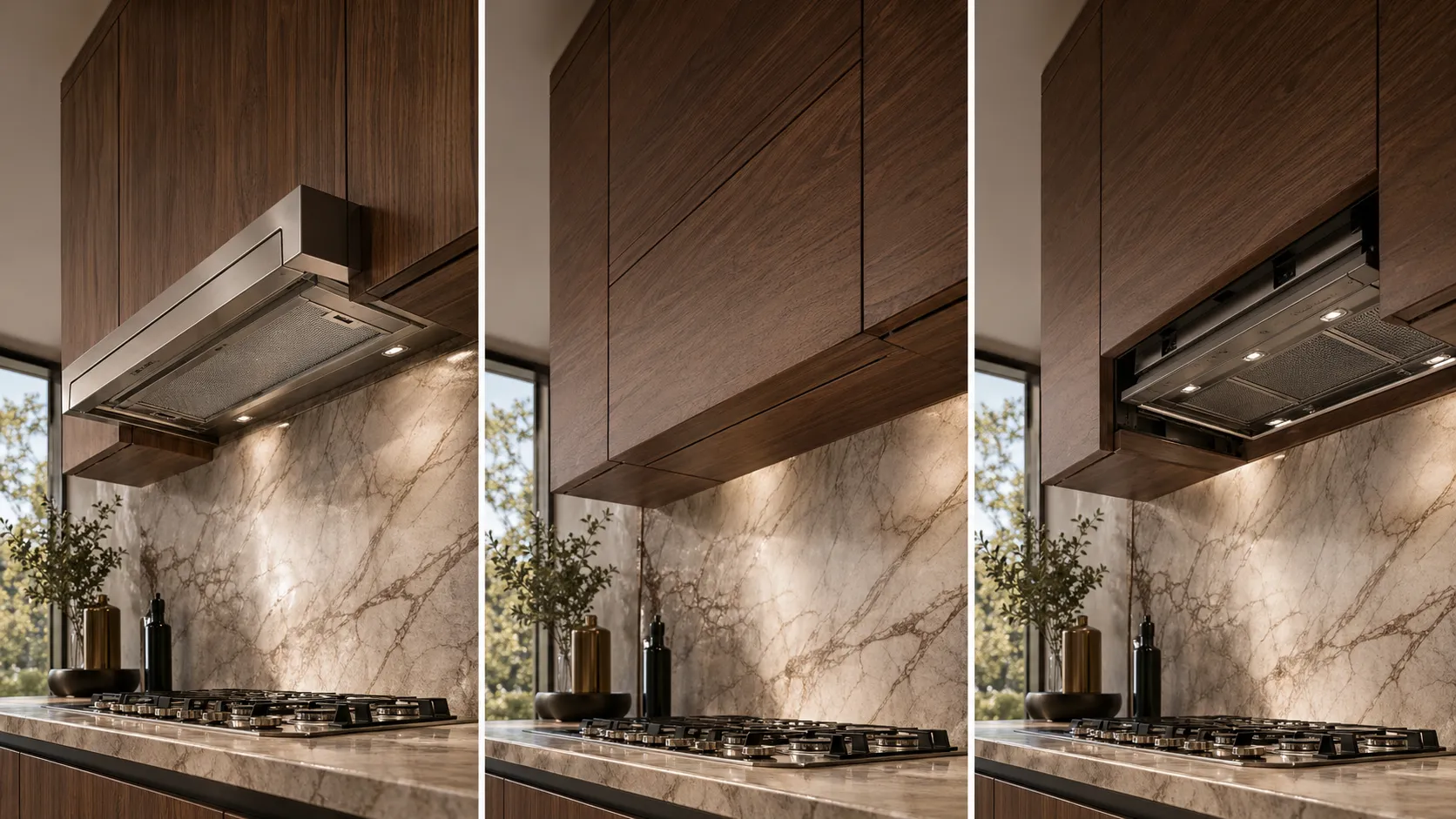
How to Choose the Right Size for a Built-in or ductless kitchen hood
The basic rule is to choose a hood that covers the entire cooking area so it can capture rising steam and grease.
When choosing a built-in hood or a ductless kitchen hood, consider the following.
Stove Width
Choose a hood equal to the stove width or slightly wider.
A smaller hood may fail to capture steam rising from the edges.
Cabinet Depth
Make sure the hood depth matches the upper cabinet depth.
This prevents the appliance from protruding awkwardly or becoming difficult to install inside the cabinet.
Air Outlet Method
If you are using a ductless kitchen hood, leave enough space for recirculated air to exit properly.
If the hood is ducted, provide a clear duct route toward the external outlet.
Filter Type
Choose grease filters that are easy to remove and clean.
If the hood works without an external duct, make sure compatible carbon filters are available.
Read more: Top Hotel Ventilation and Chalet AC Solutions in Kuwait: Silent Exhaust
Quick Size and Selection Table for Modern Kitchens
| Kitchen Condition | Best Hood Option | What to Measure | Installation Note |
| Light use | Internal built-in hood | Stove and cabinet width | Easy grease filter removal |
| Family use | Concealed hood with strong filter | Cabinet depth and power point | Clear route for air return |
| Open kitchen | Turbo hood with strong extraction | Stove location and air direction | Avoid trapping air inside cabinets |
| Heavy cooking | Study external duct installation | Duct route and outlet opening | A ductless system may not be enough |
Every kitchen has its own conditions, and those conditions determine the right specifications for smooth airflow.
Contact Cyberia customer service to prepare your request based on the technical data shown in the table.
Success Factors for Installing a ductless kitchen hood
A ductless kitchen hood requires a balance between extraction power and filter quality to prevent steam and grease buildup over time.
To achieve the best performance, consider the following.
Suitable Operating Capacity
Choose a model that matches your kitchen size and extracts odors without producing excessive noise.
High-Quality Grease Filters
Use effective grease filters that capture oil before it enters the appliance.
They should also be easy to remove and clean.
Compatible Carbon Filters
Install original carbon filters that match the model to clean the air before recirculating it into the kitchen.
Close Position to the Stove
Install the hood close to the steam source to capture smoke before it spreads.
Smooth Air Movement
Make sure inlet and outlet openings are not blocked by décor or cabinet parts.
This allows air to move smoothly through the appliance.
Regular Maintenance
Clean grease filters regularly to prevent clogged pores and reduced performance.
Carbon Filter Replacement
Replace carbon filters when you notice reduced odor removal performance.
This helps keep kitchen air cleaner during use.
Supporting Ventilation
Use a window or additional ventilation source to reduce humidity, especially because a ductless kitchen hood does not discharge air outdoors.
Cooking Style
Limit this type to light and medium cooking. Heavy frying and grilling usually require stronger external exhaust solutions.
Also read: Best Central Home Ventilation Systems in Kuwait and Silent Duct
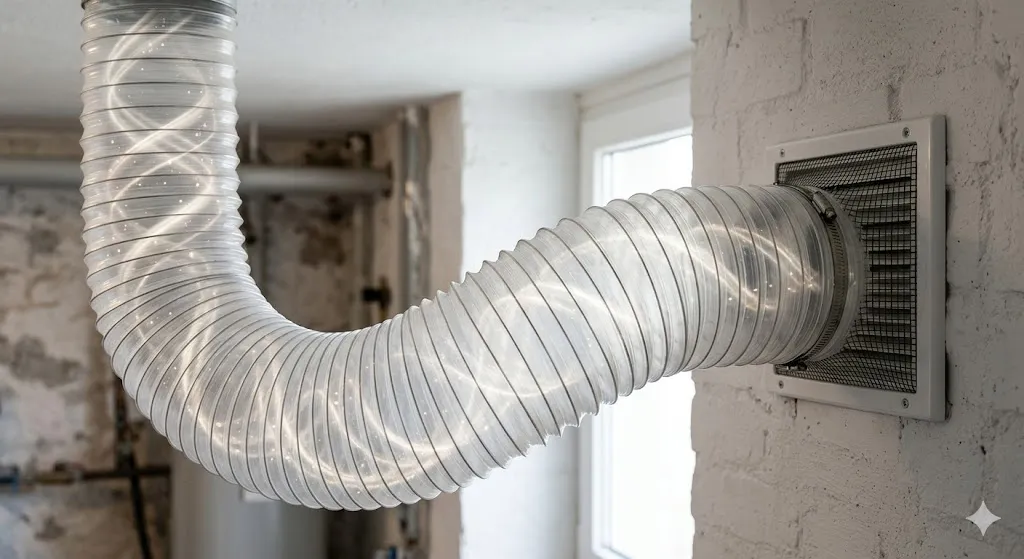
Duct Route Design Rules When an External Outlet Is Available
A smart duct route improves extraction, while a poorly designed route weakens performance and increases noise.
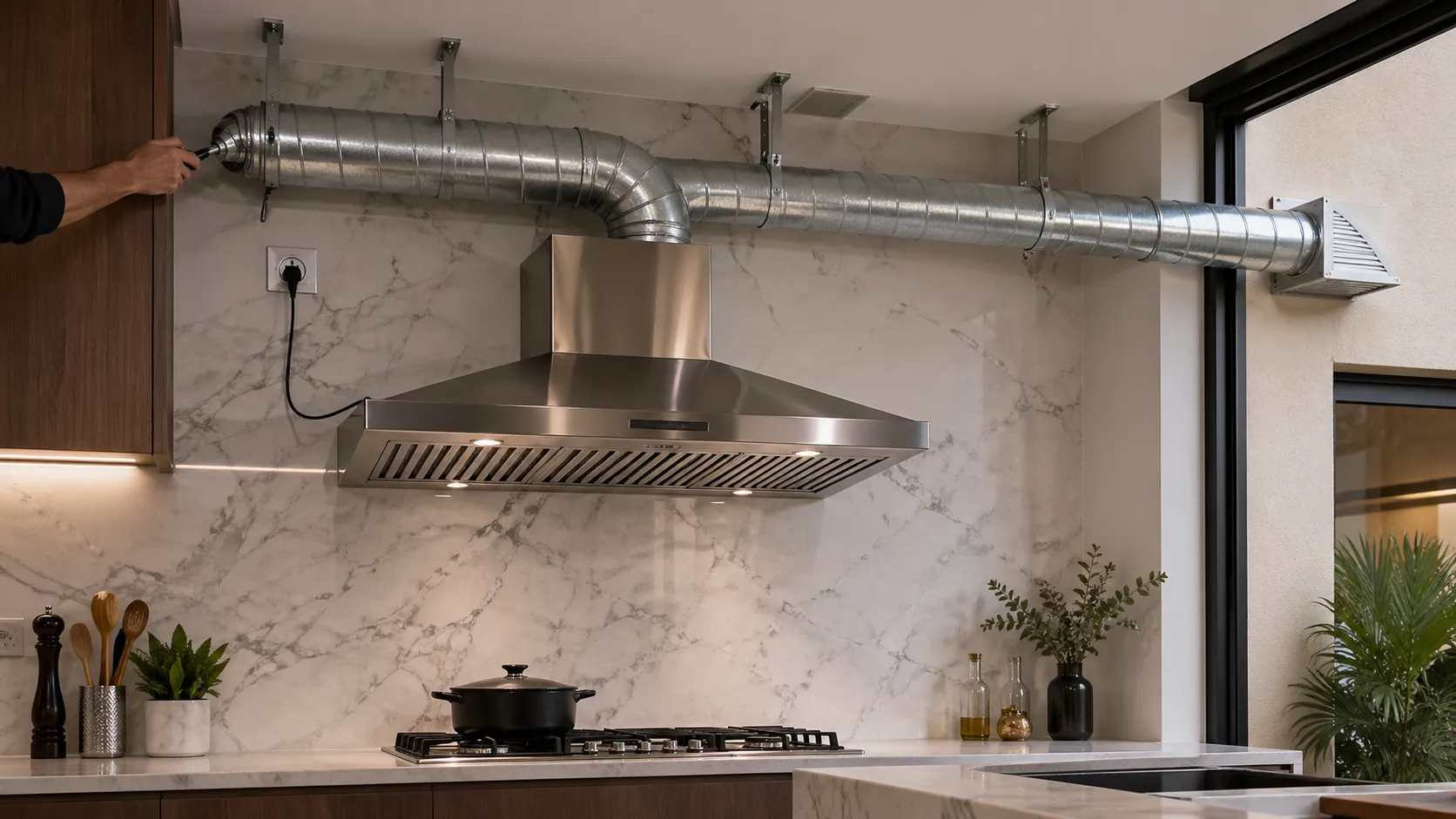
The route should provide the shortest possible path between the hood and the outlet to reduce air resistance.
Engineering Route Design Basics
- Reduce bends: Design the route with the fewest possible angles to prevent weak extraction and grease buildup.
- Shorten the distance: Keep the duct as short as possible so heat and steam leave quickly.
- Seal the connections: Secure all joints properly to prevent odors from leaking into the ceiling.
Technical Requirements for the Outlet Point
- Outdoor discharge: Make sure the duct reaches the outside completely. It must not end inside ceilings.
- Backdraft damper: Use a backdraft damper to prevent dust or insects from entering the kitchen.
- Smooth inner surface: Choose ducts with smooth internal surfaces to reduce friction and prevent blockage.
Too many bends in air ducts can choke the motor and reduce extraction significantly. Contact Cyberia to design a duct route plan that provides maximum steam discharge outdoors.
Maintaining a ductless kitchen hood and Preventing Odors
Neglecting cleaning will block airflow routes, increase motor noise, and reduce odor control.
To maintain a ductless kitchen hood, follow these practices:
- Clean the grease filter: Wash metal filters regularly to prevent oil buildup that restricts airflow and increases noise.
- Replace the carbon filter: Change carbon filters once they become saturated with odors because they are responsible for cleaning the air before recirculation.
- Clean the internal body: Wipe areas around the fan to prevent sticky grease layers that affect motor balance and speed.
Some signs require urgent maintenance:
- Cooking odors remain for a long time after finishing, which may indicate a damaged or saturated carbon filter.
- Steam rises away from the extraction area, which may indicate clogged front grease filters.
- The fan becomes unusually loud, which may indicate blockage or friction caused by dirt buildup.
Cyberia: Leading Ventilation and HVAC Solutions in Kuwait
Cyberia leads the Kuwaiti ventilation market by providing integrated engineering solutions that go beyond supply and installation.
Our vision is based on analyzing each site and kitchen space to ensure performance efficiency according to international quality standards and customer needs.
At Cyberia, we use a technical method when recommending kitchen ventilation systems:
- Site analysis: Studying kitchen size and daily cooking intensity to define the required extraction power accurately.
- Custom solutions: Providing a ductless kitchen hood as a practical option for buildings without ready external duct routes.
- Design integration: Installing built-in hood systems inside modern cabinets to balance elegant appearance with effective function.
Cyberia Supply and Installation Advantages
Cyberia provides sustainable kitchen ventilation solutions through:
- Recommending the most suitable hood according to stove and cabinet dimensions.
- Installing appliances professionally so filters remain easy to remove and maintain.
- Using advanced filtration systems that reduce odors efficiently in recirculating kitchens.
Why Work with Cyberia?
Working with Cyberia becomes especially valuable when preparing a modern kitchen in Kuwait because we help with:
- Solving complex duct restrictions by offering high-quality internal hood systems that are easy to install.
- Providing technical consultations for electrical points and airflow planning in large residential projects.
- Supplying original spare parts and carbon filters to keep kitchen ventilation systems performing efficiently.
Cyberia covers all Kuwait governorates. Send your location now and receive a detailed quotation that matches your real need.
FAQs About ductless kitchen hood and Built-in Kitchen Hoods
Does a ductless kitchen hood Increase Kitchen Steam?
Yes, it can.
A ductless kitchen hood mainly filters odors and grease, but it does not remove humidity completely outdoors. This is especially clear in closed kitchens and during boiling, where steam may take longer to disappear.
Can a Built-in Hood Damage Kitchen Cabinets?
Cabinets may be damaged over time if ventilation around the appliance is weak or if grease accumulates because of poor installation.
Correct fixing, cabinet protection, and enough access space for filter maintenance are essential.
How Can I Check Hood Noise Before Buying?
Ask the supplier to operate the appliance at different speed levels.
Check for stable sound and make sure there is no vibration or clicking. Vibration often comes from fixing problems or cabinet structure, not from the motor alone.
Is a Built-in Hood Suitable Above a Gas Stove?
Yes, provided that you choose a model designed for that use and follow the manufacturer’s safety distances.
The goal is to protect the appliance from direct heat and ensure effective steam extraction from the flame area.
What Lighting Specifications Make a Hood Practical?
Choose clear and comfortable lighting over the cooking surface.
Make sure the light position does not create strong shadows over pots. It is also better if the light is easy to maintain or replace, especially in concealed and built-in kitchen hoods.