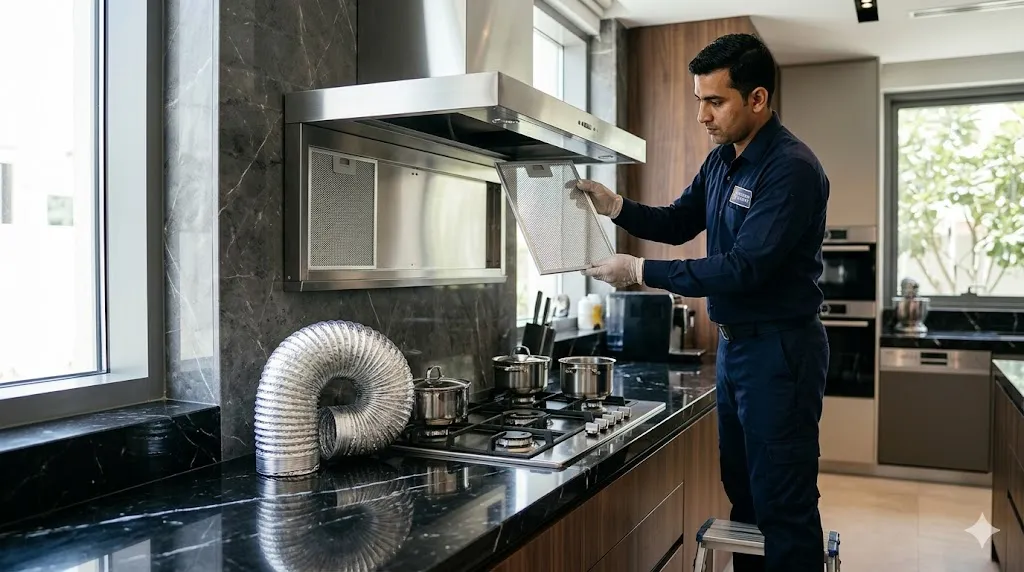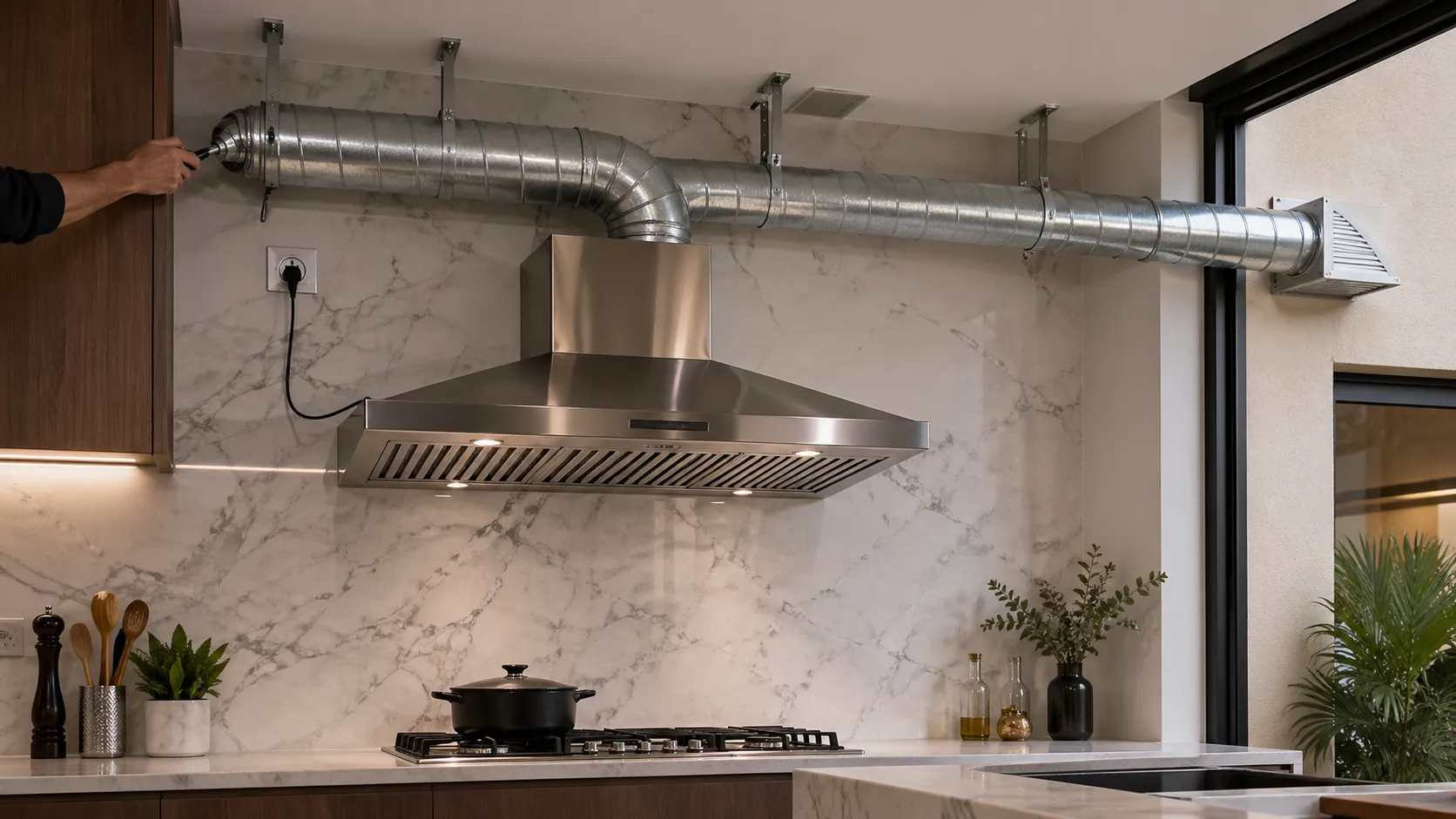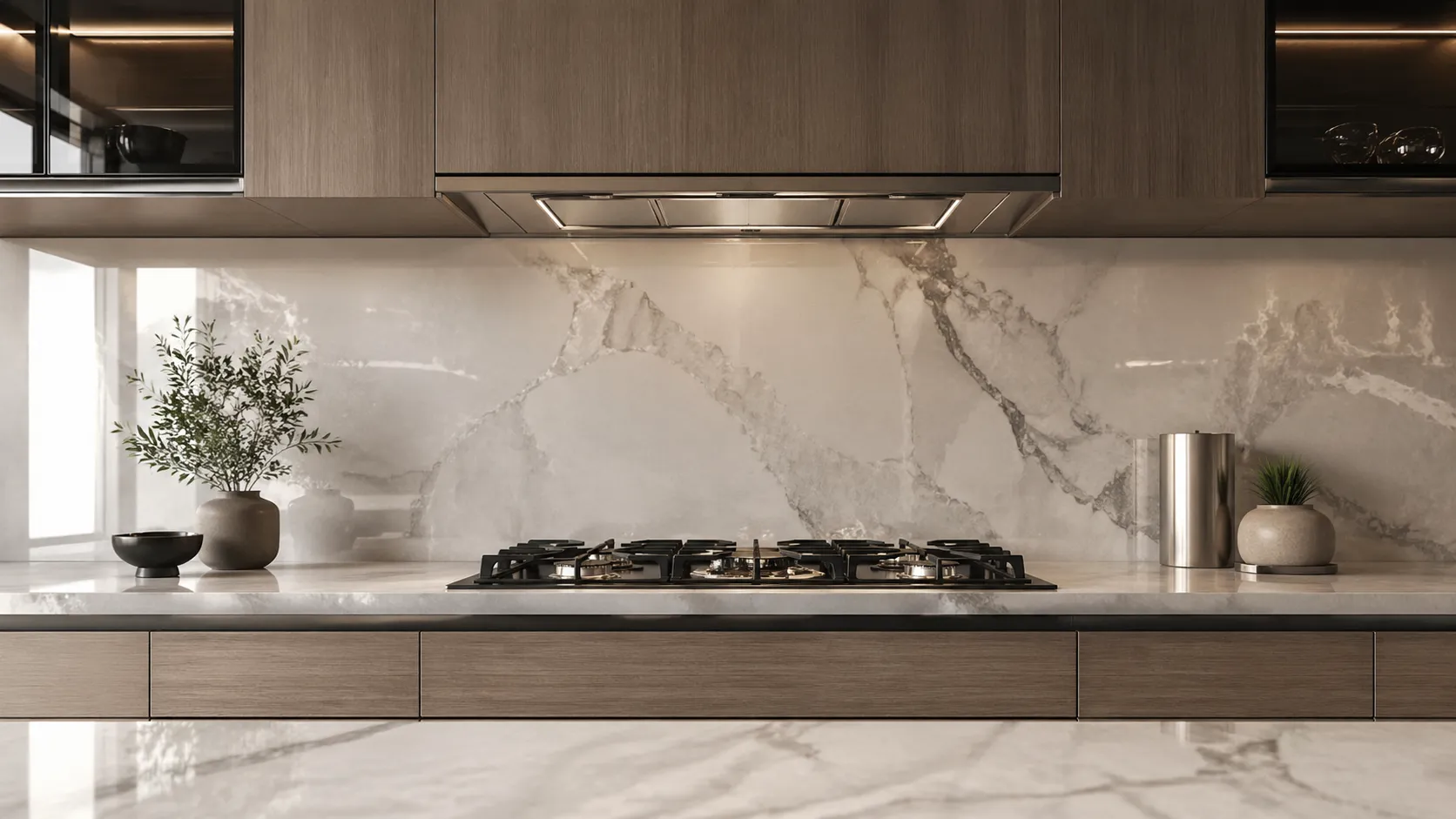


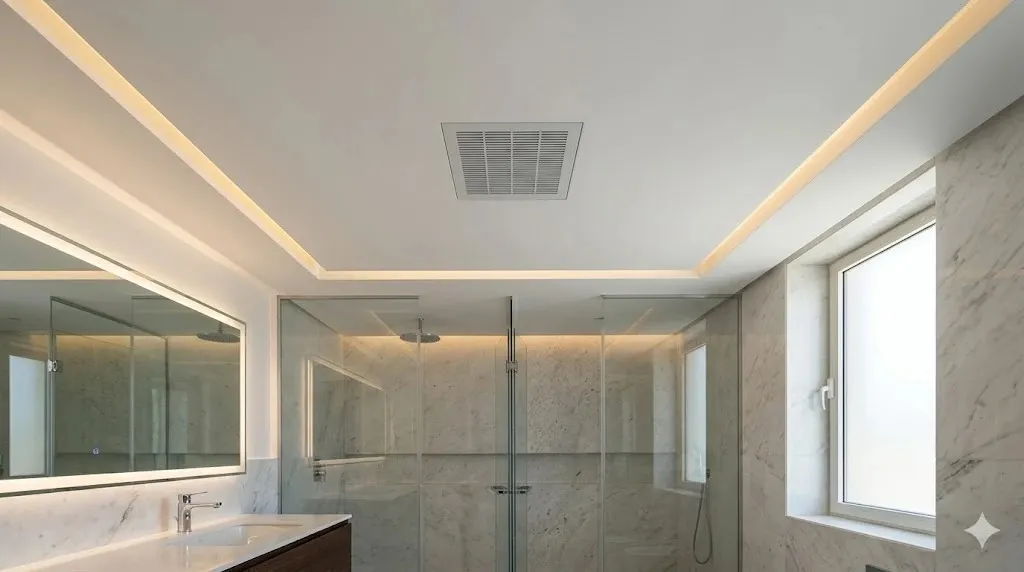
One of the biggest mistakes many people make is treating a bathroom exhaust fan the same as a kitchen exhaust fan just because they look similar. The result is grease buildup that becomes difficult to clean later.
Choosing a small kitchen exhaust fan correctly depends on the kitchen layout, stove location, discharge route, and daily cooking habits. A compact fan can work well in limited spaces, but only when it is installed close to the source of steam and connected to a proper exhaust route.
In this Cyberia guide, we explain:
- When a small kitchen exhaust fan is suitable for limited spaces.
- The difference between a wall-mounted kitchen exhaust fan and a window kitchen exhaust fan.
- Where to install a window exhaust fan to prevent air from returning indoors.
- How to choose the right air route for wall-mounted and window exhaust fans.
- When you need a ceiling exhaust fan or external kitchen exhaust fan.
- The difference between a kitchen window exhaust fan and a bathroom window exhaust fan.
Cyberia has extensive experience solving ventilation problems in compact kitchens across Kuwait. Send us photos of your site and get a technical recommendation for the fan type that best fits your space.
Factors That Determine Whether You Need a Small Kitchen Exhaust Fan
Several conditions may require installing a small kitchen exhaust fan to achieve effective ventilation in a limited kitchen area.
These include:
- Limited space: A small unit helps maintain movement freedom and avoids overcrowding the walls.
- Small stove size: A compact fan can be enough when it is installed accurately near the cooking source.
- Short ventilation route: Short routes improve the extraction efficiency of small fans and prevent performance loss.
- Ready kitchen condition: Finished kitchens often need simpler solutions that do not require major gypsum or décor modifications.
- Light cooking habits: Medium-capacity fans are suitable for light cooking, especially in closed kitchens.
- Limited cabinet dimensions: A built-in or compact model may prevent cabinet cutting and design changes.
A small kitchen exhaust fan should not be selected by size alone. Its success depends on how close it is to the stove, how short the exhaust path is, and whether the outlet allows air to leave without resistance.
Read more: Laboratory and Pharmacy Ventilation in Kuwait: Engineering Guide for Airflow and Pressure Control
Difference Between a Wall-Mounted Kitchen Fan and a Window Kitchen Fan
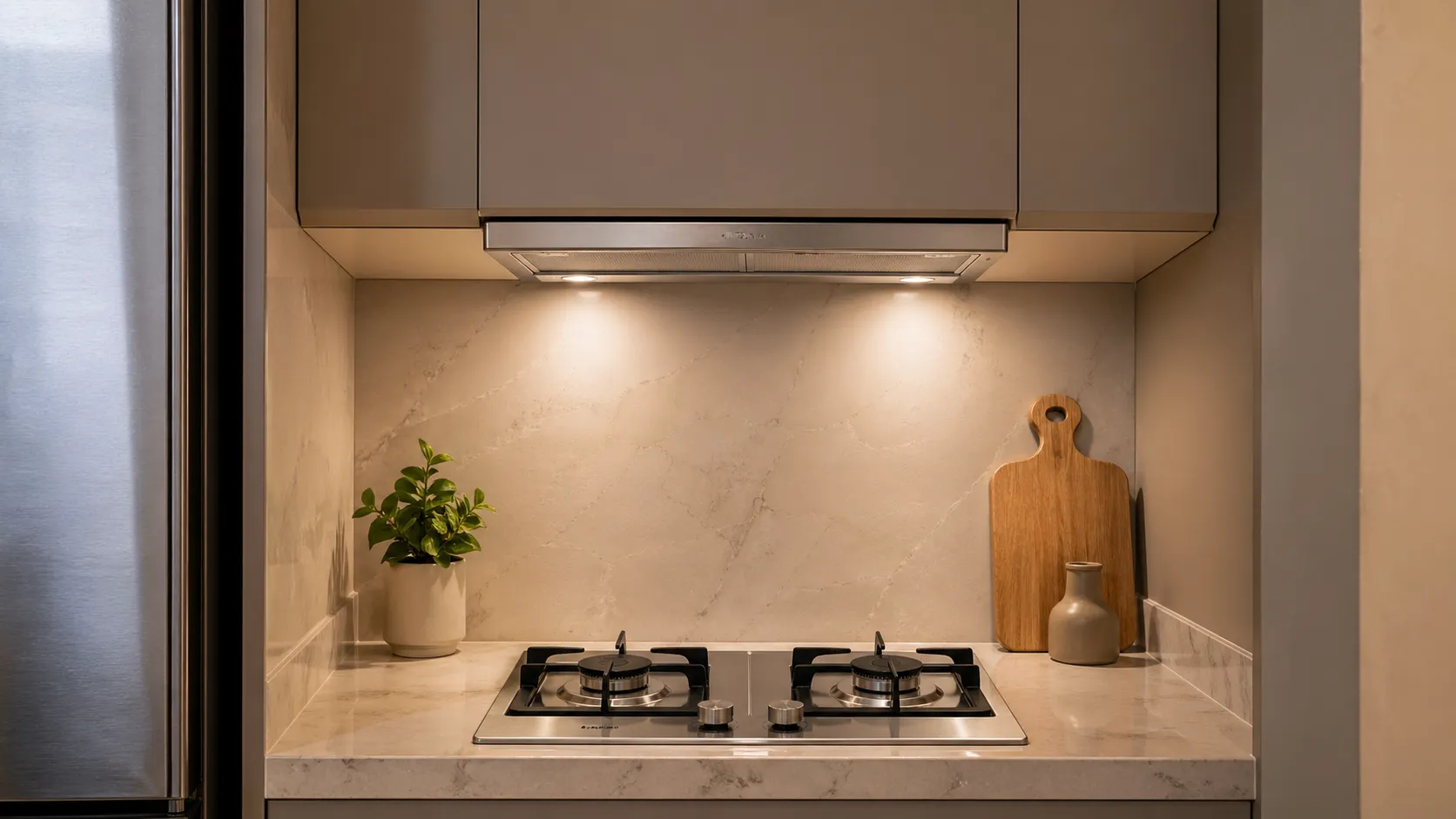
The main difference is that a wall-mounted kitchen fan is installed above or near the stove on the wall, while a window kitchen exhaust fan is installed in a window opening or direct external opening.
This creates differences in several areas.
Odor Extraction Method
A wall-mounted kitchen fan extracts grease and steam directly above the stove because it is closer to the cooking source.
A window exhaust fan pulls air toward the window. Its effect may weaken if the stove is far from the opening.
Need for Ductwork
A wall-mounted model may need a duct if the discharge opening is far from the fan, especially when air must pass through cabinets or ceiling routes.
A window exhaust fan discharges air directly outdoors, provided that the window opening is sealed properly.
Effect on Kitchen Appearance
A wall-mounted fan becomes part of the modern kitchen design and can match cabinets and finishing materials.
A window exhaust fan is simpler in appearance and may not suit the décor if the window is visible on the kitchen façade.
Ease of Installation
A window exhaust fan is usually faster to install if the opening is already available.
A wall-mounted kitchen fan requires checking the fixing point, electrical supply, and discharge route, but it gives more flexibility in extracting steam closer to the cooking area.
Also read: Majlis Ventilation in Kuwait: Odor Extraction and Duct Setup
When Should You Choose a Wall-Mounted Kitchen Fan Instead of a Window Fan?
A wall-mounted kitchen exhaust fan is suitable in several cases, especially when the cooking source is close to the wall and you need better steam capture than a window fan can provide.
Stove Against the Wall
When the stove is placed against the wall, the fan can be fixed directly above it, capturing steam before it spreads inside the kitchen.
Window Far from the Stove
If the window is far from the stove, odors may pass over cabinets and ceilings before reaching the window fan.
Open Kitchen Layout
Open kitchens need extraction close to the stove to prevent odors from moving quickly into the living room or majlis.
A wall-mounted kitchen fan provides better source capture in this case.
Cabinet and Décor Compatibility
Wall-mounted fans are available in designs that suit modern kitchens, including stainless steel, glass, and contemporary finishes.
Possibility of Installing a Duct Route
If a short and sealed duct route to the outside is available, the wall-mounted type becomes practical and closely connected to the cooking source.
Easier Filter Cleaning
Because this type is installed above the stove, filter inspection and cleaning become clearer, especially with daily cooking and grease buildup.
When Is a Window Kitchen Fan Suitable for a Small Kitchen?
A window kitchen exhaust fan can be suitable in compact kitchens when the opening is close to the stove and the cooking load is moderate.
Opening Close to the Stove
When the window or opening is close to the stove, it can extract cooking smoke and odors quickly before they spread.
Very Small Kitchen Area
A window fan can provide good ventilation and continuous air renewal in very tight spaces.
No Wall Space Above the Stove
If the wall above the stove is blocked by cabinets or unavailable, a window fan may be a practical alternative.
Fast Installation Requirement
A window exhaust fan can be installed with less effort when the opening is ready, reducing the need for wall drilling or major kitchen modifications.
Proper Opening Compatibility
The fan body must fit the opening tightly to prevent vibration and air backflow.
Light Cooking Style
A window kitchen fan may work well for light meals and moderate cooking while helping reduce electricity use.
A small kitchen exhaust fan installed in a window can be practical, but it must not be too far from the stove. If the fan only pulls air after smoke has already spread, its performance will feel weak even if the motor is working.
Cyberia’s ability to read site layouts helps determine the shortest and most sealed extraction route. Request a site inspection from our team to choose the installation point that provides the strongest extraction.
Also read: Best Bathroom Exhaust Fan in Kuwait: Size Selection and Silent Ventilation Guide
Where to Install a Window Exhaust Fan to Prevent Air Backflow
A window exhaust fan must be installed in a position that allows smoke and odors to leave without returning indoors.
To achieve this, follow these rules:
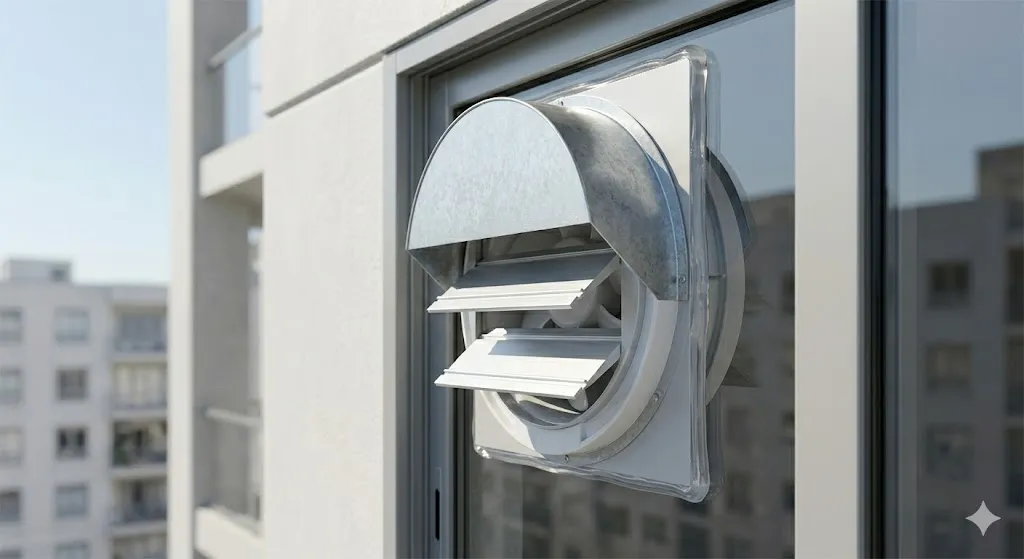
- Install the kitchen window exhaust fan in a window opening facing an open outdoor space to prevent discharged air from circulating back indoors.
- Place the fan as close as possible to the stove so grease particles and steam are captured immediately.
- Avoid installing the fan beside open windows or air inlets that may pull discharged odors back into the kitchen.
- Choose a location protected from direct outdoor wind that may obstruct airflow or bring dust inside.
Correct placement can turn a small kitchen exhaust fan into an effective solution for compact kitchens. Poor placement, on the other hand, can lead to odor return, weak extraction, and dust entering from outside.
How to Choose the Air Route for a Wall-Mounted or Window Exhaust Fan
Ventilation efficiency depends heavily on the discharge route design. A short and organized route helps remove steam quickly and prevents grease buildup inside the kitchen.
To ensure strong airflow and prevent odor backflow or grease leakage inside walls, the technician should:
- Use the shortest possible route between the extraction point and discharge point to reduce air resistance.
- Reduce bends and sharp angles in the route to prevent steam return and maintain smooth airflow outdoors.
- Seal all joints with proper insulation materials to prevent odor or moisture leakage behind décor or into internal spaces.
- Avoid discharging air into false ceilings or enclosed voids to prevent mold and odor problems over time.
A small kitchen exhaust fan performs best when the route is short, sealed, and directed outdoors. Long routes, compressed hoses, or narrow outlets can weaken extraction and increase noise.
Cyberia uses short and straight duct routes to improve grease and steam discharge efficiency. Consult our team before starting kitchen décor works to benefit from proper route planning.
Read more: Best Bathroom Ceiling Exhaust Fan in Kuwait: Size and Installation Guide
When Do You Need a Ceiling Fan or External Kitchen Exhaust Fan?
A ceiling exhaust fan or external kitchen exhaust fan may become necessary in specific situations.
You may need one when:
- A false ceiling allows ventilation ducts to be extended in a hidden and safe way.
- There are no windows near the preparation area, requiring vertical extraction upward.
- You want to move the fan unit outside the building to reduce noise and improve discharge strength over long routes.
- A nearby outlet allows installing an external wall fan that serves short duct routes efficiently.
- Vertical routes require roof-mounted fans to extract steam from multiple floors.
- The kitchen requires a central exhaust system with long or highly curved duct routes.
- An existing kitchen cannot support traditional fan installation directly above the cooking area.
In these cases, a small kitchen exhaust fan may not be enough on its own. The system may need a ceiling-mounted, external, or duct-assisted solution based on route length and cooking intensity.
Difference Between a Kitchen Window Fan and a Bathroom Window Fan
The same fan type should not be used for both spaces. Each one handles a different type of air and has different technical requirements.
Type of Extracted Air
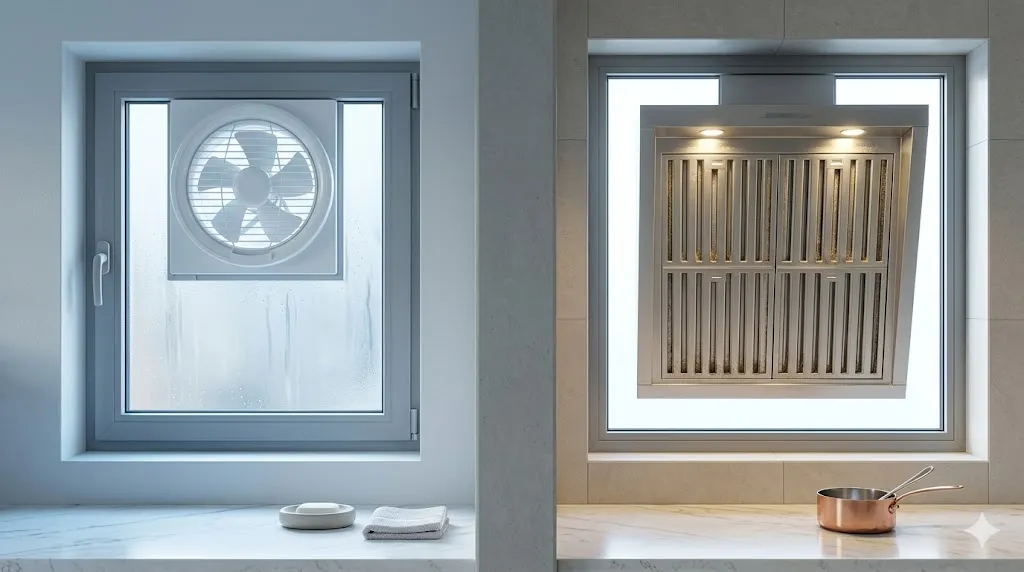
A kitchen fan extracts air loaded with grease, steam, and cooking odors, so it needs more cleaning and must be installed close to the cooking source.
A bathroom fan extracts humidity and odors, with the main focus on steam reduction and moisture control.
Suitable Installation Location
A kitchen exhaust fan should be as close to the stove as possible so it captures steam before it spreads.
A bathroom fan should be installed where it can remove humidity from the shower area or the highest point where steam collects.
Filter Cleaning Requirements
In the kitchen, grease accumulates quickly on blades or grilles, so regular cleaning is essential.
In bathrooms, dirt is usually caused by dust and humidity, not oil, so maintenance needs are different.
Resistance to Humidity and Grease
A bathroom window fan must tolerate continuous humidity.
A kitchen window fan must better handle grease and light heat from cooking. Choosing the wrong unit may lead to weak performance or rapid dirt buildup.
Required Extraction Power
Kitchen extraction power should usually be stronger because of odors and grease, especially with frying and daily cooking.
Bathroom fans need continuous or effective humidity extraction, but the air is usually lighter than kitchen air.
Air Return Risk
In kitchens, backflow means odors and grease may return indoors.
In bathrooms, backflow may return humidity or odors. In both cases, external louvers or covers help reduce reverse airflow.
This is why choosing a small kitchen exhaust fan is different from choosing a bathroom exhaust fan, even when the visible shape appears similar.
Also read:
What Should You Prepare Before Installing a Small or Wall-Mounted Kitchen Fan?
Preparation helps create a clear discharge route and reduces the need for construction changes after installation.
Before installing a small kitchen exhaust fan, prepare the following:
- Define the fan location above the stove to capture steam as soon as it rises.
- Measure the available space carefully to avoid random cabinet cutting or pressure on furniture.
- Provide a nearby and safe electrical point through a qualified technician.
- Check the air outlet and duct route to confirm there are no bends that weaken extraction.
- Make sure the wall can support the fan weight and hold screws and metal brackets firmly.
- Clear the work area from cookware and breakable items to help the technician measure and drill safely.
- Cover marble, ceramic, and wood surfaces to protect them from drilling dust or scratches.
Complete site data helps speed up execution and prevents electrical or duct connection mistakes. Upload opening measurements and site photos to receive your technical and financial quotation.
Cyberia: Engineering Solutions for Small Kitchens in Kuwait
At Cyberia, we provide advanced HVAC and central ventilation solutions in the Kuwaiti market, focusing on combining operational efficiency with practical design suitable for demanding conditions.
We do not only supply equipment. We also provide technical consultation that helps keep your kitchen healthy, free from smoke, grease, and trapped odors.
Our recommendations are based on a deep understanding of home and project requirements in Kuwait.
For limited spaces, Cyberia recommends solutions such as:
- Built-in wall-mounted exhaust fans: To extract grease directly from the source and prevent it from spreading.
- Trusted international brands: Providing brands such as KDK and TAT for strong extraction with quiet operation.
- Short duct routes: Reducing bends to move air out quickly and prevent backflow.
- Easy-clean metal filters: Choosing systems that allow simple removal and cleaning without complex tools.
At Cyberia, we base every small kitchen exhaust fan recommendation on your site’s technical details, including stove position, outlet location, available wall space, and cooking habits.
Send us your kitchen data and receive a precise recommendation for the model that matches your space.
FAQs About Small, Wall-Mounted, and Window Kitchen Fans
Is a Small Kitchen Exhaust Fan Enough for a Compact Kitchen?
Yes, a small kitchen exhaust fan can be enough if it is installed directly above or very close to the stove with a proper discharge route.
If the fan is too far from the cooking source or the outlet is not sealed properly, odors may remain inside the kitchen.
Which Is Better for a Small Kitchen: Wall-Mounted Fan or Window Fan?
A wall-mounted kitchen fan is better if the wall is close to the stove and a suitable discharge opening can be installed.
A window exhaust fan is suitable if the window is close, stable, and allows direct outdoor air discharge.
Can a Kitchen Window Exhaust Fan Be Installed on Glass?
It is better to install the fan on solid frames or dedicated openings to avoid vibration and dust leakage.
Consult a specialist technician before cutting or modifying glass.
Can a Window Exhaust Fan Let Dust or Hot Air Into the Kitchen in Kuwait?
Yes, this can happen if the openings are not sealed properly or if there are no backdraft louvers.
To prevent this, seal the gaps around the frame and use accessories that block outdoor air entry.
When Do I Need a Ceiling Fan or External Exhaust Fan?
These systems become necessary when there are no windows or walls suitable for direct discharge, or when long duct routes are needed to reach a suitable external outlet.