
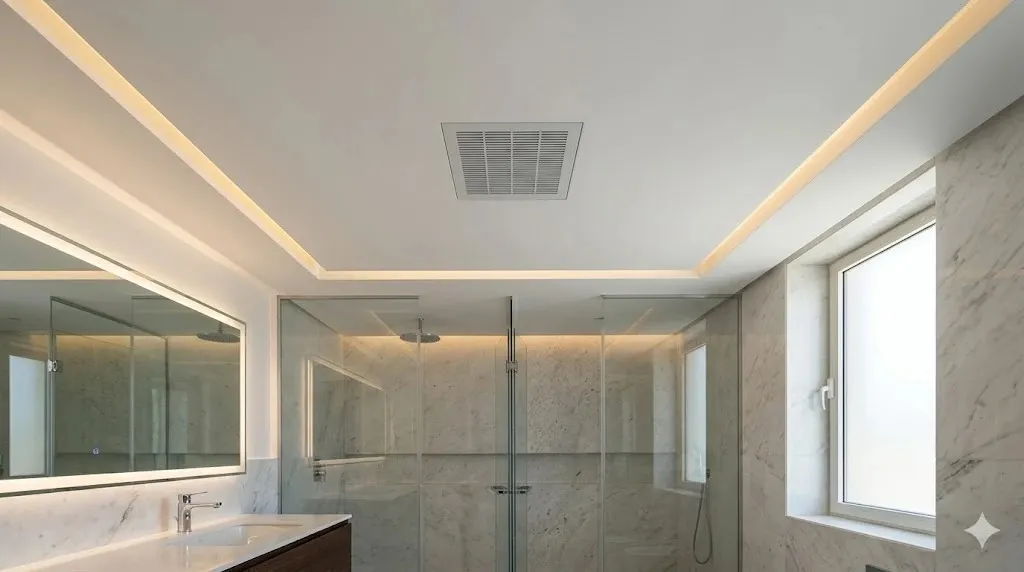
Hidden kitchen extraction systems can become a financial and operational burden when weak performance is caused by poor duct planning rather than a weak motor. The success of these systems depends on matching engineering measurements with the actual construction conditions of the kitchen.
At Cyberia, our goal is to give you a practical reference that helps you evaluate whether the hood suits your kitchen space and whether your ventilation system is ready before you make a purchase decision.
In this guide, you will learn:
- Why 60 cm built-in kitchen hoods are common in modern Kuwaiti kitchens.
- How to measure the stove and cabinet before choosing a 60 cm hood.
- A kitchen hood size table for modern kitchens and when you need a size larger than 60 cm.
- Common types of built-in kitchen hoods and what makes each type practical.
- Whether to choose an external duct or carbon filter for a 60 cm built-in kitchen hood.
- When to use a turbo hood or a ductless kitchen hood.
As Cyberia is experienced in residential ventilation and duct setup, you can request a site inspection to identify the model that matches your kitchen.
Why 60 cm Built-in Kitchen Hoods Work Well in Modern Kuwaiti Kitchens
A 60 cm built-in kitchen hood is successful because it combines practical size, hidden design, and reliable extraction when installed correctly.
Its advantages include:
- It blends with the cabinet design by being installed inside or under the cabinet, making it suitable for minimal and modern kitchens.
- It suits small and medium kitchens because of its balanced size, without overcrowding the space or requiring difficult structural changes.
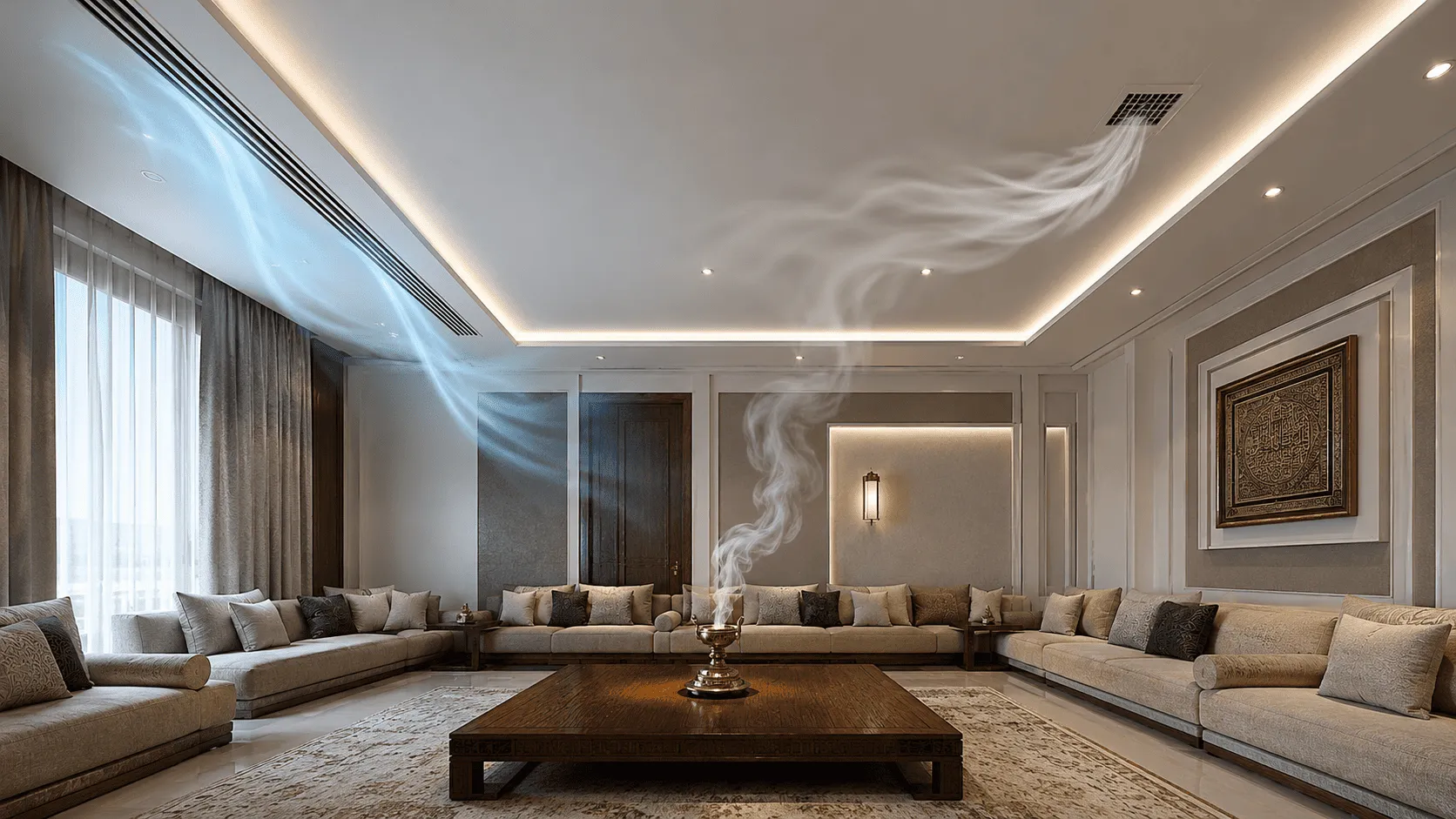
- Built-in hoods capture steam and grease as soon as they rise from the stove, helping prevent odors from spreading through the home while the AC is running.
- It can connect to an external discharge outlet for stronger performance, or use air filtration through special filters when no duct is available.
- It is easier to clean because the filters are accessible, without the need to remove wooden cabinet parts or complicate routine maintenance.
- It serves open kitchens effectively when installed accurately above the stove with a sealed air discharge route.
- A 60 cm built-in hood gives the kitchen a very organized look because it is hidden behind cabinet doors, helping maintain lighting and décor quality.
Cyberia provides technical solutions that prevent odor leakage and grease buildup. Contact us to recommend the system that matches your modern kitchen space.
Read more: Small Kitchen Exhaust Fan and Wall-Mounted Options in Kuwait
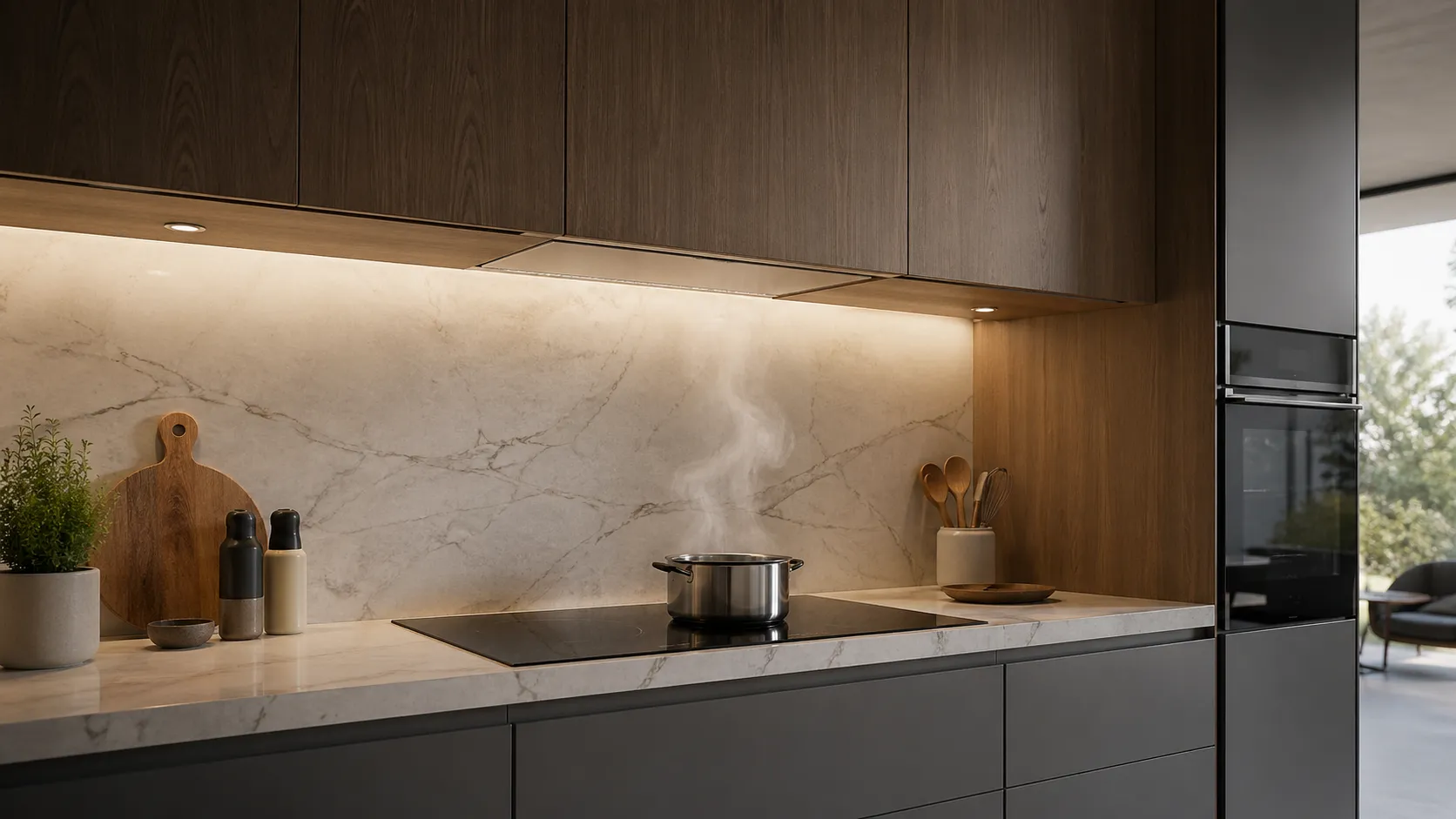
How to Measure the Stove and Cabinet Before Choosing a 60 cm Built-in Hood
Measuring before purchase is essential. The goal is to match the hood size with the actual area where steam and grease are produced, instead of relying only on theoretical catalogue dimensions.
To measure the installation space inside the cabinet, follow these steps:
- Check the internal cabinet width carefully to avoid side wood obstacles.
- Make sure the installation route is free from hinge or accessory interference.
- Measure the available space accurately so the hood body fits and sits properly.
- Check cabinet depth to provide enough space for easy filter access.
- Confirm that upper shelves do not conflict with hood components.
Checking the Duct Route and Power Connections
Before approving the hood, check the ventilation and electrical setup:
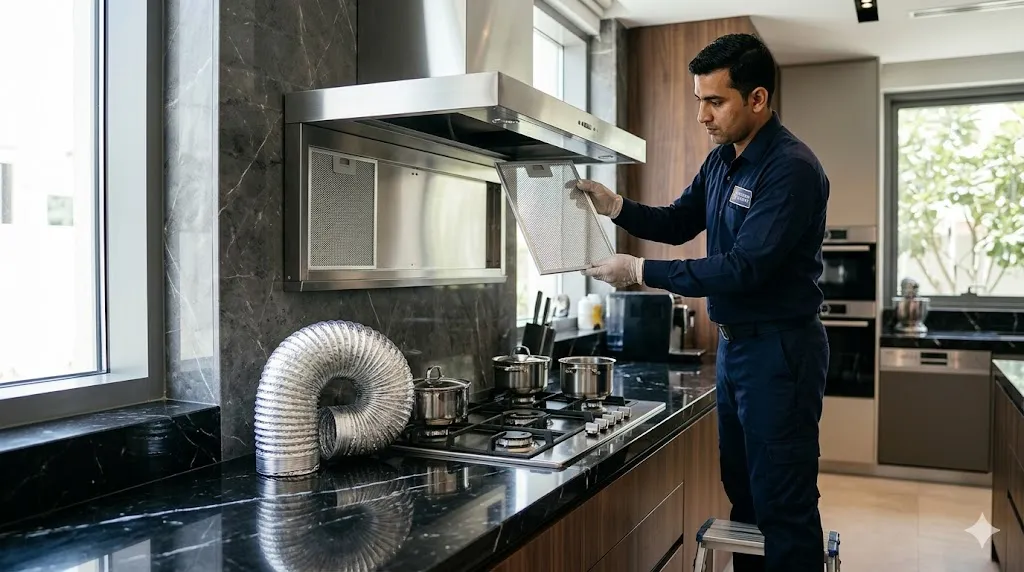
- Identify the duct location and filter space, while checking the external outlet direction and compatibility with the appliance.
- Make sure the model supports carbon filters if no external outlet is available, with enough space for future filter replacement.
- Coordinate with the contractor to prepare the duct opening, fixing points, and wiring routes before closing the cabinets.
- Ask a specialist to check the power supply points, because safe electrical connection is essential during hood installation.
Built-in Kitchen Hood Size Table for Modern Kitchens
Use this table as a quick reference when deciding whether a 60 cm built-in kitchen hood is suitable for your kitchen.
| Kitchen Case | Is a 60 cm Built-in Hood Suitable? | When to Choose a Larger Size | Decision Indicator |
| Medium stove in a closed kitchen | Usually suitable | Odors remain for too long or duct efficiency is weak | Provide a short and sealed exhaust route |
| Small apartment kitchen | Usually practical | Cabinet is too tight or maintenance is difficult | Choose a type with easy filter removal |
| Open kitchen connected to living area | Requires specific conditions | Heavy cooking and fast odor spread | Prioritize external exhaust |
| Cooktop wider than the hood | Not effective enough | Burners are outside the hood capture zone | Use wider coverage or a stronger extraction system |
| Kitchen without external outlet | Depends on filter type | Frequent frying and heavy steam | Filter is an emergency option and does not replace ducting |
Use this table as a quick guide for selecting the best built-in kitchen hood size according to your kitchen condition.
If your kitchen is open, your cooktop is wider than the hood, or there is no proper external outlet, you may need a larger hood or a stronger ventilation system after inspecting the duct route and daily use.
Also read: Beauty Salon Ventilation Solutions in Kuwait
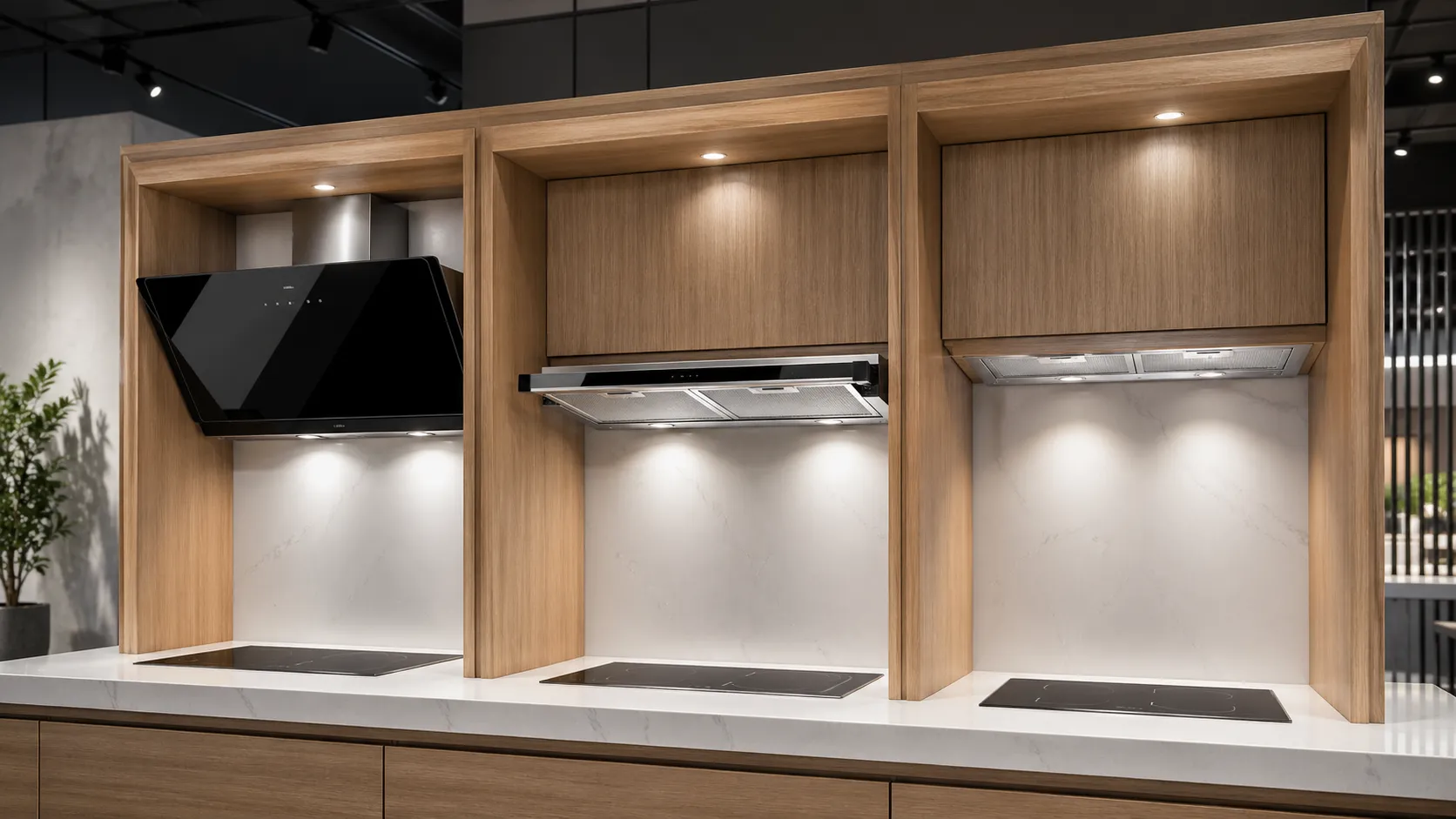
Common Built-in Kitchen Hood Types and Their Practical Advantages
Built-in kitchen hoods vary based on how they are hidden inside cabinets and how they extract air. Each type has practical features that make it suitable for specific situations.
1. Integrated Built-in Hood
This type suits modern kitchens and offers several advantages:
- It keeps the kitchen appearance highly organized by hiding the appliance inside the cabinet.
- It suits tall upper cabinets because it can be integrated without exposing metal parts.
- It avoids the bulky appearance of traditional wall-mounted hoods.
- It performs best when duct openings and cabinet dimensions are prepared accurately before installation.
2. Pull-out Built-in Hood
This hood appears during cooking and returns inside the cabinet when finished. It is a smart solution for small kitchens with hidden design preferences.
Its benefits include:
- It leaves more open space above the cooking area, reducing the feeling of clutter.
- It suits minimal designs because it does not permanently occupy visual space.
- It brings the extraction point closer to cooking pots when opened, improving grease capture.
- Its airflow efficiency and filter access must be checked before approval.
3. Flat Built-in Hood
This model has a simple under-cabinet design and is less bulky than older appliances.
Its advantages include:
- It is easier to install compared with models that require full internal cabinet cutting.
- It suits contemporary kitchens with straight lines and simple cabinet shapes.
- It provides quick access to controls and grease filters for daily use and cleaning.
- It requires enough space under the cabinet to keep the hood at a suitable height above the stove.
4. Built-in Hood with External Exhaust
This type is preferred when a wall opening or duct route is available.
It stands out because it:
- Discharges strong odors and high humidity outdoors instead of filtering and returning them to the kitchen.
- Suits heavy daily cooking and open kitchens that need immediate smoke removal.
- Depends on sealed duct connections and the shortest possible air route for strong discharge.
- Requires early planning before gypsum ceilings or cabinets are installed to hide ducts properly.
5. Built-in Hood with Air Recirculation
This type pulls air through carbon filters, cleans it, and returns it to the kitchen. It is used in apartments where wall drilling is not allowed.
It can help because it:
- Solves the problem of kitchens without external ventilation outlets or duct routes.
- Avoids difficult construction works or long discharge pipes that may affect ceiling décor.
- Is faster to install in many cases because it does not depend on a specific external outlet.
- Requires regular carbon filter replacement to maintain cleaner air and reduce frying odors.
Cyberia’s residential ventilation solutions cover different integrated and hidden hood types. Define your kitchen type and receive an accurate technical recommendation that matches your design and usage.
Check: Kitchen Hood Types and Installation Standards in Kuwait 2026
Criteria for Choosing a Built-in Hood for a Modern Kitchen
Beyond numbers, choosing a built-in hood for your modern kitchen depends on how well it fits the design, daily cooking habits, and technical setup.
Correct Stove Location
Install the hood directly above the cooking area to capture steam and odors before they spread.
The hood should be fully centered over the stove.
Upper Cabinet Readiness
Make sure the cabinet dimensions are suitable and that there is enough space for filters and internal components.
This prevents interference with shelves or wooden cabinet connections.
Easy Filter Cleaning
Choose models that allow flexible filter removal and installation for easy washing and periodic maintenance, especially if you fry or cook frequently.
Exterior Design Harmony
Compare fully concealed and partially visible models based on the overall kitchen style.
Design matters, but performance and access to components should remain priorities.
Control Panel and Lighting
Make sure the controls are easy to reach and that the lighting covers the work area effectively for a comfortable cooking experience.
Compatibility with Duct and Electricity
Check that power points and duct openings match the appliance’s technical requirements.
This helps the hood work efficiently and prevents installation obstacles.
Filter and Replacement Part Availability
Choose hoods with available spare parts and replacement filters in the market.
This supports long-term performance and makes future maintenance easier.
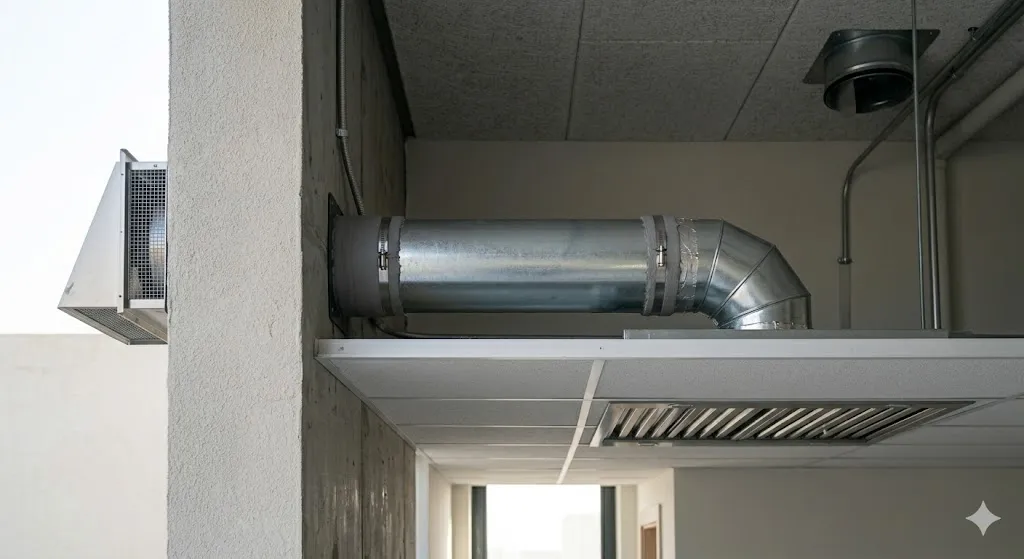
How Does the Duct Route Affect Built-in Hood Performance?
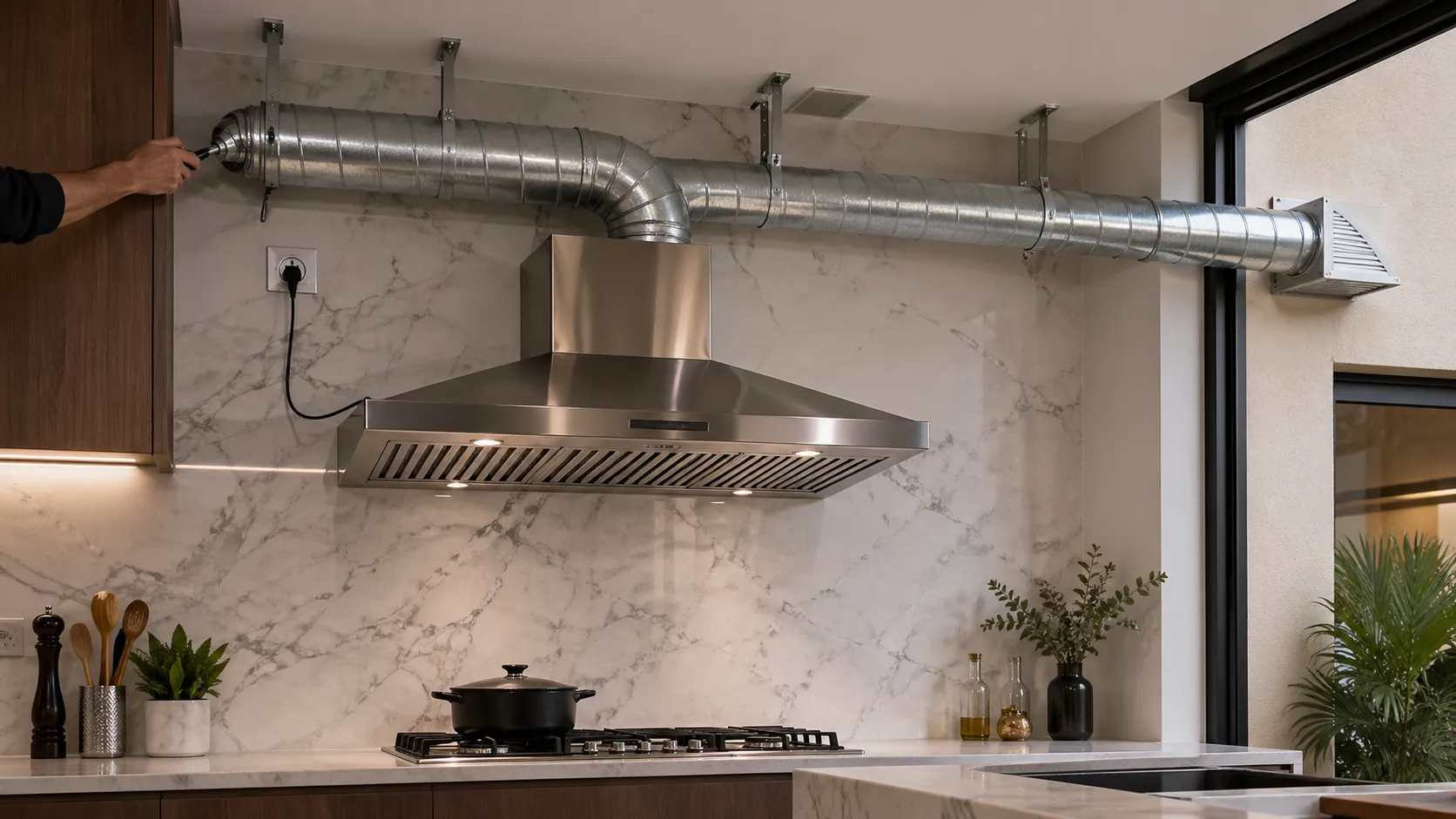
Built-in hood performance depends heavily on ventilation route quality. The system needs a clear path to remove steam, grease, and odors away from the kitchen.
Route Length and Extraction Efficiency
Long distances between the hood and discharge point make it harder for air to leave.
It is better to choose the nearest available outlet and avoid complex routes.
Too Many Bends and Air Movement
Multiple bends inside the duct restrict airflow and increase noise.
The route should remain as direct as possible, with unnecessary bends avoided.
Sealed Connections and Leakage Prevention
Poorly sealed connections allow grease and odors to leak inside cabinets or ceilings.
This creates lingering odors and visible grease marks around connection points.
Duct Space and Air Passage
A compressed or poorly bent duct inside the cabinet reduces the available airflow area.
Enough space must be provided so the duct is not trapped inside narrow sections.
External Discharge Point Location
If the outlet is close to windows, odors may return indoors.
The outlet should be placed where air can discharge away from ventilation openings.
Difficulty of Periodic Maintenance
A fully hidden or heavily twisted route makes it difficult to inspect grease leakage.
The route should be planned before cabinet installation, with maintenance access considered from the beginning.
Short and straight air routes are one of the reasons Cyberia’s kitchen ventilation systems perform effectively. Rely on our team to prepare your kitchen ductwork before closing décor and gypsum works.
Read more: Top Hotel Ventilation and Chalet AC Solutions in Kuwait: Silent Exhaust
Cyberia: Planning Your Kitchen Ventilation and Recommending the Right Hood
Cyberia provides integrated ventilation and air conditioning solutions in Kuwait, combining operating efficiency with engineering aesthetics.
Our services go beyond supplying appliances. We design and execute air ducts for villas, residential plots, and commercial projects, while ensuring high air extraction standards and proper humidity and odor discharge through advanced technical methods suited to Kuwait’s buildings and climate.
Based on this experience in residential ventilation, we recommend the 60 cm built-in hood as an ideal option that combines modern hidden design with the performance required by contemporary kitchens.
However, a hood’s success does not depend only on motor power. It depends on how well the appliance matches your kitchen’s construction conditions.
That is why Cyberia does not rely on theoretical recommendations only. We prepare a customized quotation based on your location and actual measurements. Our team studies cabinet condition, inspects the duct route, and checks external outlet compatibility before starting.
To get a specialized technical consultation and an accurate quotation, contact us through the official website and send photos of your site and stove measurements. This helps us select the best solution for your kitchen.
Also read: Best Central Home Ventilation Systems in Kuwait and Silent Duct
FAQs About Built-in Kitchen Hoods
Is a 60 cm Built-in Hood Suitable for Every Kitchen?
Not always.
It is excellent for apartments and medium spaces, but it may not be enough for open kitchens, wide cooktops, or heavy cooking situations.
Is an External Duct Better Than a Carbon Filter?
External duct discharge is stronger because it removes humidity and odors completely.
A carbon filter remains an emergency option when no external outlet is available, and it requires regular replacement.
What Is the Most Important Thing to Check Before Buying a Built-in Hood?
Check that the stove width matches the hood size, measure the cabinet depth from inside, and identify power points and ventilation opening location accurately.
Why Is Air Extraction Weak in a New Hood?
The reason is often poor connection installation, too many duct bends, or grease buildup in the filter.
It is not always a motor problem.
When Do I Need a Specialist Before Buying the Hood?
You need a specialist when you want to open new ventilation outlets in walls, or when gypsum ceilings may obstruct duct routes.
This ensures the model matches real site conditions.
Should You Choose an External Duct or Carbon Filter for a 60 cm Built-in Kitchen Hood?
The decision depends on whether a ready air outlet exists.
External ducting is the professional choice for fully removing steam and grease, helping prevent humidity buildup inside the kitchen.
Air recirculation with a carbon filter cleans odors and returns air to the space. It is a practical solution for apartments where construction changes are not allowed, provided that filters are maintained regularly.