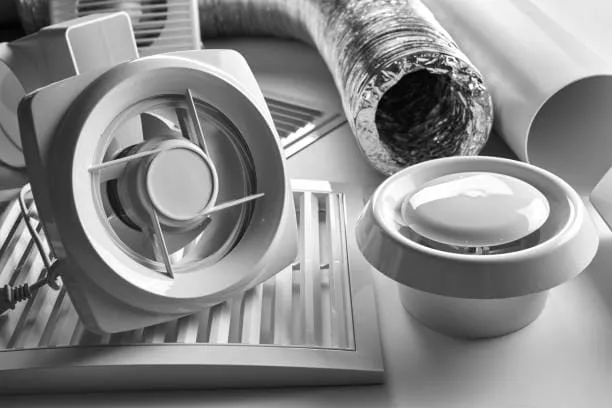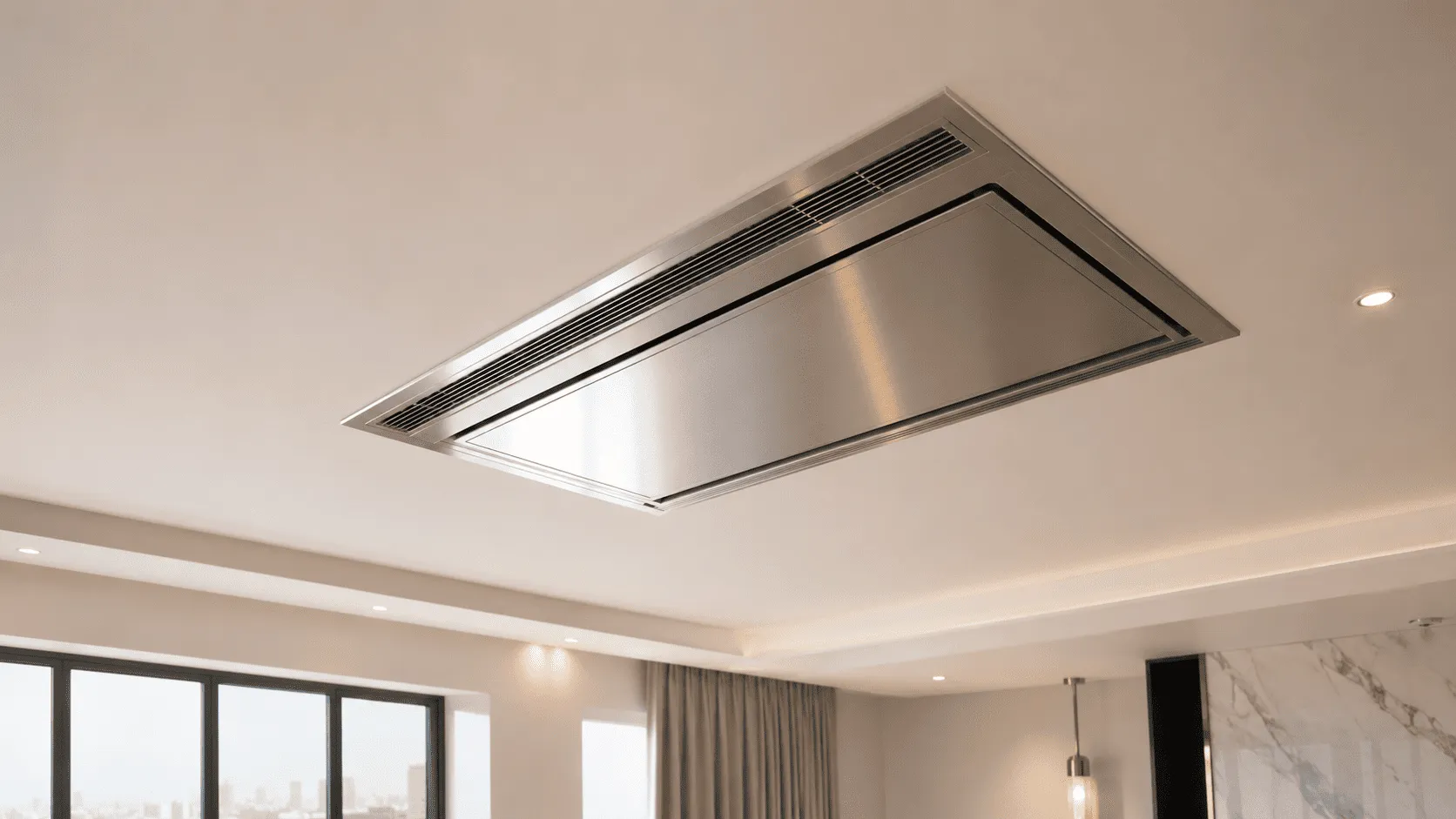


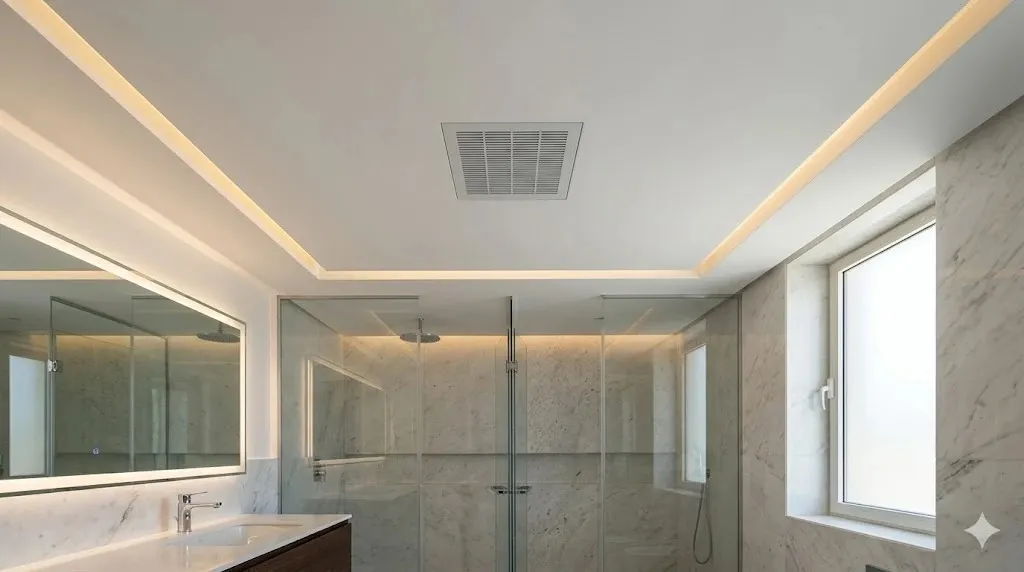
In Kuwait’s homes and apartments, the real performance depends on the fan size, duct route, ceiling depth, outdoor discharge point, and the way air moves through the bathroom after shower use.
A bathroom ceiling exhaust fan works best when it is treated as part of a complete ventilation system. If the duct is too long, too narrow, poorly sealed, or discharged into the false ceiling, even a strong fan may become noisy and weak.
At Cyberia, we help homeowners and contractors choose and install bathroom ventilation systems that remove humidity, steam, and odors while keeping the ceiling clean and the room comfortable.
In this guide, you will learn:
- When a bathroom ceiling exhaust fan is the right choice.
- How to choose the correct fan size.
- Why duct design affects suction and noise.
- What mistakes cause humidity, odor return, and weak extraction.
- How Cyberia supports bathroom ventilation projects in Kuwait.
Why Bathroom Ceiling Exhaust Fans Matter in Kuwait?
Bathrooms in Kuwait often depend on air conditioning and closed windows for long periods. This makes humidity and shower steam harder to remove naturally, especially in internal bathrooms with no direct window.
A bathroom ceiling exhaust fan helps extract warm, humid air from the highest point in the room before it condenses on mirrors, gypsum ceilings, wall paint, and cabinet surfaces.
The right system helps:
- Remove shower steam faster after hot water use.
- Reduce humidity buildup inside closed bathrooms.
- Prevent odors from spreading into corridors and bedrooms.
- Protect paint, gypsum ceilings, silicone joints, and cabinets.
- Reduce the chance of mold spots around corners and ceilings.
- Improve comfort in apartments, villas, offices, and commercial bathrooms.
In Kuwait’s climate, the fan should not be selected by appearance only. It must match the bathroom size, usage frequency, duct route, and discharge point.
Read more: ALPA Distributor in Kuwait: German Ventilation Fans for Different Projects

When Is a Bathroom Ceiling Exhaust Fan the Right Choice?
A bathroom ceiling exhaust fan is usually suitable when the bathroom is internal, has a false ceiling, or needs a cleaner appearance than a visible wall-mounted fan.
It is especially useful in these cases:
- The bathroom has no natural window.
- Steam remains on mirrors and walls for a long time.
- The ceiling has enough depth for installation.
- You want only a clean grille or compact cover visible.
- The bathroom is connected to a duct route leading outdoors.
- Odors return or remain inside despite regular cleaning.
- You are still in the finishing stage and can plan ductwork early.
The ceiling fan is also a practical option for bathrooms where humidity rises directly above the shower or bathtub area. However, it must be connected to a proper duct that discharges air outside the building, not into the gypsum ceiling void.
Check: Blauberg Fans in Kuwait: German Performance for Humidity and Heat Extraction
Ceiling Fan, Concealed Fan, or Wall Fan: Which One Fits Your Bathroom?
There is no single fan type that suits every bathroom. The best option depends on the bathroom layout, ceiling condition, duct route, and access to an external wall.
Ceiling Exhaust Fan
A ceiling fan is suitable for internal bathrooms and bathrooms with false ceilings. It extracts steam from above and keeps the visible design clean.
The main requirement is a proper duct route that carries humid air outdoors.
Concealed Inline Fan
A concealed inline fan is installed inside the duct route, often away from the bathroom grille. It is useful when you want lower noise inside the bathroom or when the fan must serve a longer route.
This option requires better planning and access for maintenance.
Wall-Mounted Exhaust Fan
A wall fan works well when the bathroom is located directly on an external wall. It can discharge air outside through a short route and is often easier to install.
However, it may not suit internal bathrooms far from external façades.
Read also: Home Cooling Fans in Kuwait: Solutions for Humidity and Heat Extraction
How to Choose the Right Bathroom Ceiling Exhaust Fan Size?
Choosing the correct fan size requires looking at the bathroom as a space that needs air renewal, not only as a room with a ceiling opening.
Before selecting a bathroom ceiling exhaust fan, review these factors.
Bathroom Area
Larger bathrooms need higher extraction capacity because they contain more air volume and usually produce more steam.
Small guest bathrooms may need a simpler fan, while master bathrooms with showers, bathtubs, or heavy daily use require stronger extraction.
Usage Frequency
A family bathroom used many times per day needs a more reliable fan than a small bathroom used occasionally.
Frequent showering increases humidity load and requires more consistent air extraction.
Natural Ventilation
A bathroom with no window needs a stronger mechanical ventilation solution than a bathroom with natural airflow.
Internal bathrooms should be treated carefully because humidity has no easy escape route.
Duct Route Length
A long or curved duct reduces real suction power. In this case, the fan must be selected according to the route resistance, not only the room size.
Noise Level
The right bathroom ceiling exhaust fan should provide strong extraction without disturbing noise, especially near bedrooms.
Noise may come from the fan itself, but it often comes from poor duct design, sharp bends, narrow outlets, or weak fixing.
Read more: Concealed Exhaust Fans for Bathrooms and Kitchens in Kuwait
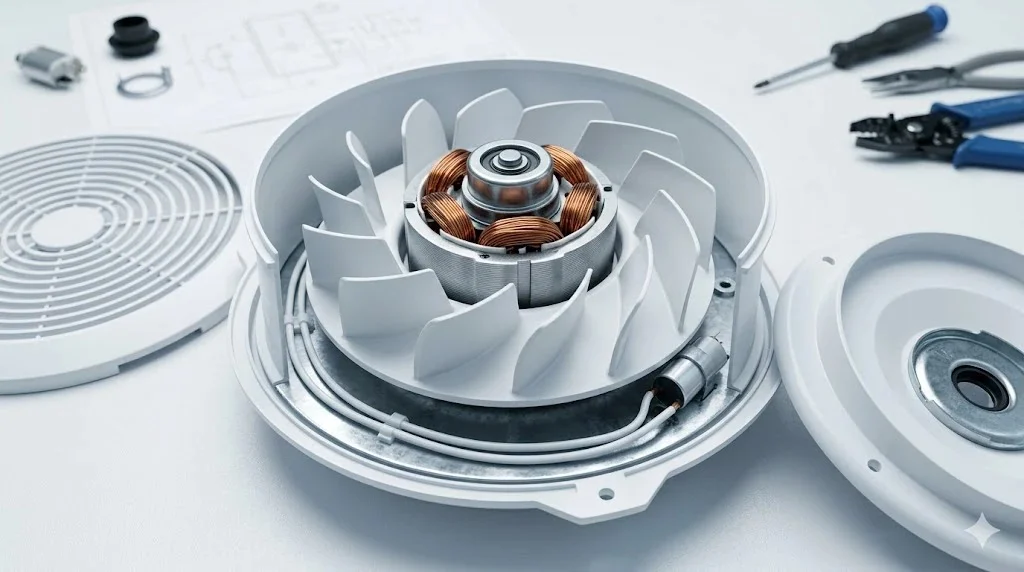
Why the Duct Route Controls Suction and Noise
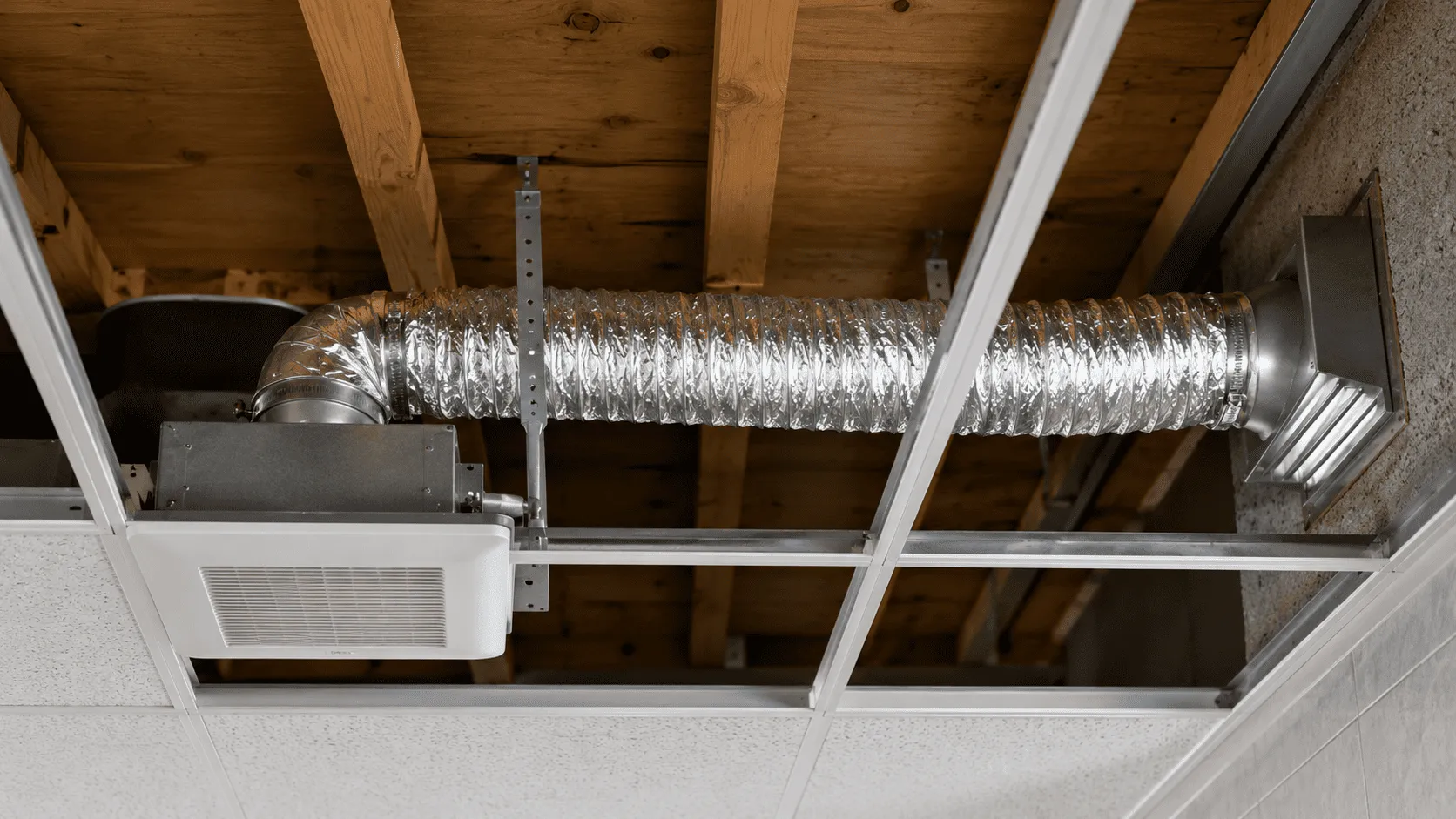
The duct route is one of the most important parts of any ceiling exhaust system. It determines whether the fan’s power reaches the bathroom or gets lost before the air exits outdoors.
A poor duct route can make the fan noisy and weak at the same time.
Common duct problems include:
- A route that is too long for the fan capacity.
- Too many sharp elbows and bends.
- A duct diameter smaller than the fan outlet.
- A dirty or blocked external grille.
- Air leakage from duct joints.
- Discharging humid air into the false ceiling.
- A discharge point close to windows or air return paths.
When air moves through a narrow or twisted duct, resistance increases. This can create whistling, vibration, and weak extraction. A loud fan does not always mean strong suction. Sometimes it means the fan is working against a badly designed duct route.
Signs That Your Bathroom Exhaust System Is Not Working Properly
You may need to inspect your bathroom exhaust system if you notice:
- Fog remains on mirrors after showering.
- Moisture appears repeatedly on walls or ceilings.
- Paint peels or gypsum becomes swollen.
- Mold spots appear around silicone, corners, or vents.
- Odors move into nearby rooms or corridors.
- The fan sound is loud while suction remains weak.
- The ceiling or grille vibrates during operation.
- Performance becomes weak again shortly after cleaning.
In these cases, replacing the fan immediately may not solve the problem. The issue may be in the duct, external outlet, backdraft damper, sealing, or lack of make-up air.
Read more: Kitchen Hood Filter in Kuwait: Odor and Duct Solutions
How a Good Bathroom Ceiling Duct Route Should Be Designed
A good duct route should be short, direct, sealed, and properly supported.
The goal is to move humid air outside with the least possible resistance and without allowing moisture to leak into the ceiling void.
A proper duct route should:
- Use the shortest possible path to the outdoor discharge point.
- Reduce sharp bends and unnecessary turns.
- Match the fan outlet diameter.
- Seal all duct joints to prevent leakage.
- Keep the duct fixed to reduce vibration.
- Use an external cover that allows airflow to exit smoothly.
- Include a backdraft damper when needed to prevent air return.
- Discharge air outdoors, not above the gypsum ceiling.
Before changing the fan, inspect the duct cleanliness, outlet condition, bend locations, joint sealing, and whether air actually exits from the final discharge point.
Smart Features for Bathroom Exhaust Fans
Smart bathroom fan features are useful in Kuwait because many homes depend on air conditioning and closed windows.
These features help the fan continue working when humidity remains after showering.
Humidity Sensor
A humidity sensor turns the fan on automatically when moisture rises inside the bathroom.
It helps reduce condensation on mirrors, walls, and ceilings, especially in internal bathrooms with no window.
Timer
A timer keeps the fan operating for a set period after the user leaves the bathroom.
This helps remove remaining steam and odors after showering and prevents the fan from being turned off too early.
Integrated Lighting
A bathroom ceiling exhaust fan with lighting can be useful in small bathrooms or when you want a cleaner ceiling design.
It combines lighting and air extraction in one compact unit, but it still needs proper duct planning and safe electrical installation.
Installation Mistakes to Avoid
Many bathroom ventilation problems appear because of installation errors, not because of poor fan quality.
Avoid these mistakes:
- Choosing a fan based only on visible size.
- Installing the fan far from the steam source.
- Using a duct that is too small for the fan outlet.
- Creating too many bends inside the ceiling.
- Leaving duct joints unsealed.
- Discharging air into the false ceiling.
- Ignoring backdraft protection.
- Closing the ceiling without maintenance access.
- Installing the fan without enough replacement air entering the room.
- Choosing a strong fan on a weak or narrow duct route.
The best bathroom ceiling exhaust fan will not perform correctly if the air path is poorly planned.
Also read: 60 cm Built-in Kitchen Hood: Model Selection and Duct Setup Guide
How Cyberia Helps You Choose and Install the Right System
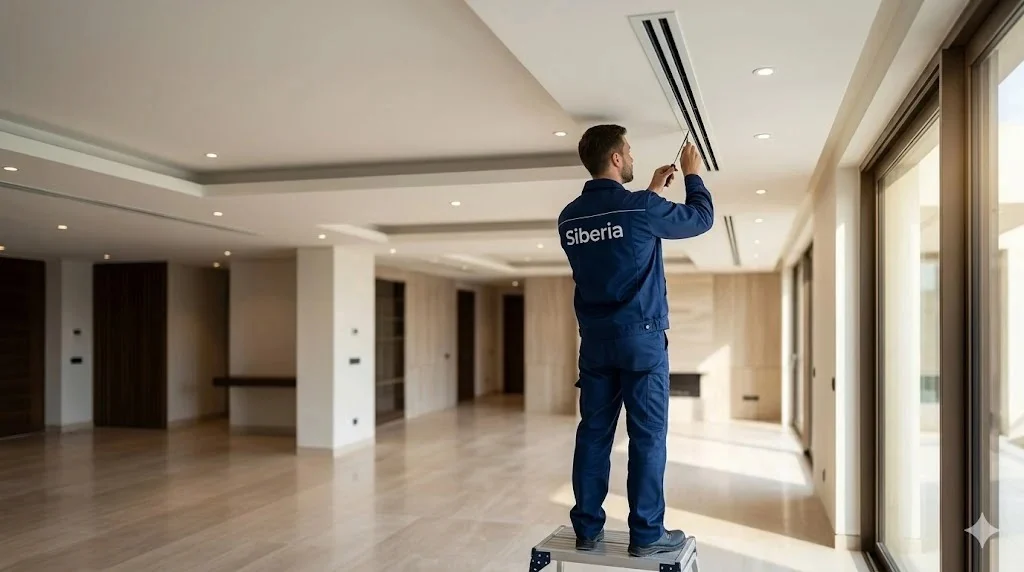
Cyberia specializes in ventilation and HVAC solutions in Kuwait. We help you choose a bathroom ceiling exhaust fan as part of a complete ventilation system, not as a random device installed in the ceiling.
Our team reviews the site conditions before recommending a solution, including:
- Whether the bathroom is internal or has natural ventilation.
- False ceiling depth and available installation space.
- Existing duct route or need for a new route.
- Current problems such as humidity, odor return, or noise.
- Fan size and suction capacity required for the bathroom.
- External discharge point and backdraft protection.
- Electrical safety and access for maintenance.
Our goal is to achieve clear operating results:
- Faster humidity removal after showering.
- Reduced odor spread to nearby rooms.
- Quiet fan operation without disturbing vibration.
- Proper air discharge outside the building.
- Protection of gypsum ceilings and bathroom finishes.
- Easier inspection and periodic cleaning.
Cyberia’s engineering approach focuses on matching fan capacity with duct design, ceiling conditions, and Kuwait’s climate. Contact our team to inspect your bathroom ventilation route and recommend the right fan and duct solution.
FAQs About Bathroom Ceiling Exhaust Fans
Does a Bathroom Ceiling Exhaust Fan Need a Duct?
Yes. A bathroom ceiling exhaust fan should discharge humid air outdoors through a duct.
Discharging air into the false ceiling can cause hidden humidity, mold, odor buildup, and gypsum damage.
Is a Ceiling Fan Better Than a Wall Fan for Bathrooms?
A ceiling fan is better for internal bathrooms or bathrooms with false ceilings.
A wall fan may be better when the bathroom is directly on an external wall and can discharge air outside through a short route.
Why Does My Bathroom Fan Make Noise but Not Extract Steam Well?
The most common reason is high resistance in the duct route.
A narrow duct, long route, sharp bend, blocked external grille, or air leakage can make the fan noisy while reducing real suction.
Can I Install a Bathroom Ceiling Fan After Finishing?
Sometimes yes, but it depends on ceiling depth, access to an outdoor discharge point, and whether there is a safe route for duct and electrical works.
A technical inspection is recommended before cutting the ceiling.
How Do I Know the Right Size for a Bathroom Ceiling Exhaust Fan?
The right size depends on bathroom area, usage frequency, duct length, number of bends, noise level, and whether the bathroom has a window.
The fan should be selected based on the full ventilation route, not only the ceiling opening.
Does a Bathroom Ceiling Exhaust Fan Need Maintenance?
Yes. Periodic maintenance includes cleaning the grille, removing dust from accessible parts, checking the duct outlet, and making sure the backdraft damper moves properly.
Dust buildup reduces suction over time and may increase noise.