
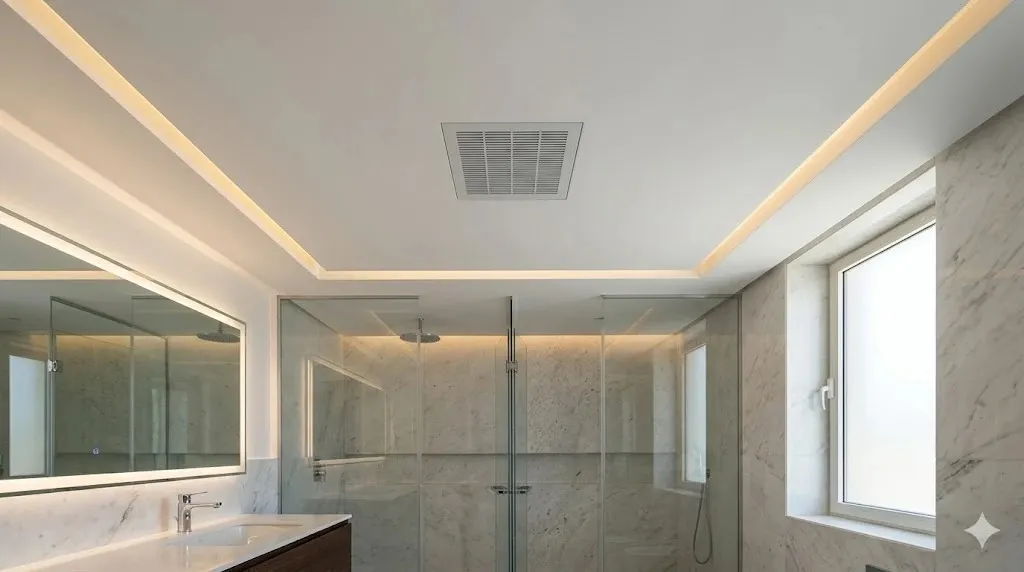
Designing ventilation for diwaniyas and villa majlis spaces in Kuwait requires smart engineering planning that differs from ordinary rooms because guest numbers can change suddenly. Relying on air conditioning alone often causes stagnant air and traps odors inside ceilings and corridors.
In this Cyberia guide, we explain how to design and inspect a silent and effective ventilation system for your majlis. You will learn:
- Why a majlis needs ventilation instead of simply increasing cooling.
- How to choose the right fan size.
- How to select silent exhaust fans for reception halls.
- How to distribute extraction openings and plan the duct route.
- How to inspect and test the system before handover.
- What technical factors affect the final cost.
Cyberia’s mechanical ventilation systems help move your reception space from random airflow to controlled air movement that removes stuffiness and odors efficiently. Choose Cyberia’s engineering expertise for cleaner and more comfortable hospitality spaces.
Why Majlis and Reception Hall Ventilation Matters Even with Air Conditioning
You may think that cooling the diwaniya is enough to refresh its air. In reality, air conditioning lowers the temperature but does not replace stale indoor air.
In Kuwait, majlis spaces often stay closed for long periods because of heat and dust. With guests gathering inside, odors from coffee, incense, food, perfumes, and smoke can build up quickly.
Signs that your majlis needs ventilation beside air conditioning include:
- Odors moving to the rest of the house.
- Odors staying after the gathering ends.
- A feeling of breathing discomfort despite low temperature.
- Heavy air when the majlis is full of guests.
- Repeated need to open the door to refresh the space.
What Does Diwaniya Ventilation Do Beside Air Conditioning?
A proper ventilation system helps by:
- Extracting polluted air and allowing cleaner replacement air.
- Removing strong odors and preventing long-term buildup.
- Balancing humidity levels inside the closed space.
- Providing a healthier and more comfortable seating environment.
A well-designed majlis ventilation in Kuwait system should not fight the air conditioner. It should remove stale air while preserving cooling comfort as much as possible.
Read more: ALPA Distributor in Kuwait: German Ventilation Fans for Different Projects

Criteria for Choosing a Silent Majlis Exhaust Fan in Kuwait
The main goal of diwaniya ventilation in Kuwait is to remove odors and heavy air without creating disturbing noise or uncomfortable drafts for guests.
This requires balancing the space, airflow route, fan capacity, and seating layout.
To achieve this, focus on three key points:
- Choose a majlis ventilation fan that matches the room size and expected guest count.
- Design a comfortable duct route that is not too narrow.
- Install the extraction opening in a studied location away from direct seating areas.
Where Should the Air Extraction Opening Be Placed in a Kuwaiti Diwaniya?
The best location for the extraction opening is the point where stale air and odors gather naturally without exposing guests to direct airflow.
The right location depends on the majlis shape, sofa distribution, main door position, and odor sources.
When planning majlis ventilation in Kuwait, the installation technician should consider:
- Avoid placing the extraction point directly above seating areas.
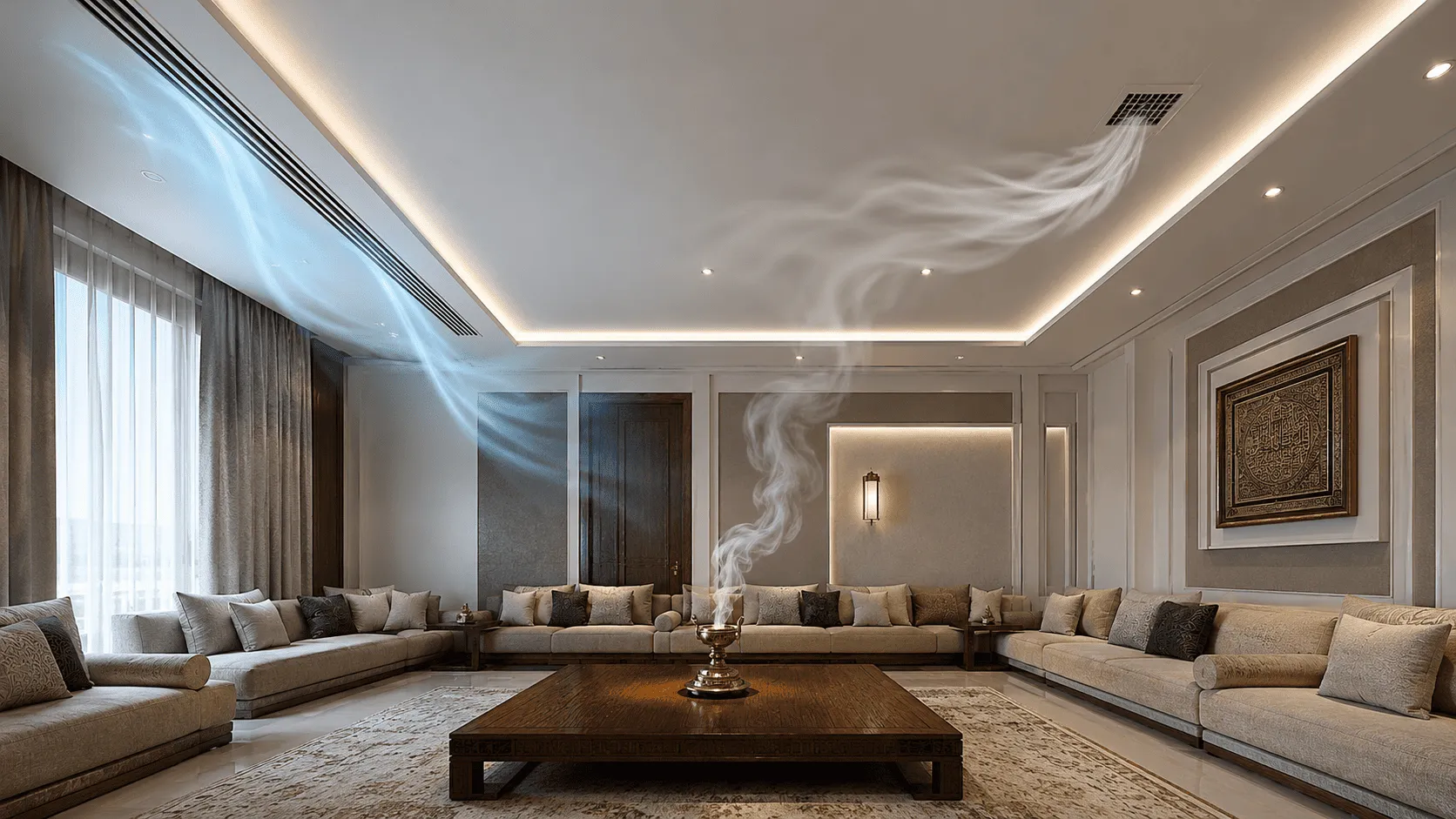
- Separate extraction openings from AC supply ducts to avoid wasting cooled air immediately.
- Choose an angle that helps move air smoothly from the center of the room toward the exhaust point.
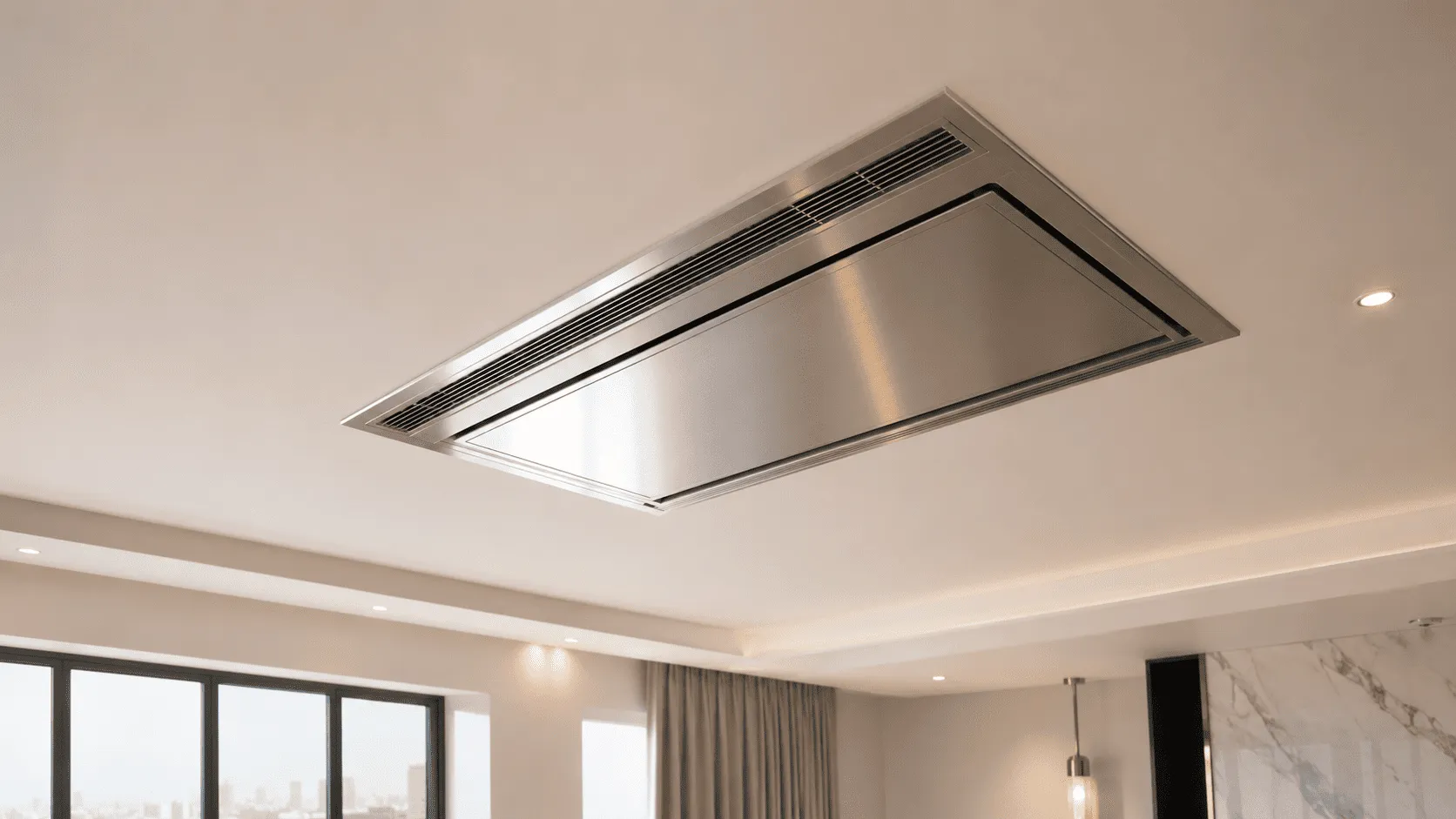
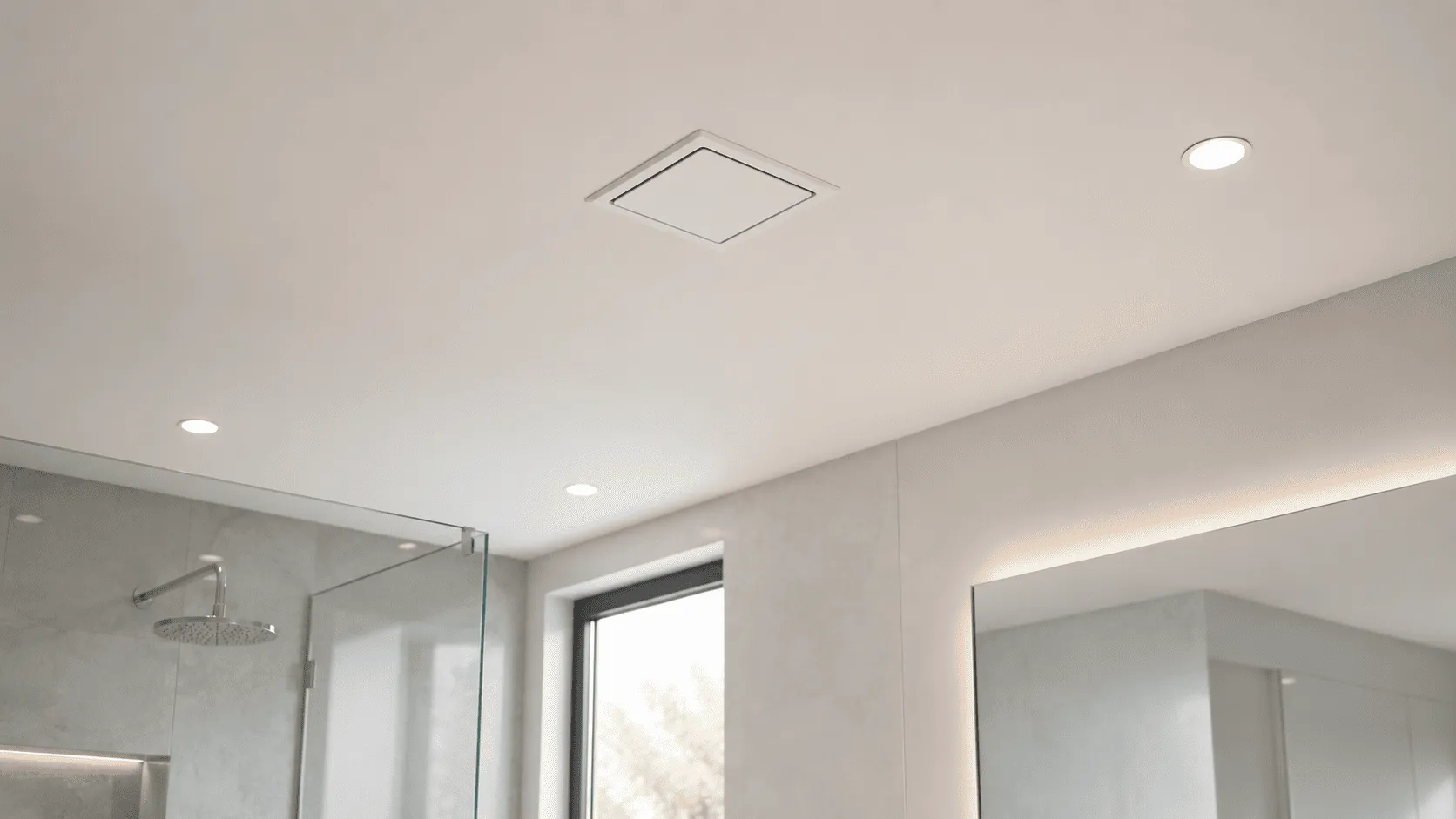
- Integrate ventilation grilles neatly with interior design and false ceilings.
- Direct exhaust ducts through insulated routes that prevent odor return into the home.
Check: Blauberg Fans in Kuwait: German Performance for Humidity and Heat Extraction
What Data Determines Majlis Exhaust Fan Size Before Installation?
Before buying or installing an exhaust fan for a reception hall, the correct fan size must be identified.
The sizing process depends on simple but important data, including:
- Total room area and ceiling height.
- Expected number of guests during normal days and events.
- Activity type, such as incense, meals, smoking, and hospitality.
- Whether the space is separate or open to other areas.
- Air duct length and number of bends.
- Final outdoor discharge point.
- Desired quietness level inside the room.
- Ceiling specifications and ability to reduce equipment noise.
Residential Majlis Exhaust Fan Size Guide in Kuwait
| Space Type | Typical Use | Suitable Fan Size | Important Note |
|---|---|---|---|
| Small Majlis | Limited family gatherings | Small to medium exhaust fan | Suitable when odors are light and the air route is short |
| Medium Majlis | Frequent guest reception | Medium exhaust fan | Preferably quiet, with an indirect extraction opening away from seating |
| Large Majlis or Diwaniya | Long hospitality sessions and higher guest count | Medium to powerful exhaust fan | Needs careful duct planning to avoid noise or weak extraction |
| Open Reception Hall | Light reception with connected corridors | Quiet fan with planned distribution | The priority is preventing odors from moving through the home without pulling cooling too quickly |
| Majlis with Incense, Food, or Smoking | Frequent and heavy odors | Stronger extraction with flexible control | A low-noise fan with independent switch or timer is preferred |
Cyberia’s advice is clear: do not choose a reception hall exhaust fan based only on the visible size. Sometimes, a smaller fan with a correct duct route performs better than a large fan installed incorrectly.
The best approach is to define the size after reviewing the majlis area, ceiling height, number of occupants, duct length, and outdoor discharge location.
Read also: Home Cooling Fans in Kuwait: Solutions for Humidity and Heat Extraction
How to Plan Duct Routes for Hall Ventilation Systems in Kuwait?
The duct route determines the success of the entire diwaniya ventilation system. Its effect is just as important as fan efficiency.
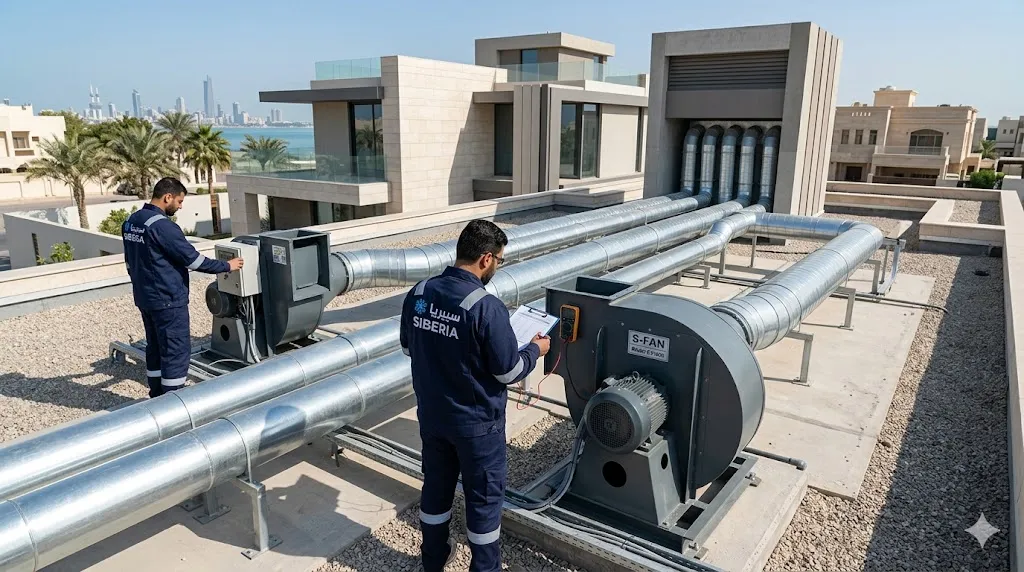
When planning the duct route, the Cyberia engineering team focuses on:
- Shortening air duct length as much as possible to preserve extraction power.
- Avoiding narrow and sharp bends that increase airflow resistance and noise.
- Directing discharge outlets toward outdoor areas away from windows and entrances.
- Installing suitable acoustic insulation for ducts close to relaxation and seating areas.
- Separating the room extraction system from other recirculation networks to prevent leakage.
- Adding backdraft dampers to prevent dust or fumes from returning when the fan is off.
A common mistake in majlis ductwork is installing a powerful fan with an unsuitable duct. The result is often loud noise, weak extraction, and possible odor return.
In Kuwaiti diwaniyas and villa majlis spaces, it is better to plan the duct route before finishing or during false ceiling works. This allows the system to be hidden neatly without sacrificing performance.
Professional duct setup helps prevent odor backflow and vibration inside the diwaniya ceiling.
Also read: 60 cm Built-in Kitchen Hood: Model Selection and Duct Setup Guide
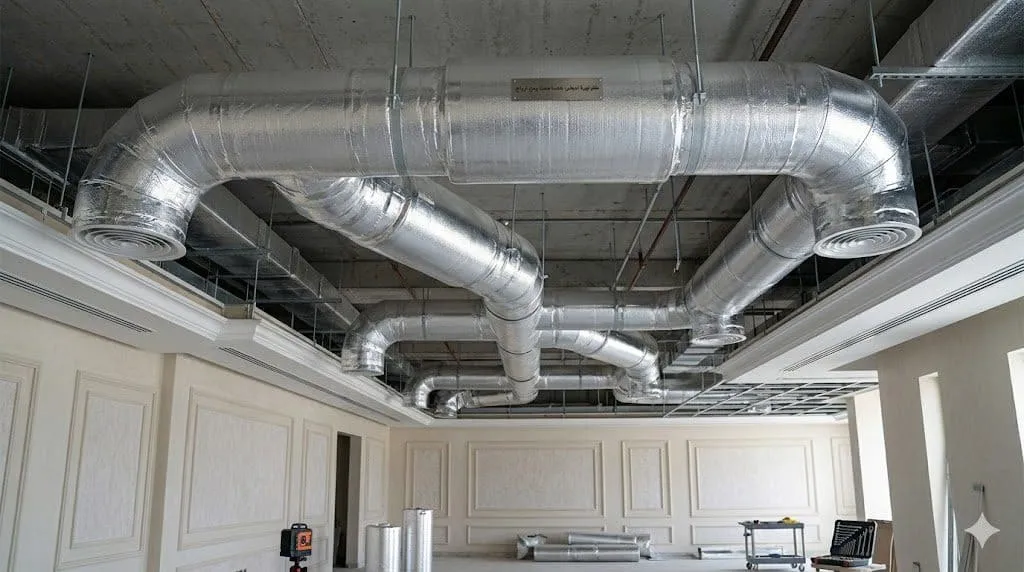
Installation and Testing Steps for Villa Majlis Ventilation Systems
The success of a hall ventilation system depends on accurate inspection after the construction work is completed.
The system must be checked for actual extraction performance, suitable noise level, vibration-free operation, and absence of odor backflow.
This is done in two stages.
Before Closing the Ceiling or Finishing
Before closing the ceiling, ask the technical team to confirm:
- The fan body is fixed securely to prevent vibration.
- Air ducts are routed through straight and short paths.
- Ducts and fan areas are covered with acoustic insulation where needed.
- Exhaust air is discharged directly outside the building.
- A backdraft damper is installed to prevent dust and external odors from entering.
Testing and Handover Stage
Before accepting the work, test the exhaust fan under conditions that simulate real hospitality use.
Run the air conditioning, close all openings, and monitor:
- Whether the sound level suits the calm atmosphere of the majlis.
- Whether the ceiling and décor are free from vibration.
- Whether airflow extraction is strong at the main grilles.
- Whether discharged air reaches a safe and suitable external point.
- Whether any odors return after turning off the fan.
This testing step is essential for any majlis ventilation in Kuwait project because real performance appears only when the space is used under realistic conditions.
Read more: Concealed Exhaust Fans for Bathrooms and Kitchens in Kuwait
Cost Factors for Diwaniya and Hall Ventilation in Kuwait
The total cost of your ventilation project is affected by several technical variables, including:
- Total hall area and false ceiling height required to determine airflow volume.
- Expected visitor density during events and daily gatherings.
- Type of fumes and odors, such as tobacco smoke, incense particles, and heavy food smells.
- Full duct length and number of bends in the route.
- Required acoustic comfort level and type of sound insulation used.
- Construction timing and whether the work is done before or after décor.
- Nature of the external discharge point used to remove exhausted air.
- Control method, such as independent switches or smart timers.
Cost should not be judged by the fan price alone. In majlis ventilation in Kuwait, duct route quality, acoustic treatment, access, and discharge planning are major parts of the final value.
Read more: Kitchen Hood Filter in Kuwait: Odor and Duct Solutions
Cyberia Services for Villa Majlis Ventilation and Air Conditioning in Kuwait
Cyberia is a leading company in indoor climate solutions in Kuwait. We specialize in integrated air conditioning and ventilation systems that combine high efficiency with precise engineering design.
Our goal is to provide a comfortable and healthy environment through advanced global technologies that suit Kuwait’s hot desert climate and ensure continuous fresh airflow with ideal cooling for different spaces.
Because majlis and diwaniya spaces are central to Kuwaiti culture as gathering places for family and friends, Cyberia gives special attention to ventilating these spaces to ensure visitor comfort and maintain indoor air quality.
Our specialized solutions include:
- Designing and installing odor and smoke extraction systems to keep the air clean.
- Providing fresh-air supply systems to renew oxygen and prevent stuffiness.
- Installing silent air-conditioning units that do not disturb people seated inside.
- Distributing AC outlets using engineered layouts to deliver cooling to all corners.
- Using advanced filtration technologies to remove dust and impurities from the air.
- Providing specialized periodic maintenance to ensure systems operate efficiently during summer.
Cyberia’s integrated systems give your diwaniya continuous air freshness, guest comfort, and stable cooling without disturbance. Contact our engineering consultant to improve your home’s ventilation performance.
FAQs About Majlis and Hall Ventilation in Kuwait
Does Ventilation Affect AC Cooling Inside the Majlis?
If extraction is excessive or placed incorrectly, it may pull part of the cooled air out of the room.
A well-designed system renews air without creating a disturbing effect on AC comfort.
Does Reception Hall Ventilation Increase Dust Entry in Kuwait?
Correct ventilation should expel indoor air outdoors, not bring dust into the majlis.
The key is having a suitable exhaust route and a backdraft damper when needed to reduce dust and odor entry.
Are There Official Requirements or Approvals for Installing External Exhaust Outlets?
Requirements may differ depending on building type, outlet location, and the conditions of the owner, municipality, or relevant authority.
It is better to review code requirements and conditions before opening any external outlet or modifying the façade.
Can Ventilation Operate Automatically During Hospitality Hours or Through a Smart System?
Yes. A majlis exhaust fan can be connected to an independent switch, timer, or smart control system depending on available equipment.
This helps operate ventilation only when needed instead of keeping it running all day.
How Long Does It Take to Install a Diwaniya or Reception Hall Ventilation Fan?
Execution time depends on ceiling condition, duct length, air discharge location, and whether the work is done before or after finishing.
A site inspection is the best way to define the suitable timing without giving a general estimate that may not fit every majlis or reception hall.