
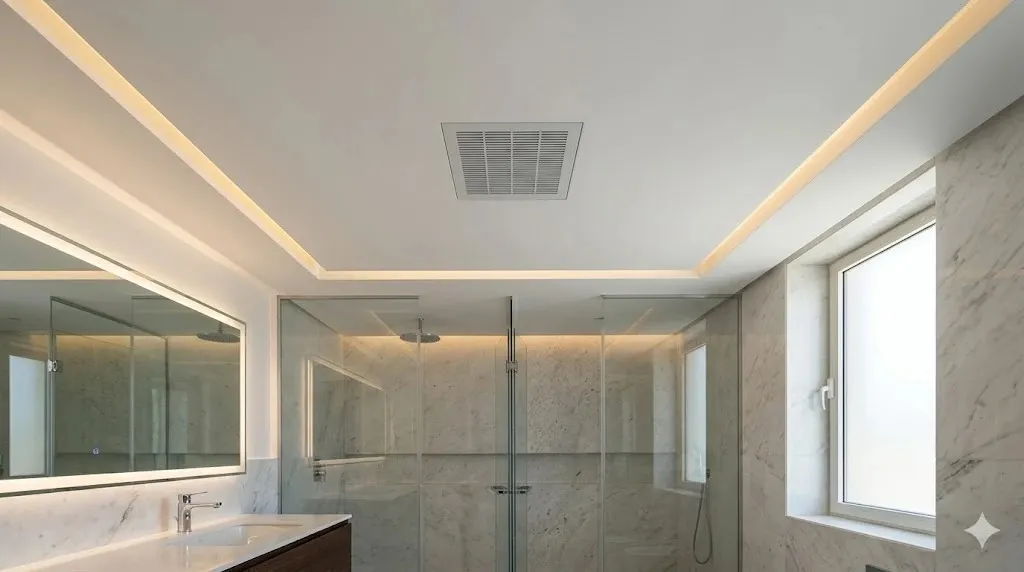
Most modern kitchens need a careful balance between visual design and mechanical performance to prevent smoke, grease, and cooking odors from spreading into the rest of the home. The solution is not simply to operate the hood at the highest speed. Real performance comes from correct installation and a direct, safe exhaust route that protects the motor and keeps the kitchen clean.
In this Cyberia guide, we explain the practical stages of kitchen hood installation in Kuwait, including:
- Supplying and installing kitchen hoods and preparing the site.
- Defining the duct route and choosing the right size.
- Testing and handover steps to confirm extraction efficiency.
Cyberia’s experience in home ventilation across Kuwait helps you build an exhaust system that removes odors properly. Send photos of your kitchen to receive an accurate supply and installation quotation.
How Kuwait’s Climate Affects Kitchen Hood Installation?
Kuwait’s climate creates specific requirements for kitchen hood installation. High heat, humidity, and indoor cooling systems can all affect how steam and cooking fumes move inside the kitchen.
Humidity and Grease Condensation Inside Ducts
Humid weather can make steam extraction more difficult and may increase grease deposits inside the duct system.
To reduce this risk:
- Place the kitchen hood directly above the cooktop to extract steam and grease as soon as they rise.
- Create a short exhaust route to reduce grease condensation inside the duct caused by rapid temperature differences.
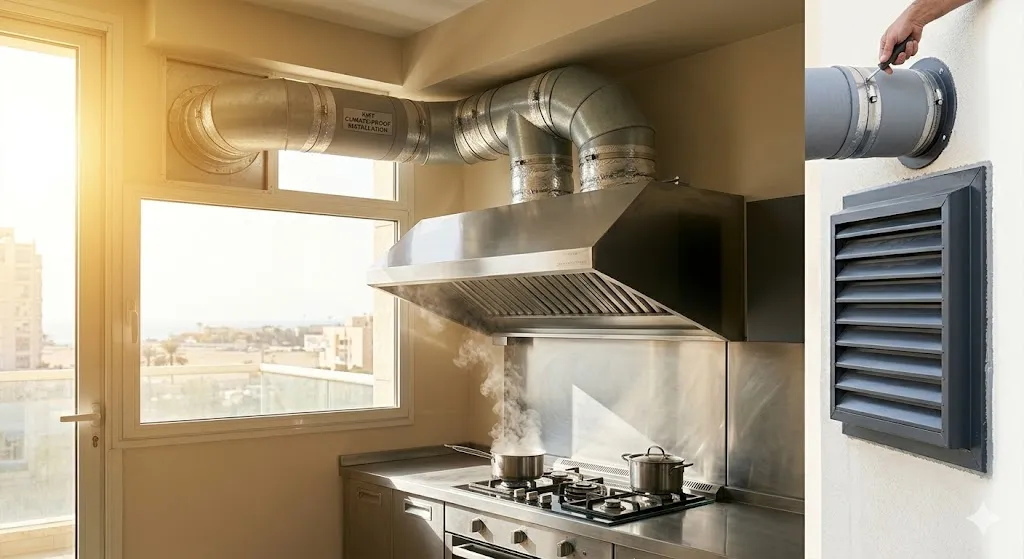
- Seal duct joints tightly to prevent odors or liquids from leaking into voids, walls, or ceilings.
- Install an external exhaust cover that allows airflow in one direction and reduces humidity backflow into the kitchen.
AC Airflow and Heat Effects on Ventilation Routes
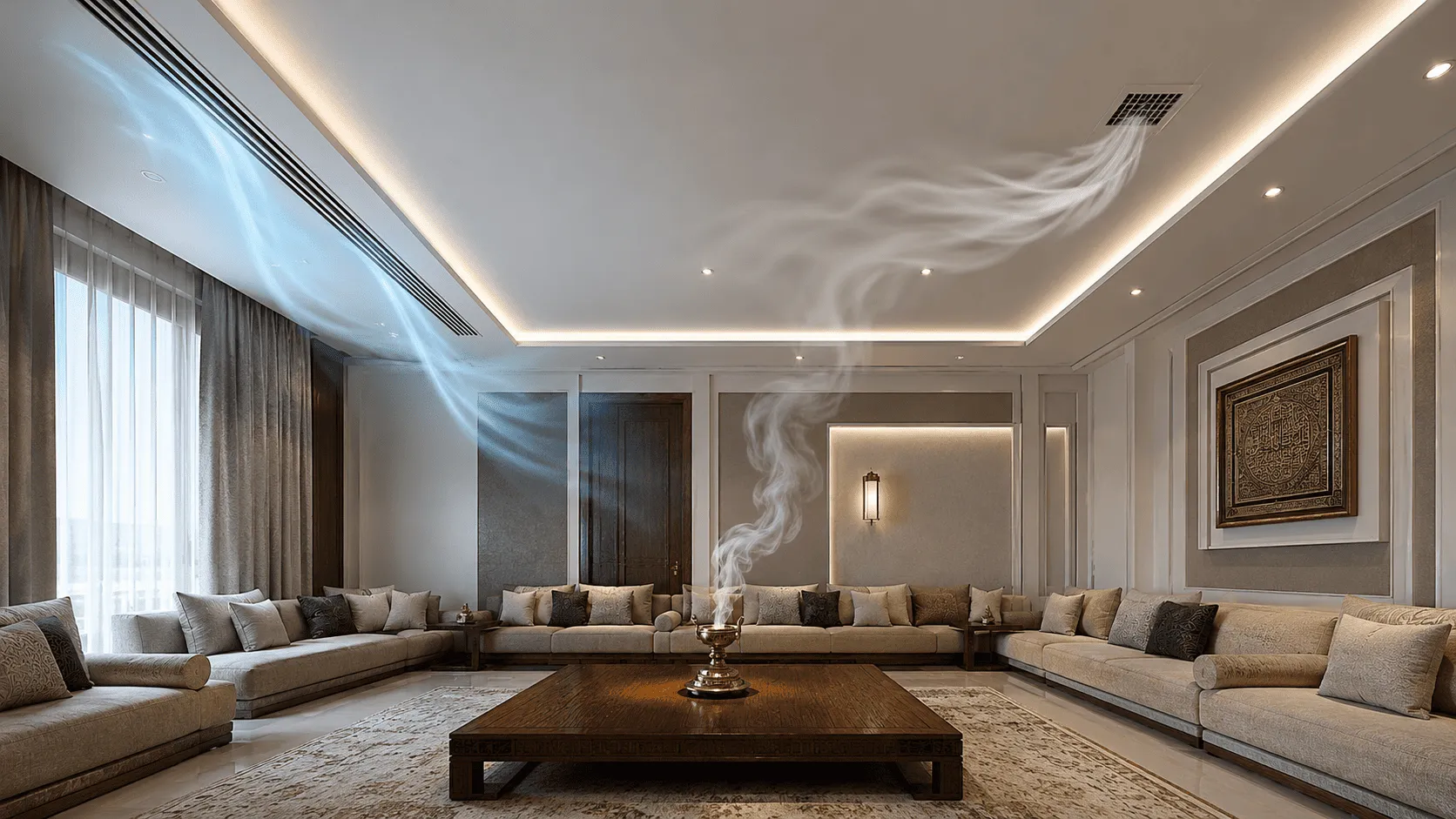
Air movement inside Kuwaiti kitchens is affected by the temperature difference between outdoor heat and indoor cooling. This requires a specific installation approach.
You should:
- Define the hood height accurately to prevent AC airflow from pushing odors away from the extraction zone.
- Reduce duct bends to improve the power of the kitchen exhaust system and allow hot air to exit smoothly.
- Make sure the extraction area covers the full cooktop to prevent rising steam from escaping because of indoor airflow.
- Choose filters that are easy to remove and clean, because grease and dust build up continuously inside kitchen hoods.
Cyberia designs solutions suited to Kuwait’s environment to prevent humidity condensation inside duct routes. Contact our team to design the most suitable exhaust route for your home.
Read more: Small Kitchen Exhaust Fan and Wall-Mounted Options in Kuwait
Information Required Before Supplying a Kitchen Hood
Before ordering a powerful kitchen hood or comparing kitchen hood options, prepare the right site information. This helps prevent buying a unit that does not fit your kitchen cabinets or later modifying the duct route.
Prepare the following:
- Cooktop width and cooking-area dimensions.
- Condition of the external exhaust opening and whether a ready duct outlet exists.
- Availability of a nearby electrical point suitable for the appliance.
- Current cabinet condition and whether cabinets are finished or still under fabrication.
- Kitchen type, such as villa, apartment, open kitchen, or preparation kitchen.
- Selected installation location, such as wall-mounted, under-cabinet, built-in, or window installation.
- Clear photos of the site, including sides and ceiling if gypsum work exists.
- Kitchen plans and duct-route drawings for engineering or consultant-led projects.
This data allows the supplier to recommend the best kitchen hood based on actual site conditions. The right solution depends on duct-route clarity and construction limitations.
Contact Cyberia in Shuwaikh Industrial Area, send photos, measurements, cooking habits, and the expected air discharge location so your request can be approved correctly.
Window Kitchen Hood or External Duct Extension: Which Is Better?
The main factor is the cooktop location and the route available for removing steam and odors. A window hood is a simple option, while an external duct system is stronger for open spaces.
When Window Hood Installation Is Suitable
A window kitchen hood may be suitable when:
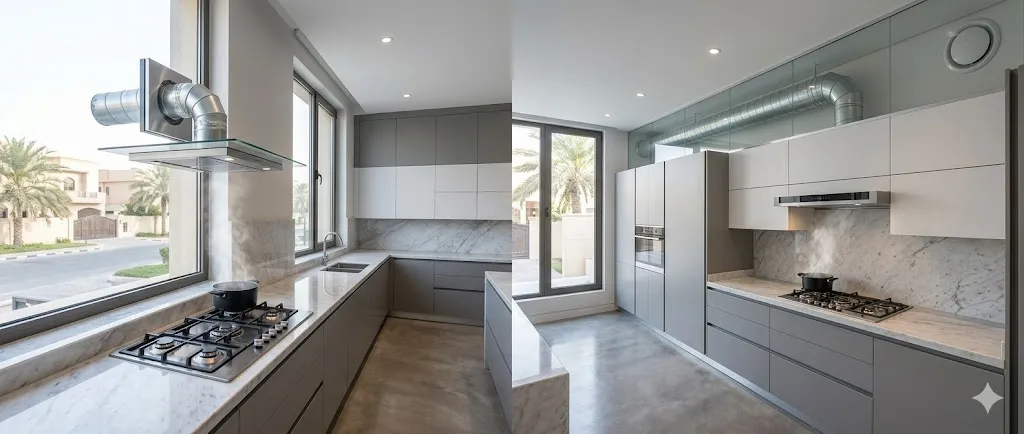
- The cooktop is close to the window, with no cabinets or physical barriers between them.
- The kitchen is small or enclosed, making it easier to contain and remove odors quickly.
- Duct extensions inside gypsum ceilings or existing upper cabinets are difficult.
- You need a direct and fast exhaust solution without complex construction work.
- The window opening allows safe fixing that prevents vibration or air leakage.
- You do not need to create new wall openings that affect the exterior façade.
Challenges of Traditional Window Exhaust Fans
Traditional window fans may have limitations, including:
- Lower efficiency when the steam source is far from the window.
- Air discharge affected by outdoor wind pushing against the fan direction.
- Possible odor return when the kitchen hood stops operating.
- Grease buildup on window glass and frames because steam is not captured from the source.
Advantages of External Duct Exhaust Systems
A ducted kitchen hood system provides several advantages:
- It extracts smoke and odors directly above the cooking area before they spread through the home.
- It suits open kitchens that need stronger extraction to prevent odors from reaching the living room.
- It allows greasy air to be directed through insulated routes toward external discharge points.
- It maintains a cleaner interior appearance by hiding ventilation pipes behind décor or inside cabinets.
In Kuwait, with heat, humidity, and heavy AC use, proper exhaust-route planning is often more important than the hood type alone.
Also read: Beauty Salon Ventilation Solutions in Kuwait
Duct Route Design Rules for Kitchen Hood Efficiency
A correct duct route starts with a simple rule: remove air outdoors through the shortest path, with the fewest bends and no leakage at the joints.
Before starting, define the hood location above the cooktop, the nearest external discharge point, and the safest route between them. Avoid designing the route after cabinets or gypsum ceilings are completed, because this often creates twisted paths that are difficult to maintain.
When planning the route, follow these rules:
- Avoid too many angles and use bends only when necessary.
- Do not compress the duct so airflow remains wide and unobstructed.
- Seal all joints tightly to prevent grease or odor leakage inside the ceiling.
- Choose an exhaust outlet away from home windows or building air intakes.
- Provide enough access space for technical inspection when needed.
- Keep the route away from electrical wiring and water networks.
In Kuwait, humidity and heat affect kitchen hood efficiency. Warm cooking air moving through an unsealed route may cause condensation or lingering odors, so some sites may require special duct insulation depending on ceiling conditions.
Kitchen Hood Types Suitable for Fast Supply and Installation
The speed of installation depends on how well the hood matches the kitchen design and existing site preparation.
The suitable type should be selected according to the following:
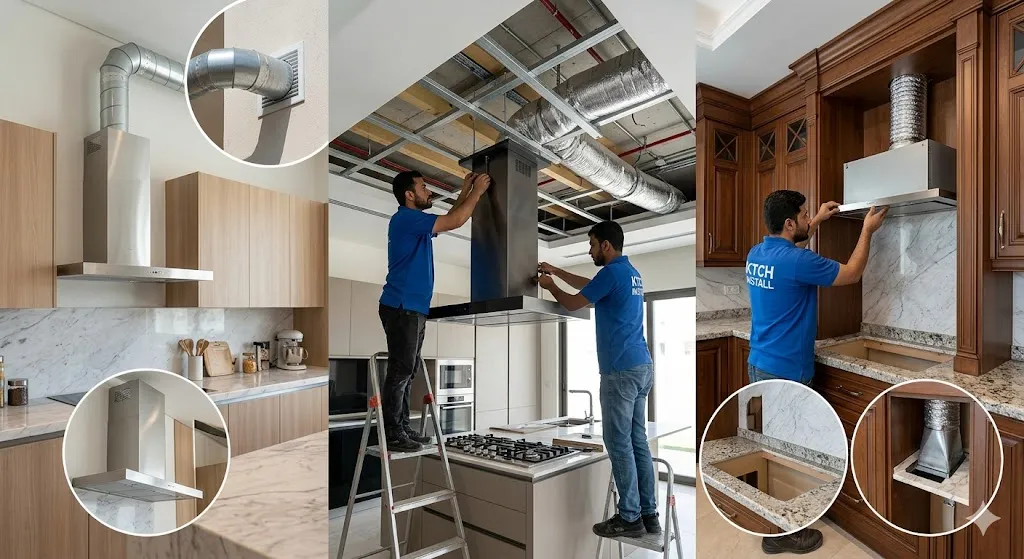
- Wall-Mounted Hood: Suitable for kitchens where the cooktop is against a wall. It is easier to install when a power point and nearby exhaust opening are available.
- Built-In Hood: Installed inside upper cabinets to hide the appliance. Installation time depends on cabinet readiness and available duct space.
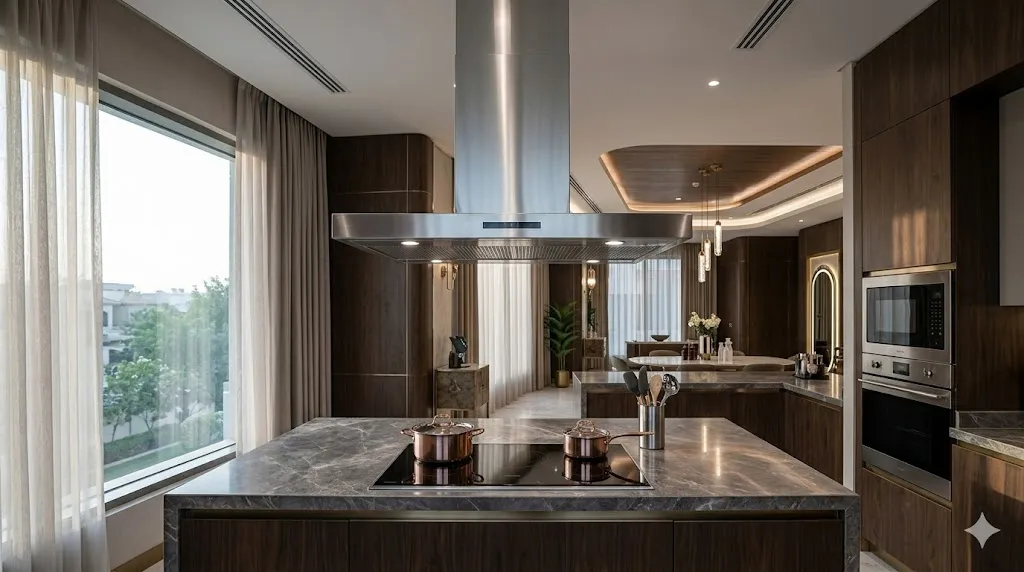
- Island Hood: Installed in open kitchens above a central cooktop. It requires ceiling preparation and an upper air-extraction route.
- Window Hood: A quick solution for small spaces, provided that the window is close to the cooking area and there are no wooden obstacles around it.
- Flat Hood: Suitable for modern minimalist kitchens. Installation speed depends on whether it is wall-mounted or built-in.
- Recirculating Hood: Works through filters without requiring an external outlet, making installation faster in sites where duct extension is difficult.
Check: Kitchen Hood Types and Installation Standards in Kuwait 2026
How to Choose the Right Powerful Kitchen Hood Size Before Supply?
The selection starts with cooktop width and installation location, but it does not end there. A hood may look suitable in size but still perform poorly because of a long duct, too many bends, a narrow outlet, or dirty filters.
Do not only ask for the strongest kitchen hood. Look for the best kitchen hood that matches your kitchen conditions and duct setup.
Use the following guide as an initial reference:
| Cooktop and Kitchen Condition | Initial System Recommendation | When Technical Review Is Needed |
|---|---|---|
| Cooktop against a wall with clear cabinets | Wall-mounted or built-in hood covering the cooking zone | If there is a long duct or extensions inside gypsum décor |
| Cooktop under finished cabinets | Built-in or under-cabinet kitchen hood | If cabinet design does not allow duct passage |
| Island cooktop | Strong ceiling-mounted island hood | If ceiling suspension is unsafe or no clear exhaust route exists |
| Open kitchen connected to living room | System covering the heat source with sealed external exhaust | If odors move quickly to adjacent spaces |
| Heavy frying and intensive cooking | Heavy-duty hood, filters, and duct routes | If grease builds up or odors remain during operation |
This table is only an initial reference. The final decision depends on the manufacturer’s specifications, duct condition, and exhaust direction. Hood efficiency differs significantly between closed and open kitchens.
Site Preparation Before Kitchen Hood Installation
Preparing the site before the technician arrives reduces modification time and improves installation quality. Before installing an electric kitchen hood, define its location and power point, and provide a safe work area while protecting surrounding finishes.
The duct route should also be reviewed before closing gypsum décor to avoid longer routes or unsuitable openings later.
Follow this checklist before kitchen hood installation in Kuwait:
- Clear the countertop around the cooking area completely.
- Remove all obstacles inside upper cabinets.
- Coordinate with the carpenter to confirm the final hood location if cabinets are still being fabricated.
- Check whether a ready exhaust opening or duct route is available.
- Cover marble, ceramic, and glass surfaces to protect them during drilling.
- Inform the technician about any hidden electrical or plumbing lines inside walls or ceilings.
- Send clear photos of cabinets, cooktop location, exhaust outlet, or site plans before the visit.
Preparing Electrical Extensions and the Power Point Before Installation
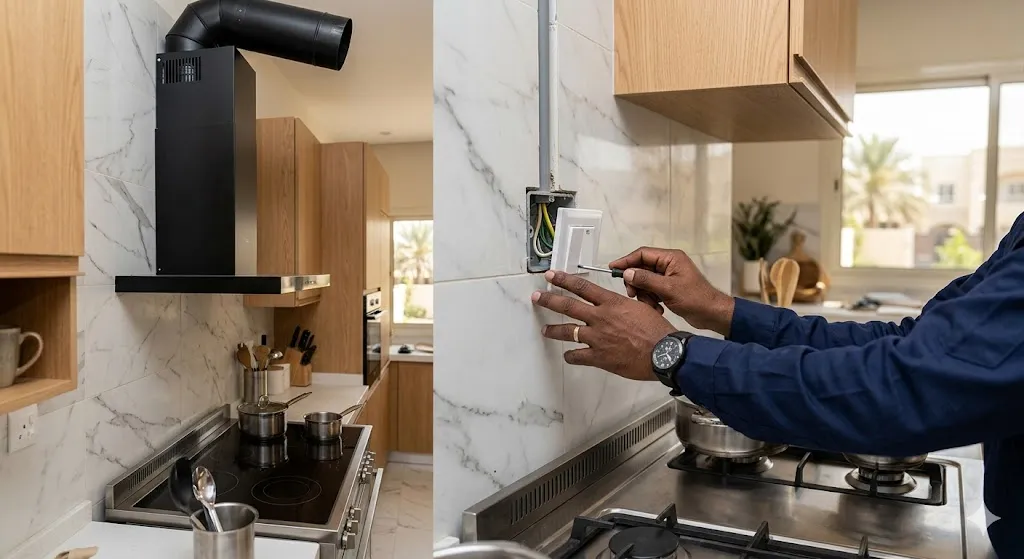
Electrical preparation starts by defining a power point near the kitchen hood location to avoid random visible wiring after finishing.
The power point should suit the appliance location and should not conflict with the hood body, duct route, or fixing points.
Electrical connections should be executed safely by a qualified technician. Avoid temporary wires or unsuitable solutions in kitchens where heat, grease, and humidity are present.
Sending the following photos before the technical visit helps make kitchen hood installation more accurate:
- Current power point and its location relative to the hood.
- Cooktop and surrounding upper and side cabinets.
- Ceiling or wall where the duct will pass.
- Data plate of the electric kitchen hood if the appliance is already available.
- Any old openings or previous site preparations.
Good preparation before installation speeds up work and supports better execution quality.
Read more: Top Hotel Ventilation and Chalet AC Solutions in Kuwait: Silent Exhaust
Supply and Installation Scope in Kitchen Ventilation Systems
Buying a kitchen hood requires clearly written scope items to avoid misunderstanding during work.
A standard agreement may include:
- Supplying a powerful kitchen hood that matches the agreed technical specifications.
- Providing the duct connectors needed to direct air outdoors.
- Installing the appliance body accurately and securely in its designated location.
- Connecting the system outlet to the ready discharge opening at the site.
- Testing suction strength by operating all available speed levels.
- Explaining how to remove filters for periodic maintenance.
However, some tasks are usually excluded from standard installation unless stated clearly in the quotation.
These may include:
- Demolishing walls or changing the building structure to expand air routes.
- Relocating kitchen hood power points or water networks.
- Cutting wooden cabinets to create enough space for the appliance.
- Drilling wall openings that require specialized machines or building permits.
- Painting walls or treating drilling marks at fixing locations.
- Cleaning old grease inside an existing duct from previous kitchen hoods.
A clear scope protects your rights and speeds up project handover.
Also read: Best Central Home Ventilation Systems in Kuwait and Silent Duct
Kitchen Hood Installation Stages from Fixing to Operation
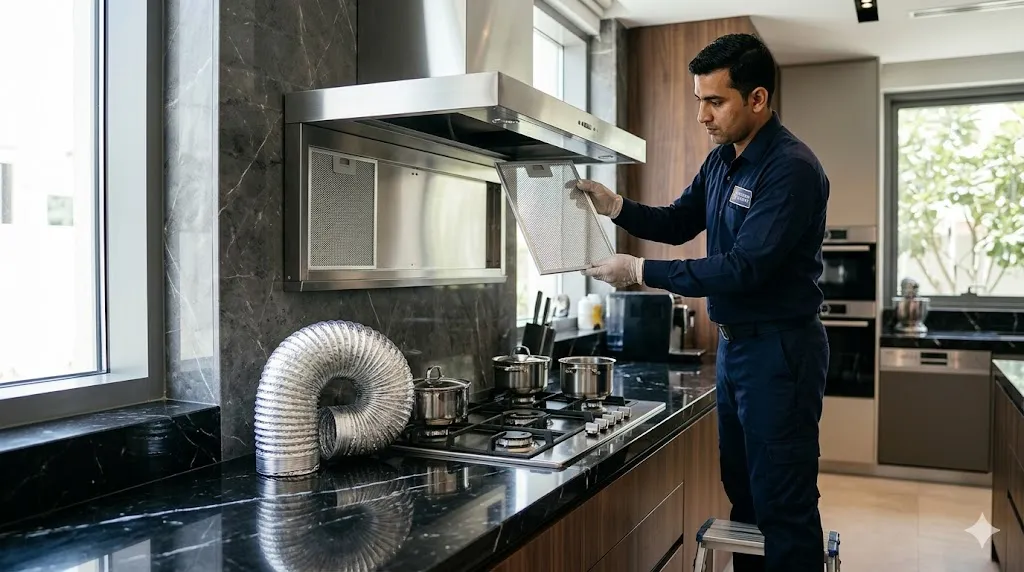
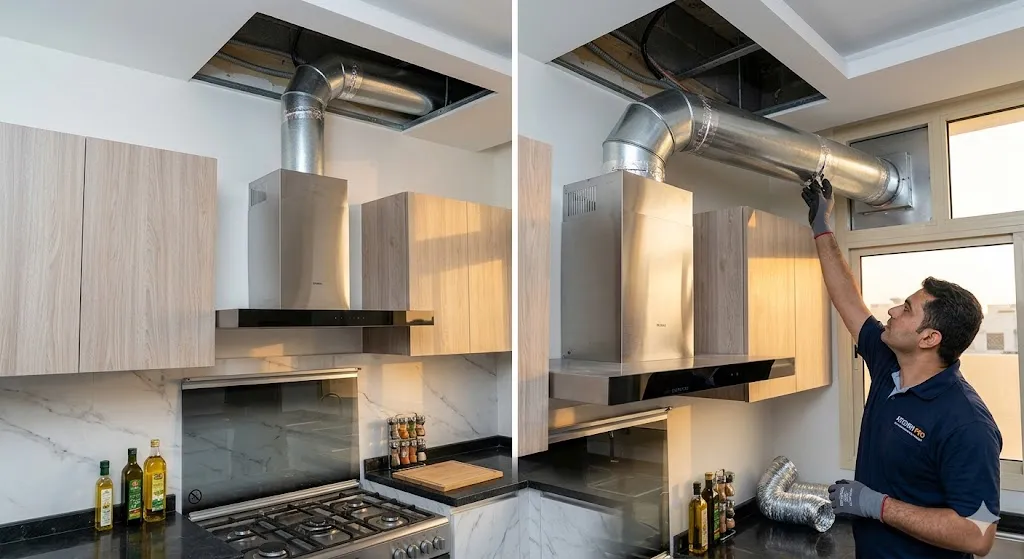
Kitchen hood installation is usually completed in two main stages: fixing the appliance itself, then connecting the duct extensions.
You will not install it yourself, but you can follow the specialist technician through these steps:
- Inspect the cooktop and cabinet location and identify the nearest power point.
- Take accurate measurements of the fixing location to ensure compatibility with the appliance size.
- Draw the duct extension route and define the external discharge opening accurately.
- Fix the hood body or support frame securely to prevent future vibration.
- Connect the duct to the air outlet and secure the connection to prevent vapor leakage.
- Complete electrical connections through a qualified technician to ensure safety.
- Turn on the electric kitchen hood and test speed levels and lighting.
- Monitor sound and check joints to confirm there is no air leakage.
- Explain to the user how to operate the appliance and clean the filters.
Handover and Testing Checklist for the Best Kitchen Hood
After kitchen hood installation is complete, do not only turn it on. Test performance before the technician leaves.
Check the following:
- Make sure the hood body is stable and balanced with no tilt to the right or left.
- Operate the system and confirm that there is no strong vibration causing noise.
- Test all suction levels to make sure the motor works at full capacity.
- Test the lighting buttons to confirm lamp safety and illumination strength.
- Listen carefully for any abnormal internal friction noise during fan rotation.
- Check the duct connection point manually to ensure no air escapes into the kitchen.
- Confirm that air exits outdoors completely without reversing back inside.
- Ask the technician to explain how to remove filters for periodic handwashing.
- Keep the technical manual or take a photo of the appliance data label.
Health organizations generally recommend operating a strong kitchen hood from the beginning of cooking and cleaning grease filters regularly to maintain indoor air quality.
If persistent odors or weak suction appear after installation, request an inspection visit from Cyberia before replacing the appliance immediately.
Factors Affecting Kitchen Hood Supply and Installation Cost in Kuwait
The cost of kitchen hood installation in Kuwait is not determined by appliance price alone. Execution cost, duct accessories, and required construction modifications all affect the final budget.
The project budget is influenced by several technical and logistical factors:
- Hood Type: A wall-mounted or concealed kitchen hood affects fixing labor cost.
- Cabinet Condition: Wooden cabinet modifications increase manual installation cost.
- Duct Status: Creating a new exhaust outlet costs more than connecting to a ready outlet.
- Route Complexity: Multiple duct bends increase material quantities and labor cost.
- Additional Accessories: A strong kitchen exhaust system may require extra accessories for tight joint connections.
- Construction Work: Wall drilling or gypsum cutting adds extra cost.
- Site Access: The work requires enough movement space around the installation technician.
- Schedule Coordination: The project may require coordination with the site’s building contractor.
- Service Type: Cost differs between supply only and complete supply with installation.
Cyberia: Kitchen Hood Supply and Installation in Kuwait
Cyberia provides an organized technical process that starts with reviewing site measurements and photos, then defining the appliance type, evaluating the duct route, supplying accessories, and operating the system.
We have more than twenty years of local experience in kitchen hood installation in Kuwait across residential and commercial projects.
To receive a faster response and identify the best kitchen hood for your needs, provide the following data:
- Full name and direct contact numbers.
- Residential or commercial area inside Kuwait.
- Property type, such as villa, apartment, or restaurant.
- Cooktop width with a clear photo of the cooking area.
- Clear site photos from different angles.
- Whether external discharge openings or previous duct routes exist.
- Cabinet condition and whether enough space is available for fixing.
- Confirmation that nearby electrical power points are available.
- Required service type, whether supply only or complete installation.
- Any technical conditions requested by the homeowner or building contractor.
Cyberia’s professionalism appears in delivering ventilation systems that operate efficiently through:
- Performing accurate technical site evaluation to identify the most suitable kitchen hood types.
- Designing a proper engineering duct route that turns your appliance into an effective kitchen hood.
- Providing the original parts and connectors needed to complete technical work properly.
- Applying strict inspection standards to operate a strong kitchen exhaust system that protects indoor air.
- Providing complete technical solutions that help you select a powerful kitchen hood with confidence.
With more than twenty years of leadership in Kuwait’s ventilation market, Cyberia is your trusted partner for kitchen hood systems.
FAQs About Kitchen Hood Supply and Installation in Kuwait
Is Inspection Necessary Before Supplying a Kitchen Hood Remotely?
Clear photos and accurate measurements may be enough for an initial recommendation about suitable kitchen hood types.
However, a site visit becomes necessary when there are structural obstacles or when the home’s air-discharge route is unclear.
What Data Is Needed to Ensure Accurate Kitchen Hood Supply?
You should define the kitchen type and cooktop width accurately to choose a powerful kitchen hood suitable for daily cooking volume.
Clarifying electrical extension status and previous exhaust openings also speeds up preparation of the required installation materials.
Does Supply Include All Installation Accessories, or Might I Need Extra Parts?
This depends on the order scope.
Some sites need special accessories such as extra duct connectors, external finishing pieces, or fixing accessories. It is best to document what the quotation includes before approving the request.
What Is the Difference Between Supplying a Home and a Contractor Project?
In homes, the decision usually focuses on appearance, available space, ease of use, and odor level.
In contractor projects, the priority is unified specifications, approval workflow, duct compatibility, handover requirements, and availability of required components within the project scope.