
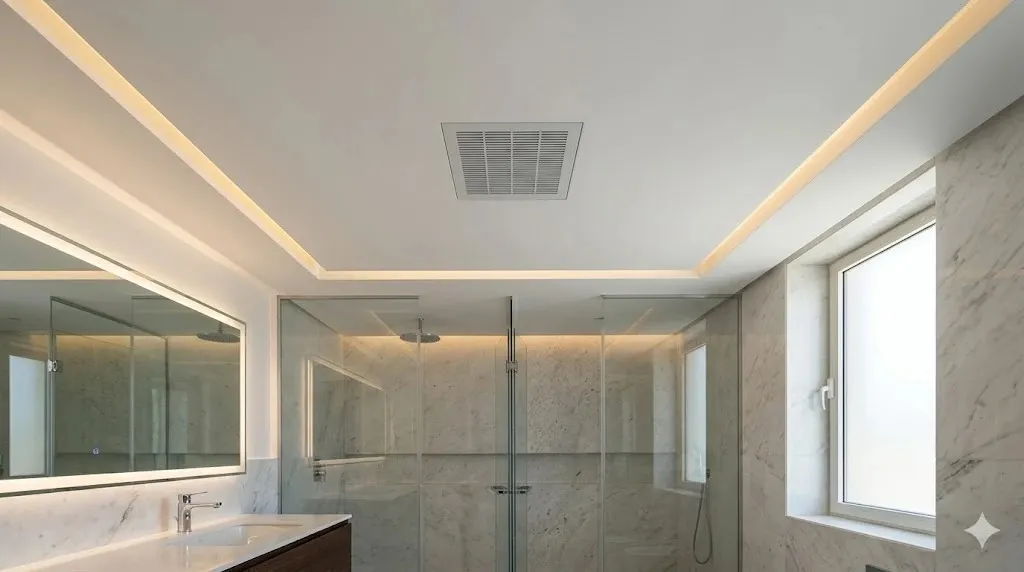
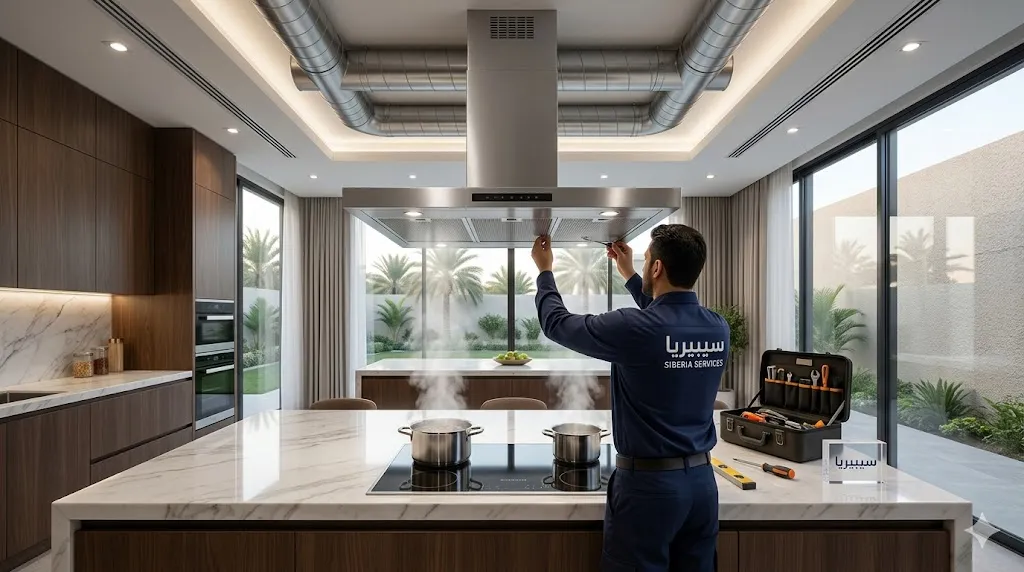
A kitchen island hood is a key element in modern kitchen ventilation. When it fails to perform properly, cabinets may be damaged, grease can accumulate on nearby furniture, and cooking odors may spread because of poor exhaust-route planning.
A successful installation requires connecting the technical specifications of the hood with the actual kitchen layout to prevent steam backflow, vibration, or weak extraction during operation.
In this Cyberia guide, we explain the correct installation approach by covering:
- How to choose the right kitchen island hood size and ceiling design.
- How to plan the duct route and prepare the site before installation.
- How to inspect the system after installation to ensure quiet and powerful operation.
Cyberia has extensive experience controlling airflow in open kitchens across Kuwait. Contact our team to install an extraction system that solves cooking odor problems properly.
Advantages of a Kitchen Island Hood Compared with Other Types
Ceiling-mounted ventilation systems have special installation requirements when the cooking area is located in the middle of the kitchen.
The most important differences include the following.
Engineering Fixing Requirements
A kitchen island hood is suspended above the cooking area from a secure ceiling point.
It requires a clear duct route that connects the appliance to an external exhaust opening.
Its position above the steam source is essential to capture odors and vapors within the cooking zone.
Its ceiling-fixing method is completely different from the usual installation method used for wall-mounted kitchen hoods.
Open-Space Air Movement Challenges
An open kitchen does not have side walls that help contain grease within the cooking area.
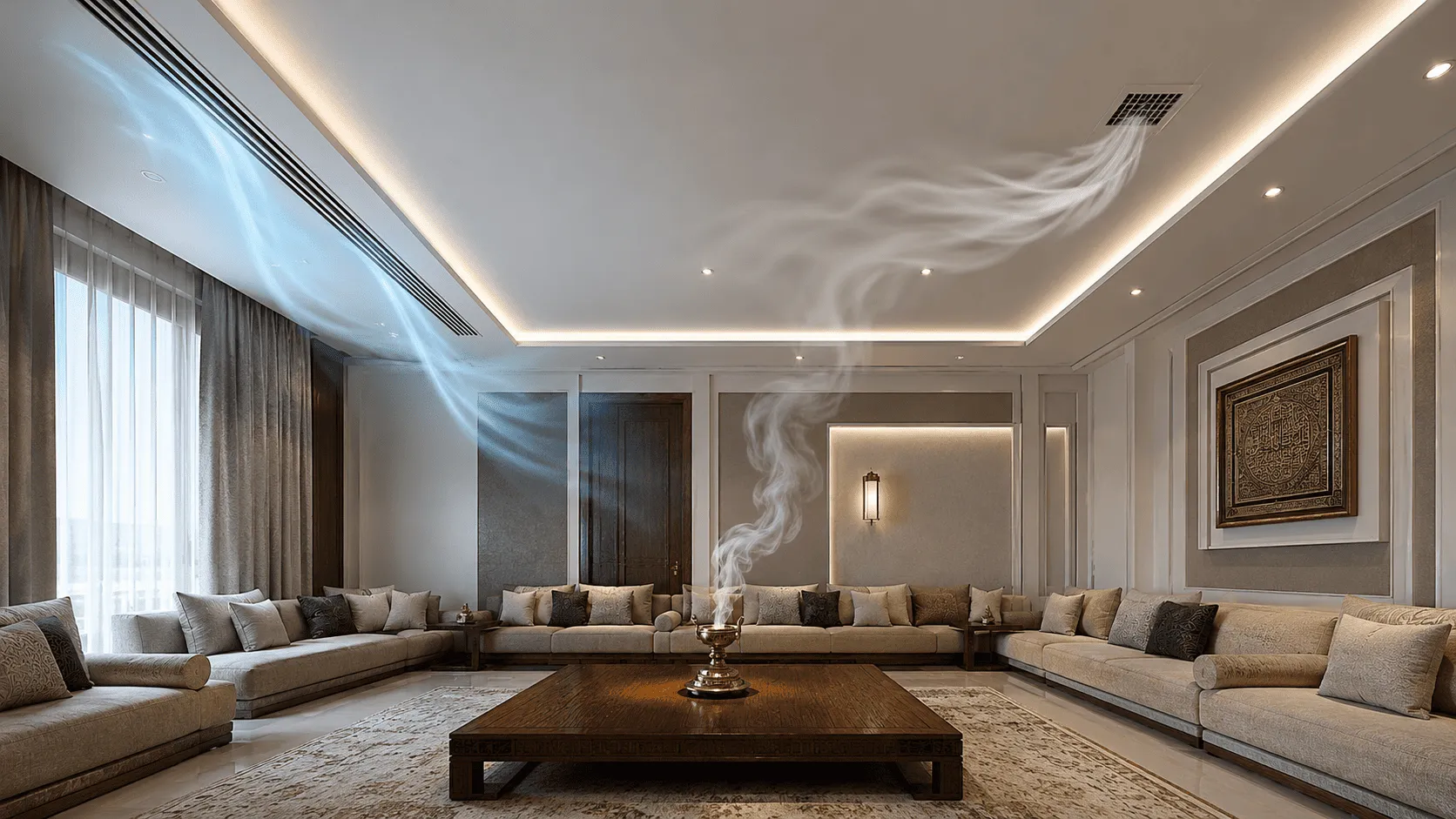
Odors can move quickly toward the living room or majlis when the available extraction power is not suitable.
The performance of a kitchen island hood can be affected by air-conditioning drafts that disrupt the path of rising steam.
Successful extraction depends on the hood’s ability to capture air from the center of the room.
Full Dependence on Ceiling Preparation
The performance of a kitchen island hood depends heavily on the condition of electrical and duct extensions inside the ceiling.
The strength of gypsum ceilings must be checked to ensure they can safely carry the hood’s weight during final installation.
The site condition determines whether an external exhaust route can be used or whether a carbon-filter recirculation system is required.
A modern kitchen hood requires advance planning to prepare the power points needed to operate the fan.
Height and Technical Planning Standards
If the hood is installed too far above the cooktop, oils and vapors may disperse through the space before reaching the extraction zone.
If it is installed too low without proper planning, it may obstruct movement while cooking.
Following the manufacturer’s instructions helps achieve maximum benefit from the hood’s extraction capacity.
A kitchen island hood is a technical solution that requires early planning for hidden ceiling services.
Cyberia’s long experience in Kuwait projects helps ensure accurate airflow route distribution. Request a technical inspection before installation to avoid common fixing mistakes.
Read more: Small Kitchen Exhaust Fan and Wall-Mounted Options in Kuwait
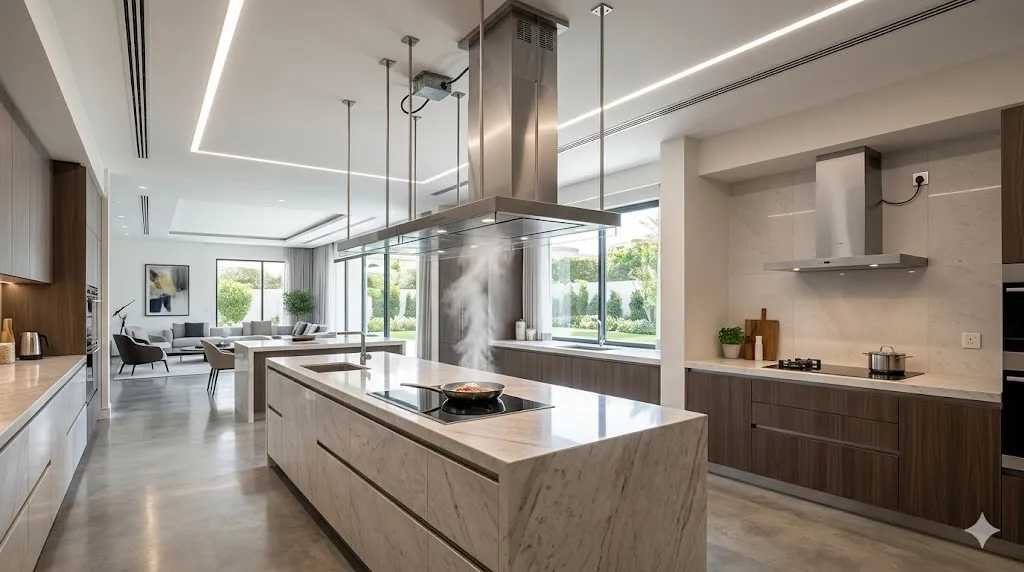
When Is a Kitchen Island Hood the Right Choice?
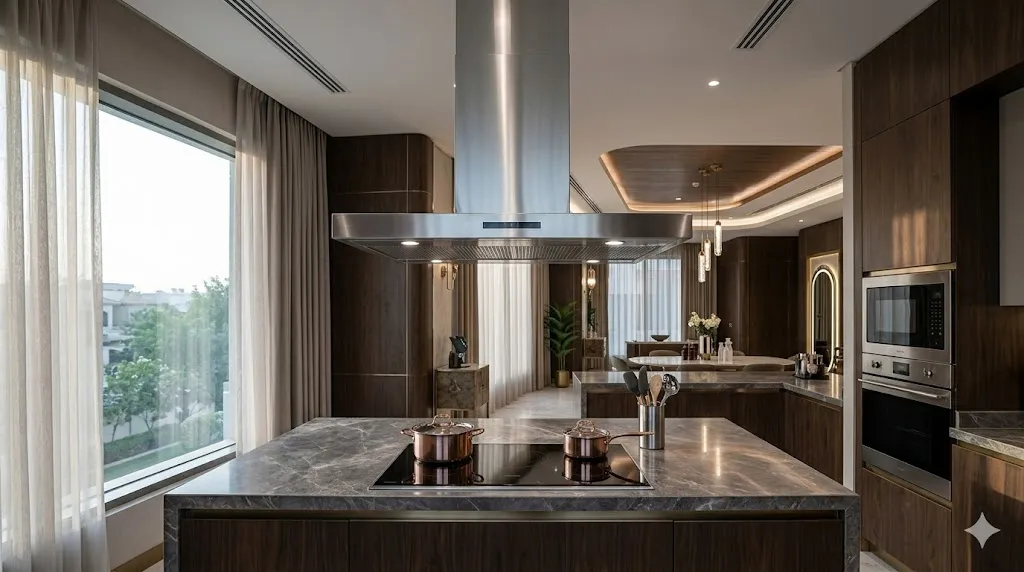
A kitchen island hood is ideal when the cooktop is located in the center of the kitchen, because it captures steam, grease, and odors before they spread to the rest of the house.
It is also suitable in cases such as:
- The cooktop is positioned in the middle of the kitchen away from side walls.
- The cooking and preparation area opens widely to the living room or dining area.
- You want a modern kitchen hood to act as a visual design element.
- The kitchen design supports visible materials such as stainless steel or suspended modern hood models.
Requirements for Successful Kitchen Island Hood Installation
For the hood to work efficiently, choosing the right shape is not enough. The site must be technically ready before installation.
The key requirements include:
- A strong ceiling that allows the hood to be suspended safely and evenly without vibration.
- Easy access to grease filters for regular cleaning.
- Compatibility between hood capacity, installation method, kitchen area, and actual use.
- Installation that prevents vibration and noise while helping extract steam directly from the source.
- A clear route for an external exhaust duct, or an effective recirculation system when outdoor discharge is not possible.
Obstacles to Ceiling-Suspended Hood Systems
A kitchen island hood may not be the best choice in certain situations, such as:
- The cooktop is placed against a wall, making a wall-mounted hood more practical.
- The ceiling cannot safely carry heavy suspended loads.
- The building management does not allow external openings in the façade.
- The duct route is complicated or too long, reducing the extraction capacity of the hood.
Also read: Beauty Salon Ventilation Solutions in Kuwait
Key Information Needed Before Supplying a Modern Kitchen Hood
This step prevents you from choosing a hood that does not match the ceiling condition, air route, or cooking-zone dimensions.
Before ordering a kitchen island hood, prepare the following information:
- Accurate cooktop width.
- Location of the power outlet dedicated to the appliance.
- Distance between the floor and ceiling to determine hood length.
- Dimensions of the marble island or central countertop.
- Location of the existing exhaust opening and expected duct route.
- Clear photos of the cooking area and ceiling from multiple angles.
- Ceiling type, whether concrete, gypsum, or suspended ceiling.
- Current kitchen condition, whether under construction or fully finished.
- Preferred system type, whether external exhaust or air recirculation through filters.
It is better to show the ceiling plan to the consultant before finalizing gypsum works. Preparing the ventilation route after finishing often requires more difficult solutions. Building rules regarding façade openings should also be reviewed before installing a flat kitchen hood.
Cyberia supports contractors in preparing duct extensions professionally, helping ensure the site is ready before equipment arrives.
Check: Kitchen Hood Types and Installation Standards in Kuwait 2026
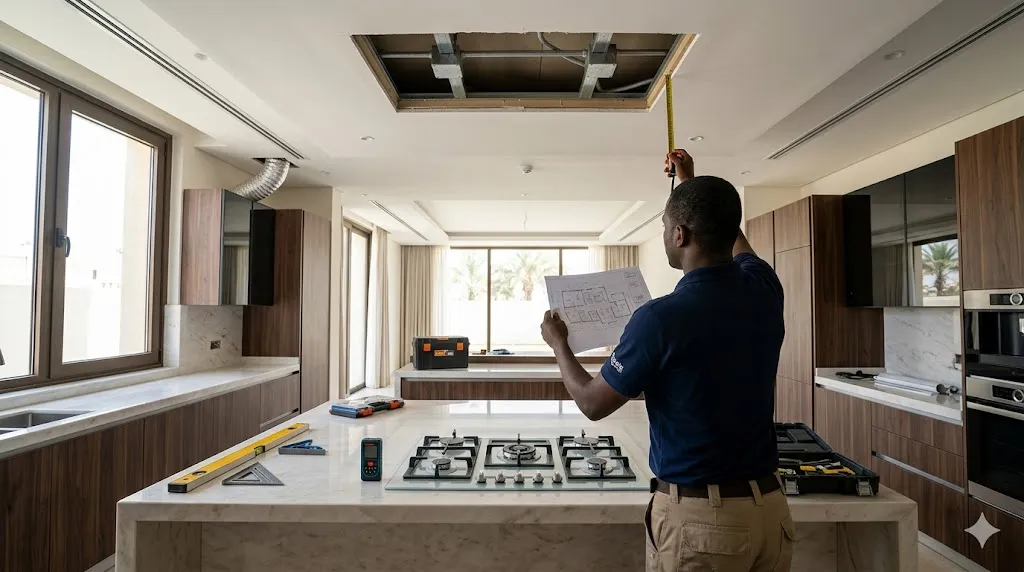
How to Choose the Correct Kitchen Island Hood Size?
The key rule is that the hood should cover the cooking area properly to capture smoke, grease, and steam in the open space.
In addition to width, two main factors affect the right choice: installation dimensions and system integration.
Size and Installation Criteria
Choosing a kitchen island hood requires balancing measurements with surrounding site conditions.
Important criteria include:
- Considering the vertical distance between the ceiling and worktop to adjust extraction performance.
- Ensuring duct joints are sealed and that the duct diameter matches the system size.
- Studying the air outlet location to ensure efficient discharge of vapors outdoors.
- Following manufacturer instructions carefully when selecting modern hood models.
Component Quality and System Integration
Successful ventilation does not depend only on choosing a wide stainless-steel hood. It depends on the whole system working together.
This includes:
- Choosing a flat or suspended hood that fully covers the rising grease and vapor zone.
- Using original accessories that improve the performance of the ceiling-mounted hood.
- Checking that the system can operate quietly without vibration caused by incorrect sizing.
- Providing the right ventilation-channel accessories to support overall exhaust performance.
Read more: Top Hotel Ventilation and Chalet AC Solutions in Kuwait: Silent Exhaust
Kitchen Island Hood Size Guide for Open Kitchens
This table is only an initial guide. It does not replace site inspection or the manufacturer’s manual.
| Cooktop Width | Suggested Hood Width | Ceiling Height | Duct or Recirculation Option | Installation Note |
|---|---|---|---|---|
| 60 cm | Covers the full cooktop width | Low to medium | External exhaust or recirculation when ducting is not possible | Suitable for small and medium spaces |
| 90 cm | Clearly covers the cooking zone | Medium to high | External exhaust is better for heavy cooking | Requires accurate inspection of the suspension point |
| Large island | Defined after plan review | Depends on site | Depends on outlet point and route | Technical consultation is recommended before purchase |
You can request a suitable kitchen island hood size recommendation from Cyberia after sharing the cooktop width and photos of the ceiling and island.
Criteria for Choosing the Right Hood for the Ceiling and Usage
Ceiling Type Compatibility
The ceiling condition directly affects the installation method.
- Gypsum Ceiling: Requires reinforcement bridges behind it to carry the hood weight.
- Concrete Ceiling: Requires duct and electrical openings to be defined in advance.
- Ceiling Height: A model with adjustable length is preferred to maintain extraction strength.
- Décor: Hood dimensions should be reviewed so they do not block hidden lighting.
Choosing the Shape Based on the Duct Route
The hood shape should serve the air route, not just the visual design.
- Vertical Hood: Suitable when air can exit directly through the ceiling.
- Flat Kitchen Hood: Suitable for quieter designs and carbon-filter systems.
- Efficiency: The best shape is the one that allows the shortest route for steam discharge.
Filter Cleaning and Maintenance Access
Easy maintenance is essential in a kitchen island hood because grease buildup is common in open kitchens.
- Removal Method: Choose filters that can be removed manually and washed easily.
- Access: Avoid complex shapes that make grease-filter access difficult.
- Daily Use: Easy cleaning is more important than external appearance.
Balancing Stainless Steel and Flat Modern Designs
- Stainless Steel: Practical, but fingerprints and grease marks appear quickly.
- Flat Modern Design: Provides a contemporary look but needs very precise fixing.
- Quality: The best model is the one that is easier to install, clean, and maintain.
Lighting Distribution and Control Locations
- Control Position: Buttons should be visible and easy to reach.
- Lighting Distribution: Make sure the hood lights cover the full cooking area.
- Integration: Treat hood lighting as part of the kitchen’s overall lighting plan.
Fit with User Movement and Kitchen Space
- Height: The hood should be fixed at a level that prevents head impact during cooking.
- Size: The hood width should not visually crowd the kitchen.
- Open Kitchen: Choose a design that fits the living-room furniture and surrounding décor.
Cyberia designs combine appearance with easy periodic maintenance, helping you choose a model that supports both your décor and ventilation performance.
Read more: Small Kitchen Exhaust Fan and Wall-Mounted Options in Kuwait
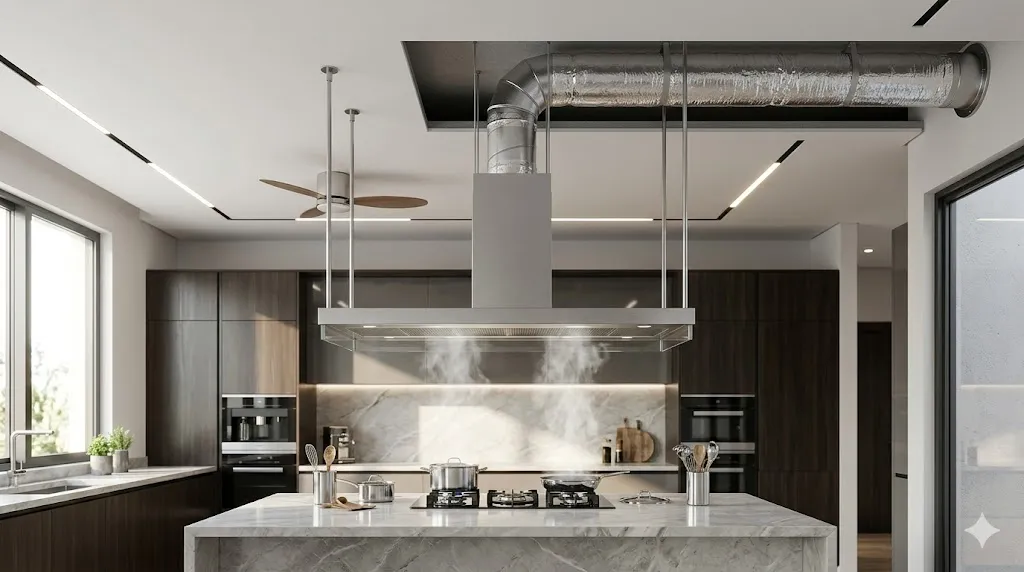
How to Plan the Ceiling Duct Route for a Kitchen Island Hood?
The duct route is one of the strongest factors affecting kitchen island hood performance.
The rule is simple: keep the route short, clear, low in bends, and tightly sealed.
Technical Design Rules for the Route
A properly planned duct route should follow these rules:
- Define the nearest external discharge point from the hood location.
- Make sure the duct route inside the gypsum ceiling is free from structural obstacles.
- Reduce the number of bends to prevent weak extraction.
- Seal all connection points to prevent grease leakage into the ceiling.
- Insulate ventilation ducts to reduce condensation caused by humidity and heat.
- Provide access openings for future inspection and maintenance.
- Use a well-planned route to protect the hood body from grease and moisture accumulation.
Performance and Extraction Efficiency Standards
Poor duct execution can reduce the value of even a strong kitchen island hood.
Key performance issues include:
- Leaking joints can spread odors and cause grease accumulation above décor.
- Long duct routes may require an auxiliary fan that matches the hood system.
- Choosing a suitable hood supports stronger air discharge outdoors.
- Good insulation helps prevent humidity-related corrosion inside the system.
- Correct execution should follow safety requirements to maintain stable ventilation performance.
- High-quality installation materials help extend the service life of the kitchen exhaust system.
Also read: Best Central Home Ventilation Systems in Kuwait and Silent Duct
Installation and Handover Stages for a Kitchen Island Hood
The process starts by inspecting the ceiling and defining the center point above the cooktop to ensure full coverage of steam and vapors.
The installation stages include:
- Defining the suspension point and preparing electrical connections through a specialist technician.
- Fixing the suspension supports securely into the ceiling structure.
- Hanging the kitchen island hood while adjusting horizontal and vertical alignment accurately.
- Connecting duct pipes and sealing joints tightly to prevent grease leakage.
- Operating the appliance to test extraction strength, speed levels, and lighting.
Before accepting the work, review these points:
- The hood body is stable with no vibration during operation.
- The hood is centered exactly above the cooking zone.
- Filters can be removed and reinstalled smoothly for future cleaning.
- The air route has no abnormal friction sounds or joint leakage.
- Air is clearly discharged outdoors with no odor return into the kitchen.
Cyberia technicians complete installation with attention to stability and quiet operation, helping you receive work that meets quality standards.
Cyberia: Supply and Installation of Kitchen Hoods in Kuwait
Cyberia provides integrated engineering solutions that start with studying the kitchen design to ensure extraction efficiency.
Our role does not stop at supplying the appliance. It also includes reviewing duct routes and electrical points according to the actual site condition.
Key advantages of working with Cyberia for kitchen hood supply and installation include:
- Recommending the hood type based on kitchen design, whether wall-mounted, built-in, window, or island.
- Reviewing the duct route before installation to avoid weak extraction or odor return.
- Checking power-point readiness and fixing location.
- Supplying required accessories according to the agreed work scope.
- Installing the appliance safely while checking stability and vibration.
- Testing operation after installation, including speed levels, lighting, and filters.
- Explaining filter cleaning and correct use after handover.
Cyberia has built the trust of villa owners and contractors in Kuwait through integrated ventilation solutions. Request a quotation that includes supply and installation.
FAQs About Kitchen Island Hoods
Does a Kitchen Island Hood Affect Home Air Conditioning in an Open Kitchen?
Yes. Strong operation may extract part of the cooled air from the nearby living area because there are no physical barriers.
It is better to adjust speed levels or provide supporting air balance to reduce cooling loss during heavy use.
Does a Kitchen Island Hood Require Make-Up Air?
It may be required when using a powerful hood in a fully closed space, to avoid door resistance or odor backflow.
In some cases, a simple source of replacement air during operation may be enough to maintain indoor air-pressure balance.
Can a Kitchen Island Hood Be Noisy in Open Kitchens?
Yes. Because there are no walls in an open kitchen, motor sound and vibration can travel directly into the living room.
To reduce noise, focus on fixing quality, duct sealing, and quiet operating speeds.
Can Hood Lighting Replace Kitchen Lighting Above the Island?
Usually, hood lighting is only complementary for the cooking surface and is not enough as the main lighting for the surrounding area.
Check the light distribution, brightness, and availability of spare parts before purchase.
How Can I Make Sure Filters and Spare Parts Are Available Before Buying?
Ask the supplier for the filter name, number, or specification, and confirm availability and replacement options.
This is important because filters in kitchen environments are exposed to grease and humidity and may need cleaning or replacement depending on use.
When Is a Wall Hood or Built-In Hood More Suitable?
A wall hood is better when the cooktop is near a wall or when ceiling duct extension is complicated or unsafe.
A built-in kitchen hood is ideal for those who prefer a hidden look inside cabinets, provided that cabinetry dimensions are coordinated accurately.
When Should You Choose an Alternative to a Kitchen Island Hood?
Choose another solution if the ceiling is weak, the exhaust route is too long, or building management prevents ceiling or façade openings.
Another type may also be better if the cooking area is near a wall or if upper cabinets require a built-in hood installation.